

Iran Hormuz attacks intensified early Tuesday as the Revolutionary Guard claimed strikes on a tanker and two other ships in the vital waterway. The crew of the tanker was forced to abandon vessel off Oman.
The incident came during the 10th consecutive night of US airstrikes on Iran. Washington says the strikes aim to “degrade” Tehran’s ability to attack commercial shipping.
Yemen’s Iran-backed Houthis also escalated. They announced an immediate maritime blockade of Saudi Arabia in the Red Sea, closing the Bab al-Mandeb strait to Saudi vessels.
New Strikes On Shipping Lanes
The UK Maritime Trade Operations centre confirmed the tanker attack in the strait of Hormuz early Tuesday. The vessel was hit and the crew abandoned ship.
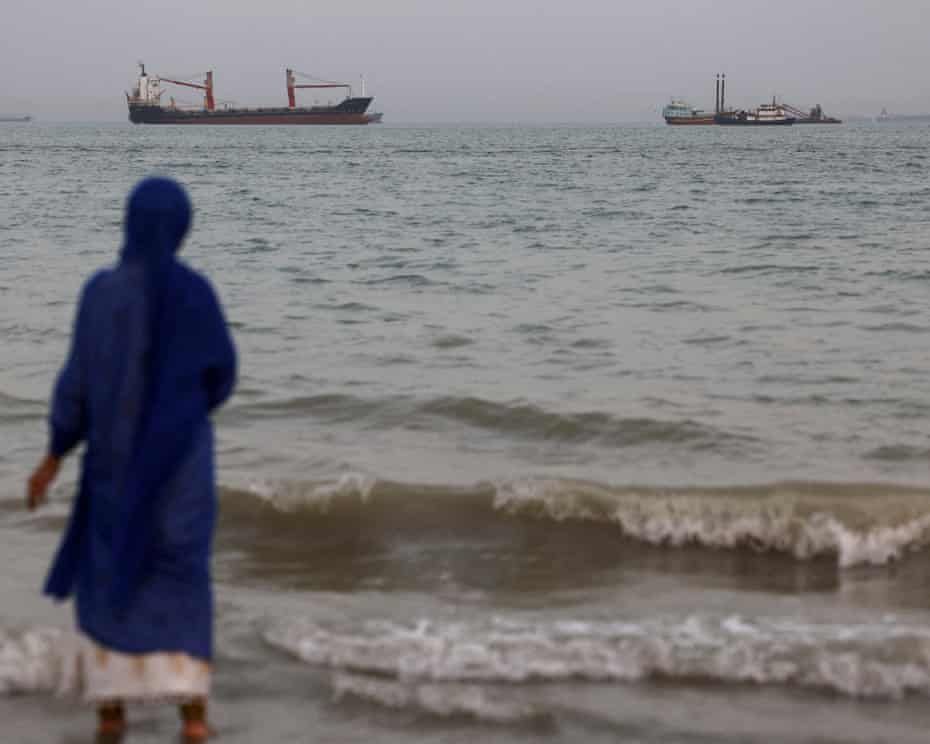
Iran’s Revolutionary Guards claimed responsibility. They also claimed two other attacks on ships in the waterway on Monday. No casualties have been confirmed yet.
The strait of Hormuz carries about 20% of the world’s oil. Any disruption threatens global energy supplies and insurance costs for tankers.
US Response Continues
10th Night Of Airstrikes
US Central Command said the latest strikes targeted military command centers, missile sites, and drone launch pads. The goal is to stop attacks on commercial vessels.
Iranian media reported explosions in Bandar Abbas, Tabriz and Bushehr, home to Iran’s only operational civilian nuclear plant. The scope of damage is unclear.
President Donald Trump warned Iran would pay “many times over” for killing US soldiers. Multiple service members were killed in action over the weekend, the Pentagon said.
The Pentagon also admitted almost 100 troops had been injured in recent weeks as Iran launched reprisals on US allies across the region.
Houthis Close Red Sea Route
A Houthi official said the Bab al-Mandeb strait would be closed to Saudi ships. The move is in response to what they call a “unjust blockade on Yemenis for over 10 years.”
About 12% of global trade usually passes through Bab al-Mandeb at the southern end of the Red Sea. A closure would hit shipping lines and oil routes hard.
Saudi Arabia responded quickly. It said it would take “all necessary measures to protect its vessels in accordance with international law.”
The Houthis and Saudi Arabia traded fire last week for the first time in years. The new blockade marks a sharp escalation in that front.
Iran Hits US Allies
Tehran’s retaliation has spread beyond the water. Iran launched attacks against Bahrain, Kuwait and Jordan on Monday night, all of which host US forces.
In Jordan, the Revolutionary Guard claimed an attack on a US military site. Jordanian state TV said three missiles launched from Iran were intercepted over Amman.
Sirens sounded in the capital on Monday evening. There were no immediate reports of casualties in Jordan.
The widening strikes show Iran is responding on multiple fronts, not just at sea. US bases across the Gulf are now on high alert.
Oil Markets React
Oil prices softened slightly after hitting a one-month high. Brent crude futures eased 0.4% to $88.87 a barrel by 0052 GMT Tuesday.

US West Texas Intermediate for September was steady at $82.47 a barrel. Traders are watching to see if Hormuz traffic slows further.
Analysts warn that even a partial closure could push prices above $100. Insurance premiums for Gulf transits have already jumped this week.
The market is balancing fear of supply disruption against hopes that diplomacy might still intervene.
Diplomacy Efforts Underway
Despite talk of “full-scale war,” Iran’s president said the country was ready for talks. The interior minister traveled to Pakistan, a key mediator, on Tuesday.
Pakistan has hosted backchannel discussions before. Whether Tehran will use them while strikes continue remains uncertain.
The US has not signaled a pause. Central Command said operations will continue until Iran stops targeting commercial shipping.
Meanwhile, Democrats in Washington urged Trump to reverse course. They cited the deaths of three US troops killed in Iranian strikes over the weekend.
Broader Regional Impact
The Lebanese army began taking charge of security in three southern villages. The US said it was part of a deal for an Israeli withdrawal and Hezbollah disarmament.
That deal faces its first test on the ground. Any flare-up in Lebanon could open another front in the crisis.
In the Red Sea, shipping companies are rerouting vessels around the Cape of Good Hope. That adds weeks and millions in costs.
The combined pressure on Hormuz and Bab al-Mandeb means two of the world’s most critical chokepoints are now contested.
What Leaders Are Saying
Trump has taken a hard line. “Iran would pay many times over,” he said after US casualties were reported.
Iranian officials have vowed to keep the strait unsafe until US “aggression” stops. The Revolutionary Guard warned of further “punitive operations.”
Saudi officials have called the Houthi blockade illegal. They pledged naval escorts for Saudi-flagged ships.
In Europe and Asia, governments are urging restraint. Importers of Gulf oil are especially nervous about a prolonged shutdown.
Human Cost Rises
Casualty figures remain disputed. The Pentagon confirmed US injuries. Iran has not released updated numbers from US strikes.
Civilian shipping crews are the most exposed. The abandoned tanker crew was rescued, but the incident has rattled mariners.
In Yemen, a decade of war has left millions in need. The Houthis say the blockade is leverage to end what they call a Saudi siege.
What Happens Next
The next 48 hours will be decisive. If tankers stop moving through Hormuz, global markets will feel it immediately.
The US says strikes will continue. Iran says attacks will continue. The Houthis say the Red Sea will stay closed to Saudi ships.
Diplomacy in Islamabad may offer an off-ramp. But with missiles flying and ships burning, trust is thin.
For now, the message from Tehran and its allies is clear. Pressure will not ease until US operations stop.
Read also: Cockroach Party Delhi protest brings tens of thousands to streets demanding accountability
Washington’s message is equally clear. It will keep degrading Iran’s ability to threaten shipping.
Caught in the middle are sailors, consumers, and millions who depend on stable oil prices.
The Middle East crisis 2026 has entered a new phase. Two waterways, multiple militaries, and no clear exit yet.
About The Author


