

Cockroach party Delhi protest filled the heart of India’s capital on Monday as tens of thousands of students and young people marched to demand the resignation of Education Minister Dharmendra Pradhan.
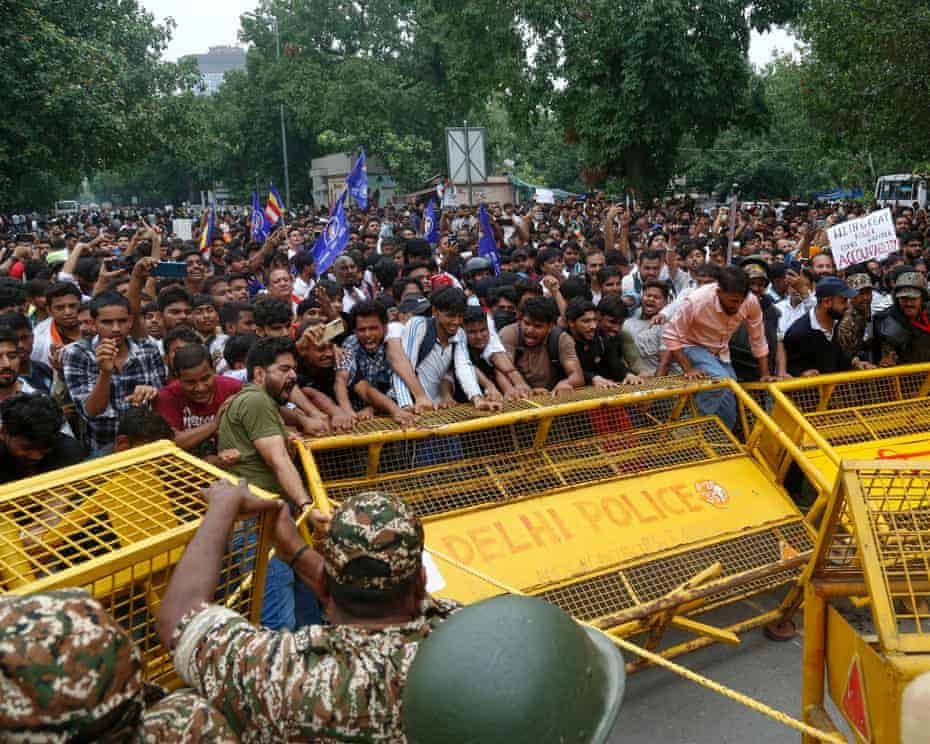
The demonstration, largely led by Gen Z, became one of the largest anti-government rallies in years. Protesters defied police bans, barricades, and an internet shutdown in central Delhi.
“They are calling this protest illegal, they are calling us anti-national,” said 22-year-old Rhythm Katoch. “But I am 22 years old and I am standing here to fight for our education system, for the rights of the young people and for our democracy.”
Why The Protest Exploded
The march was called by the Cockroach Janta party, or CJP. The name came from Chief Justice Surya Kant’s May remark calling some activists and unemployed youth “cockroaches.”
What began as satire by graduate Abhijeet Dipke has turned into a serious political challenge. Its core demand is simple: the resignation of Mr Pradhan over repeated exam leaks.
This year’s medical entrance exam saw more than 2 million students compete for 130,000 places. The paper was leaked again, forcing a cancellation and a retake.
The fiasco has been linked to more than 20 student suicides. “Because of those leaks, students have died,” said 18-year-old Harion Sharma, who had to retake the test. “We are here to call for accountability.”
Police Response And Public Anger
Batons, Teargas, And Arrests
Delhi police, under the central government, denied permission for the march. Roads were barricaded and the internet was cut in the city centre.
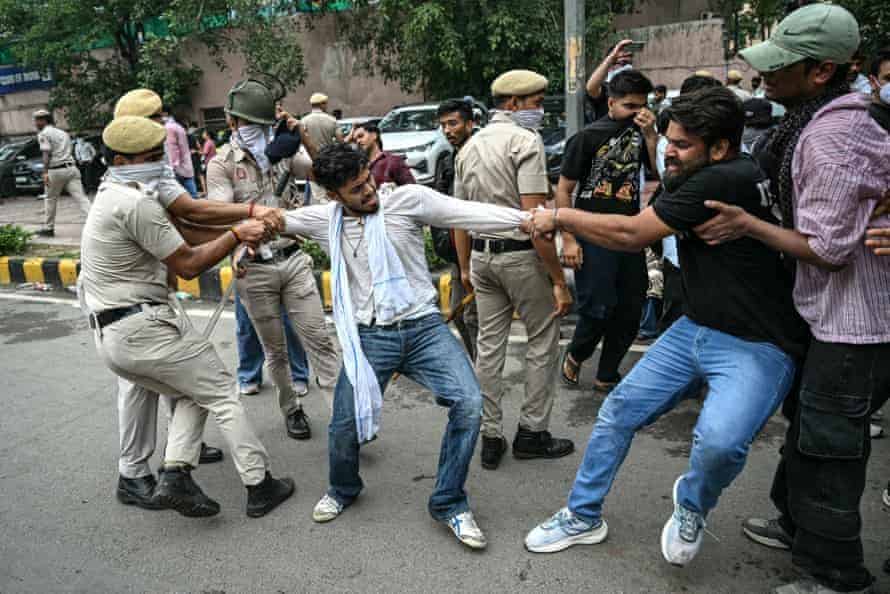
Attempts to reach parliament were met with batons and teargas. Footage showed officers dragging protesters and firing shells into crowds.
Opposition leader Priyanka Gandhi condemned the crackdown outside parliament. “There are massive issues … but you are firing teargas at children and beating them up? For what?” she asked.
CJP supporters clashed with police for hours. Despite the force, the crowd kept growing, filling streets from early morning with anti-government slogans.
The Face Of The Movement
The protest was galvanized by Sonam Wangchuk. The renowned engineer and education activist began a hunger strike 21 days ago, refusing food and water until Mr Pradhan resigns.
On Sunday, Delhi police forcibly removed him and took him to a government hospital. His wife Gitanjali Angmo called it “illegal detention,” not medical care.
“India’s second freedom movement,” Wangchuk called the march. On Monday he said he would end the fast if the government accepted accountability for education failures.
Supporters echoed him. “He is a brilliant brain and he has put his life on the line for young people,” said 27-year-old Amrita, who took a day off work to join. “How he is being treated is a shame on India.”
Government Reaction
For weeks, the Modi government ignored CJP campers less than a mile from parliament. Mr Pradhan dismissed them as “terrorists.”
After the huge turnout, cabinet minister JP Nadda met CJP spokespeople for a brief talk. CJP spokesperson Saurav Das said on social media they waited two hours and got “no commitments so far.”
BJP MP Kangana Ranaut criticized the protest. “No-one can pressure the government into who to sack and who to retain,” she told reporters.
Prime Minister Narendra Modi left parliament for the day without addressing the demands. As of Monday afternoon, no promises had been made.

Wider Youth Frustration
Beyond exam leaks, young Indians cite a lack of jobs and a broken education system. Twelve years of BJP rule has centralized power and narrowed space for dissent.
Unlike recent youth-led uprisings in Nepal, Bangladesh and Sri Lanka, large protests have been rare in India. Monday’s turnout broke that pattern.
Harion Sharma called it historic. “They might be trying to crush our futures and our democracy, but look around, how young people have come to the streets in such massive numbers,” he said. “Now, finally, the government is scared of us.”
The movement’s energy comes from desperation. Students feel their futures are being sold to the highest bidder while leaders stay silent.
What CJP Wants Next
CJP organizers say the march is only the start. They want parliamentary debate on exam security and criminal charges for those behind leaks.
They also demand investment in public education and job creation. “Is it too much to ask for the government to listen to us?” Katoch asked.
The group began hunger strikes in solidarity with Wangchuk. More students joined across Delhi and other states on Monday.
If talks fail, CJP has vowed to escalate. More marches, campus shutdowns, and online campaigns are planned despite internet restrictions.
Political Implications
The BJP has ruled for 12 years under Modi with unprecedented national and state control. Critics say dissent is routinely jailed or persecuted.
This protest tests that model. A youth movement using the government’s own insult as a badge has forced a cabinet meeting.
Analysts say the education crisis cuts across party lines. Parents, teachers, and students are united in anger, making it hard to dismiss as partisan.
The government now faces a choice: concede ground or risk the movement growing. Either way, the image of teargas on students will linger.
Voices From The Street
Protesters carried placards reading “Resign Pradhan” and “Stop Killing Our Future.” Chants echoed against barricades for hours.
Wangchuk, speaking from hospital, urged calm but firm pressure. “Accept accountability,” he said in a video message shared before the shutdown.
Young women were prominent in the crowd, many leading chants. They spoke of pressure, anxiety, and lost years to repeated exams.
The mood was not violent, witnesses said, but determined. “We are young but we are powerful,” Sharma repeated as police pushed back.
What Happens Now
The government invited CJP leaders for talks, but without guarantees. Das said the meeting was brief and produced nothing concrete.
Wangchuk remains under medical supervision with heavy police presence. His family continues to call for his release from what they call detention.
Internet services in central Delhi were restored late Monday, but monitoring continues. More barricades were put up near parliament overnight.
For now, the streets are quieter but the demand remains. Resignation, reform, and answers.
The Cockroach party Delhi protest has done what months of ignored petitions could not. It put youth anger on national TV and in the corridors of power.
Whether that translates to change depends on the next 48 hours. Students say they will not go home until Mr Pradhan answers them.
Read also: Andy Burnham Prime Minister takes office with pledge for stability and change, says UK must be honest with its challenges
“This is a government that does not care about education,” Sharma said. “So we are here to make them care.”
The march ended with a pledge, not a victory. But for India’s Gen Z, it felt like the beginning of something bigger.
About The Author


