

The Greece wildfire helicopter crash has deepened the country’s wildfire tragedy after two firefighters lost their lives when two firefighting helicopters collided while battling a massive blaze threatening the outskirts of Athens.
The fatal accident occurred west of the Greek capital as powerful gale-force winds complicated efforts to contain rapidly spreading flames that have destroyed homes, forced evacuations and stretched emergency services to their limits.
Officials confirmed the crew members aboard one helicopter died after the aircraft crashed during aerial firefighting operations amid dangerous weather conditions.
The tragedy came as hundreds of firefighters continued battling multiple fires sweeping across Greece, where soaring temperatures, dry vegetation and powerful winds have created ideal conditions for destructive wildfires.
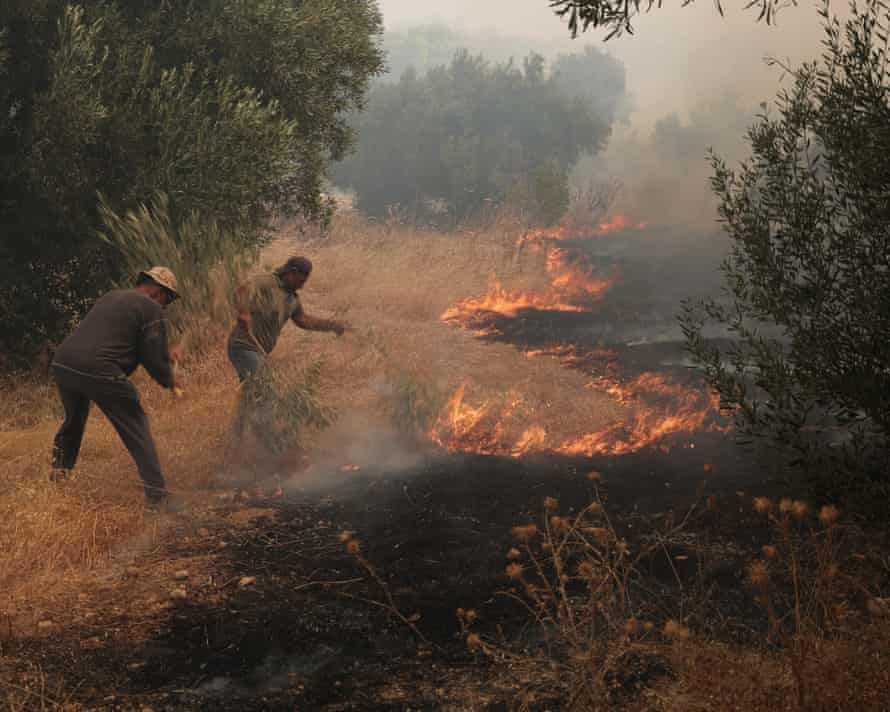
Authorities warned residents that difficult days still lie ahead as firefighters race to prevent the flames from reaching more communities around the Greek capital.
The disaster also reflects the wider Europe wildfire crisis, with devastating fires simultaneously affecting France, Spain and several Mediterranean regions.
Helicopter collision claims two lives
The collision happened as firefighting aircraft attempted to slow the advancing wildfire near Athens despite severe turbulence caused by winds exceeding 125 kilometres per hour.
Greek fire department communications director Vassilis Vathrakogiannis confirmed the tragic outcome after both pilots were rushed to hospital.
“The pilots were taken unconscious to hospital, where their death was confirmed,” Vathrakogiannis said.
Video circulating from the disaster showed one of the helicopters falling after the collision while emergency teams continued battling flames advancing toward residential communities.
The accident highlights the extreme risks faced daily by aerial firefighting crews working under dangerous weather conditions to save lives, homes and critical infrastructure.
Last week alone, Greece also lost three firefighters who suffered fatal injuries while responding to separate wildfire emergencies across the country.
Wildfires destroy homes near Athens
More than 100 homes were reportedly destroyed overnight after wildfires erupted around Porto Germeno, approximately 72 kilometres northwest of Athens, forcing residents to flee for safety.
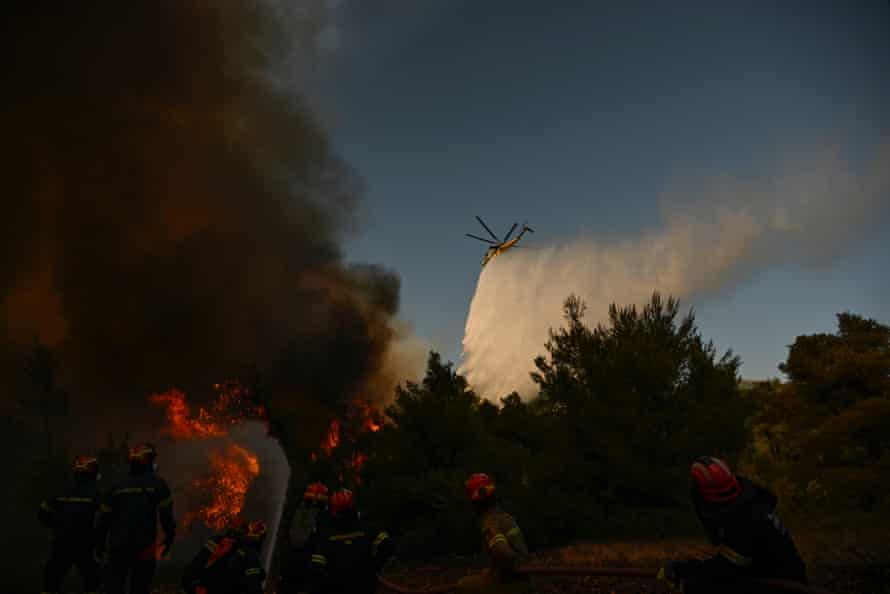
Over 500 firefighters, supported by specialist forest commandos and aircraft, were deployed to contain the Athens wildfire before flames reached additional populated communities.
Greek Prime Minister Kyriakos Mitsotakis warned that the extreme winds remain the greatest obstacle confronting emergency responders despite the country’s large fleet of firefighting aircraft.
“When the winds blow with such force, even the dozens of aircraft we have at our disposal cannot operate safely,” Mitsotakis said.
Civil Protection Minister Evangelos Tournas also acknowledged the immense pressure facing emergency responders as worsening weather conditions continued disrupting aerial firefighting operations.
He described the situation as “extremely difficult,” explaining that violent turbulence often prevented helicopters and aircraft from safely collecting or dropping water onto advancing fires.
Europe remains gripped by wildfire emergency
While Greece battled worsening fires, France reported progress in containing its massive Gironde wildfire after one of the largest peacetime evacuations in the country’s history.

French authorities nevertheless warned that thousands of firefighters remain deployed because active hotspots continue burning despite the fire’s forward movement being successfully halted.
Officials stressed that containment does not mean the blaze has been extinguished, with dangerous weather conditions still threatening renewed outbreaks across affected regions.
Elsewhere in southern France, another major wildfire forced about 2,500 people to evacuate as emergency crews fought to protect nearby villages, vineyards and forests.
Spain has also experienced destructive fires this summer, adding further pressure to firefighting resources already stretched across southern Europe.
The ongoing Europe wildfire crisis has displaced hundreds of thousands of residents while destroying forests, homes, wildlife habitats and valuable agricultural land.
Climate concerns intensify
Scientists continue warning that climate change wildfires are becoming more frequent and increasingly destructive as rising temperatures and prolonged drought leave vegetation dangerously dry.
Read also: Capital One Trump accounts closed after AML review, bank denies political bias
Europe remains the world’s fastest-warming continent, with temperatures increasing at more than twice the global average since the 1980s, according to climate experts.
Higher temperatures combined with persistent drought create ideal conditions for fast-moving wildfires capable of spreading across enormous areas within only a few hours.
Researchers have also concluded that human-driven climate change significantly increased the likelihood of the extreme fire conditions currently affecting several European countries.
Emergency authorities are urging residents in high-risk regions to remain vigilant and obey evacuation orders whenever wildfires threaten nearby communities.
As Greece mourns the victims of the firefighting helicopter collision, emergency crews continue risking their lives to prevent further destruction while Europe confronts another devastating wildfire season.

