Global air travel disruption Iran war has intensified dramatically as escalating conflict forces the closure of major Middle Eastern aviation hubs, leaving tens of thousands of passengers stranded worldwide.
Airspace shutdowns across key transit points including Dubai, Doha, and Abu Dhabi have triggered widespread cancellations, rerouting chaos, and extended delays, severely affecting international travel networks connecting Europe, Asia, and Africa.
Airlines are scrambling to respond as safety concerns grow, with many carriers suspending routes indefinitely while monitoring rapidly evolving military developments and regional instability affecting commercial aviation corridors.
Greece’s largest airline has joined the growing list of affected carriers, announcing cancellations to Tel Aviv, Beirut, and Amman until 22 April, citing ongoing security risks and restricted airspace.
Additional suspensions include flights to Erbil and Baghdad until 24 May, while routes to Dubai and Riyadh remain halted until mid-April, highlighting the prolonged nature of disruptions.
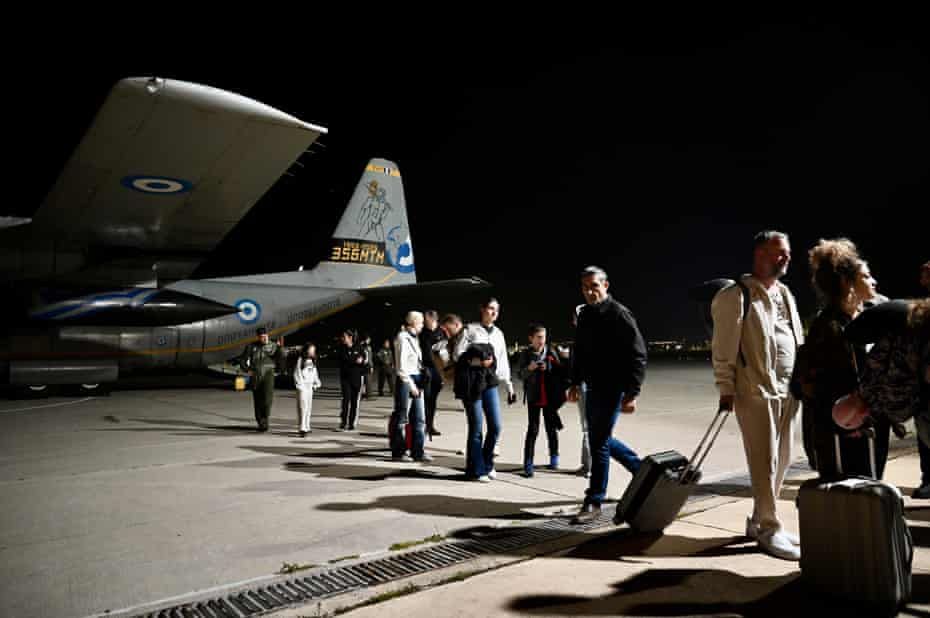
Passengers continue to face uncertainty, with many stranded in transit hubs or forced to seek alternative travel arrangements amid limited flight availability and rising ticket costs globally.
Repatriation efforts are underway in several countries, as governments coordinate emergency flights to evacuate citizens caught in affected regions following the sudden collapse of normal flight operations.
Major international airlines including Air Canada, Air France KLM, and Cathay Pacific have also suspended services to key destinations such as Tel Aviv and Dubai, in some cases extending cancellations into May.
Aviation analysts warn that the disruption could have long-term consequences for the global travel industry, with financial losses mounting as airlines grapple with operational shutdowns and reduced passenger demand.
The closure of strategic hubs has disrupted cargo operations as well, impacting global supply chains and delaying shipments of critical goods, further compounding the economic fallout of the conflict.
Travel experts advise passengers to remain vigilant, monitor airline updates, and avoid non-essential travel to affected regions as the situation remains volatile and highly unpredictable.
The aviation crisis underscores the broader global impact of the Iran conflict, demonstrating how regional wars can quickly escalate into worldwide disruptions affecting millions of travelers and businesses.
Global air travel disruption Iran war continues to ripple across continents, with connecting passengers in Europe, Asia, and Africa experiencing missed itineraries, prolonged layovers, and limited rebooking options.
Insurance providers are also facing pressure, as travelers seek compensation for cancellations linked to conflict zones, while airlines invoke force majeure clauses to manage liability amid unprecedented operational uncertainty.
Read also: US-Iran deal within reach” before war: UK insider reveals missed diplomatic breakthrough
Industry observers warn that unless diplomatic breakthroughs emerge soon, global air travel disruption Iran war could persist into peak travel seasons, further straining airline capacity, increasing fares, and reshaping international travel patterns.
About The Author