
German state elections reshape Germany’s political landscape
German state elections have intensified political pressure on Chancellor Friedrich Merz after his Christian Democratic Union suffered a historic setback in Mecklenburg-Western Pomerania, where the AfD emerged as the largest party.
The Alternative for Germany won about 37% in Mecklenburg-Western Pomerania, narrowly ahead of the Social Democratic Party, while Merz’s CDU recorded its worst result in a German state election since 1949.
The result followed another strong performance by the AfD in Saxony-Anhalt earlier this month, giving the party two leading positions in eastern German state elections within a matter of weeks.
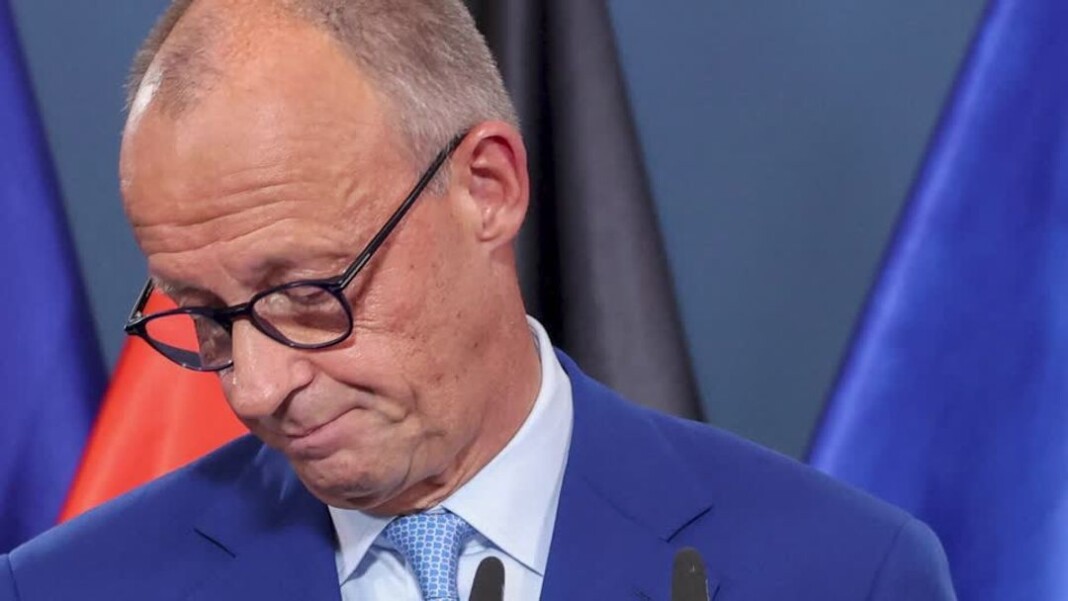
Merz acknowledged the seriousness of the result after projections were released, describing the outcome simply as “a disaster” while indicating that he intended to remain chancellor and continue pursuing his government’s reform programme.
The CDU’s result was particularly significant because the party was close to the five-percent threshold required for representation in the state parliament, creating uncertainty over whether it would secure seats.
AfD records another state-level breakthrough
The result represented another major gain for the AfD, which has increased its support in eastern Germany while remaining excluded from government because the other major parties have refused to form coalitions with it.
The party’s growing electoral strength has placed renewed attention on Germany’s so-called “firewall” strategy, under which mainstream parties reject cooperation with the AfD at government level.
The latest figures showed that the AfD’s support has expanded beyond its previous performance in Mecklenburg-Western Pomerania, where it more than doubled its 2021 result.
The party’s programme includes tougher policies on immigration, restoring energy ties with Russia and changing Germany’s approach to the euro and European integration.
Its position on Russia and Ukraine has also become an important part of the political debate, particularly in eastern Germany, where economic pressures and energy costs have featured prominently during the election campaign.
The AfD has argued for restoring access to Russian energy, including the possibility of reviving the Nord Stream gas pipelines, while also opposing continued German military and financial support for Ukraine.
Merz vows to continue reforms
Despite the electoral setback, Merz said he would continue with his government’s reform agenda, which he has presented as necessary to revive Germany’s sluggish economy.
“What needs to be done now requires backbone, steadfastness, and patience,” Merz said after the results, signalling that he did not intend to abandon his programme because of the state election outcome.
He went further by describing his reforms as “the antidote to the authoritarian poison that is penetrating ever deeper into our society, driven by the allure of authoritarianism.”
Merz’s comments came amid questions about whether the election results could lead to a change in direction within the CDU or increase pressure on him to reconsider his position as chancellor.
The chancellor has faced criticism over pension, tax and healthcare reforms, while voters have also expressed frustration about high energy prices, housing costs and broader economic uncertainty.
Recent polling and electoral setbacks have contributed to questions about the government’s ability to maintain public support while implementing reforms intended to address Germany’s economic difficulties.
CDU faces questions over economic strategy
The political pressure on Merz is closely connected to Germany’s economic performance, with voters in both Mecklenburg-Western Pomerania and Berlin identifying living costs as major concerns.
The country has experienced years of weak economic growth, while industrial companies have announced job cuts and households have faced increased pressure from energy and housing costs.
One voter in Schwerin, the capital of Mecklenburg-Western Pomerania, told Reuters that the cost of living had become increasingly difficult to manage.
“Here in Schwerin, with these wages, you can hardly afford anything anymore,” voter Carlotta Heick said, highlighting the connection between household finances and electoral dissatisfaction.
Another elderly voter criticised government spending on foreign aid, saying, “We need our money here, for our country, for children and pensioners.”
Those comments illustrate some of the domestic economic concerns that competed with national debates over foreign policy, migration and Germany’s relationship with Russia.
Berlin produces another setback for mainstream parties
The Berlin state election produced a different result but also demonstrated the fragmentation of Germany’s political landscape.
The Left Party, known as Die Linke, emerged as the leading party in Berlin, while the CDU fell behind and the AfD recorded a stronger performance in the traditionally liberal capital.
The Left Party campaigned heavily on housing affordability and proposed measures including the nationalisation of large private housing associations and restrictions on rents.
The result marked the first time that Die Linke had topped a Berlin state election, adding another dimension to the political changes emerging from Sunday’s voting.
The CDU, meanwhile, suffered another setback in a state it currently governs through a coalition with the Social Democrats.
The AfD also increased its support in Berlin, although its result remained below those of the Left Party and CDU.
The contrasting outcomes in Berlin and Mecklenburg-Western Pomerania demonstrate how voter preferences vary significantly between different parts of Germany, with economic conditions, housing costs and regional political traditions shaping the results.
Economic concerns dominate campaign debates
The economic situation played a significant role in both elections, with voters concerned about energy prices, housing costs, employment and the wider direction of the German economy.
In Berlin, the Left Party’s housing campaign appealed to voters concerned about rising rents and limited access to affordable accommodation.
In Mecklenburg-Western Pomerania, meanwhile, the AfD benefited from concerns over energy costs and opposition to Germany’s continuing support for Ukraine.
Manuela Schwesig, the Social Democratic premier of Mecklenburg-Western Pomerania, said voters in the state had expressed opposition to military and financial support for Ukraine.
“First, in my state, many people oppose support for Ukraine, both financial and military,” Schwesig said.
She also identified energy policy as another factor influencing voters, adding, “And a second point: Many people also wish to see energy flowing through Nord Stream again.”
Schwesig had previously supported the Nord Stream pipelines before they were destroyed in 2022, but subsequently changed her position following Russia’s full-scale invasion of Ukraine.
Her comments highlighted the continuing connection between Germany’s domestic economic debate and the country’s foreign-policy decisions.
AfD gains put pressure on the political firewall
The AfD gains in Germany have renewed debate about whether the long-standing strategy of excluding the party from coalition governments can continue unchanged as its electoral support increases.
The party has now secured the largest vote share in two eastern German state elections this month, while also making gains in Berlin.
However, winning the largest share of votes does not automatically give the AfD control of a state government because coalition arrangements determine which parties can form an administration.
Other major German parties continue to reject coalition agreements with the AfD, meaning alternative alliances would be required where the party finishes first.
The increasingly fragmented results make coalition negotiations more complicated because mainstream parties may need to combine across three or more parties to secure parliamentary majorities.
In Mecklenburg-Western Pomerania, the Social Democrats finished second but could potentially seek support from other parties to form a government without the AfD.
Berlin also faces coalition negotiations following the Left Party’s strong performance, with the Social Democrats and Greens among the parties that could become involved.
Political fragmentation creates new coalition challenges
Germany has traditionally relied heavily on two-party governing arrangements, but recent electoral results have produced a more fragmented political environment.
The emergence of stronger parties on both the right and left means traditional centre-left and centre-right parties face competition for voters from multiple directions.
The latest results therefore affect not only individual parties but also the practical process of forming stable state governments.
The CDU’s historic weakness in Mecklenburg-Western Pomerania is particularly notable because it occurred in a state where the party needed to reach the parliamentary threshold to secure representation.
The outcome also raises questions about whether Merz’s federal reforms can regain public support before Germany’s next federal election in 2029.
At the same time, the AfD’s state-level gains do not automatically translate into federal governing power, since coalition arithmetic and the positions of other parties remain important factors.
Ukraine policy remains part of the political debate
Germany’s support for Ukraine has become another significant issue in the country’s political debate, particularly as the AfD calls for a major change in Berlin’s Russia policy.
The party has advocated restoring closer economic relations with Moscow and ending or reducing support for Ukraine, positions that differ sharply from the policies pursued by Merz’s government.
Merz has defended Germany’s support for Ukraine and previously said he would not “go back one centimetre” on Berlin’s current policy.
He has argued that Russia’s victory in Ukraine could have serious consequences for European security, while the AfD has presented a different approach based partly on restoring economic relations with Russia.
The disagreement has become intertwined with energy policy because some voters associate the pre-war availability of Russian gas with lower energy costs.
At the same time, Germany’s energy security has become more complicated since the destruction of the Nord Stream pipelines and the broader deterioration of relations between Berlin and Moscow.
These competing positions demonstrate how economic concerns, foreign policy and domestic political competition are increasingly connected in Germany.
What the election results mean for Merz
The Friedrich Merz CDU relationship now faces greater scrutiny after the party’s historic result in Mecklenburg-Western Pomerania and its weaker performance in Berlin.
Merz has nevertheless signalled that he intends to remain in office and pursue the reforms he believes are necessary to strengthen Germany’s economy.
The election results could increase pressure within the CDU, particularly if concerns about economic performance and voter dissatisfaction continue.
However, the results alone do not determine Merz’s future as chancellor, which also depends on developments within his governing coalition and the CDU itself.
The elections instead provide a clear indication that Germany’s mainstream political parties are facing stronger competition from parties on both sides of the political spectrum.
The AfD’s success in eastern Germany has been particularly pronounced, while the Left Party has demonstrated that dissatisfaction with established parties can also benefit the political left.
Read also: France Canada relations: Macron and Carney announce closer ties amid Trump tensions
Germany’s political system therefore enters the next phase with greater fragmentation, more difficult coalition negotiations and heightened debate over economic and foreign policy.
The German state elections have also demonstrated that voters’ concerns differ significantly across regions, with housing dominating political discussion in Berlin and energy, Ukraine policy and economic pressure playing important roles in Mecklenburg-Western Pomerania.
For Merz, the immediate challenge is to continue governing while responding to voters concerned about living costs and economic uncertainty and to defend his reform agenda against growing political competition.
For the AfD, the results represent another substantial state-level breakthrough, although its ability to translate electoral strength into participation in government remains constrained by the refusal of other major parties to form coalitions with it.
The next stages of coalition negotiations in both states will show how the parties respond to the new distribution of votes and whether established alliances can adapt to a more fragmented electorate.
The results also ensure that Germany’s economic performance, energy policy, Ukraine support, immigration and the future of the political “firewall” will remain central issues as the country moves towards the 2029 federal election.
According to Reuters, Sunday’s results marked a historic setback for Merz’s CDU while strengthening the AfD’s position in eastern Germany and demonstrating the growing difficulty of building governing majorities among Germany’s established parties.
The elections therefore represent an important development in Germany’s current political landscape, but their longer-term consequences will depend on coalition negotiations, government performance and how voters respond to the policies adopted during the remainder of the parliamentary term.