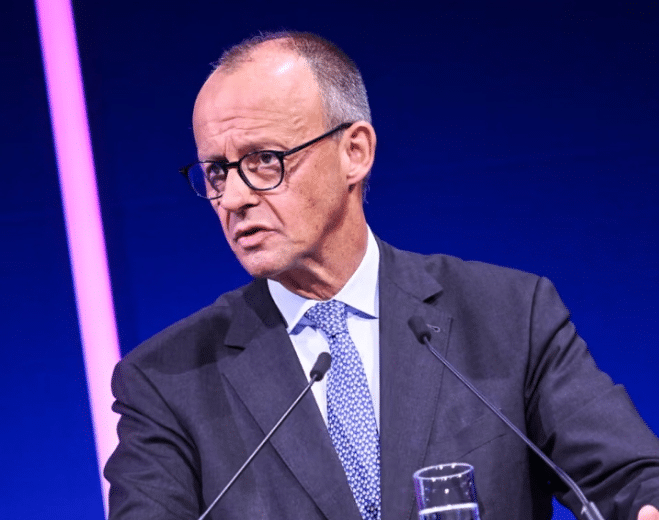
Chancellor Friedrich Merz has ignited a national debate by declaring that Syrian asylum in Germany is no longer necessary following the official end of Syria’s devastating civil war.
During the brutal fourteen-year conflict, Germany emerged as the European Union’s most generous host, accepting more Syrian refugees than any other EU country. That era, Merz insists, is over.
He argues that the fall of Bashar al-Assad’s government nearly a year ago has changed the situation drastically, and Syrians now have a duty to return and rebuild their country.
In his remarks, Merz stated that Syrians living in Germany had been offered protection during wartime, but now peace demands their participation in reconstruction.
“There are no longer any grounds for asylum in Germany,” Merz said, insisting deportations could start soon. “Repatriations can begin, and those refusing voluntary return will face consequences.”
His comments immediately triggered political tension within Germany’s ruling coalition and raised difficult questions about the country’s humanitarian image and economic needs.
Foreign Minister Johann Wadephul recently visited Damascus, where he expressed doubts that conditions were yet safe for mass returns of refugees from Germany to Syria.
He warned that widespread destruction, social collapse, and insecurity still make a dignified return unrealistic for many, contradicting Merz’s more optimistic assessment of Syria’s postwar landscape.
Wadephul had earlier supported the tougher asylum stance aimed at curbing far-right momentum, particularly as the Alternative für Deutschland (AfD) gains traction nationwide.
His recent comments signaled a softening tone, however, suggesting that while the government shared the goal of eventual return, the human realities could not be ignored.
That subtle shift drew criticism from conservative members of Merz’s Christian Democratic Union, who accused Wadephul of undermining national objectives and discouraging return efforts.
Merz’s critics argue that his plan overlooks the vital contributions of Syrians to Germany’s economy, especially in sectors where shortages are growing acute.
Germany’s aging population and labour gaps have made immigrants, particularly Syrians, indispensable in areas such as healthcare, construction, and logistics.
Official figures show that more than 7,000 Syrian doctors are working across Germany, many in rural regions that have long struggled to attract medical professionals.
Beyond healthcare, Syrians have integrated rapidly, mastering the language and joining the workforce, contributing to taxes and sustaining regional economies.
Of the roughly 1.3 million Syrians residing in Germany, about a quarter were born there, and many others have acquired citizenship after years of legal residence.
Still, a large proportion hold only temporary permits, leaving them vulnerable to policy shifts like the one Merz proposes regarding Syrian asylum in Germany.
Analysts note that the chancellor’s statement may be as much political as practical, reflecting pressure ahead of crucial state elections next year.
The AfD continues to exploit anti-immigrant sentiments, portraying itself as the defender of German identity while attacking mainstream parties for what it calls weak migration controls.
Five regional elections in 2026 will test how far these narratives have penetrated traditional conservative strongholds, especially in eastern states where AfD support runs high.
Observers believe Merz’s tougher line on Syrian asylum in Germany aims to blunt the AfD’s appeal by reclaiming the law-and-order mantle for the Christian Democrats.
However, human rights organizations warn that Syria remains unsafe, citing reports of arbitrary arrests, forced conscription, and repression under the transitional government.
They argue that sending refugees back now would violate international norms and expose returnees to serious risks despite the nominal end of the conflict.
The United Nations and the European Commission have also stressed that repatriation must be voluntary and tied to verifiable guarantees of safety and dignity.
German public opinion remains sharply divided, with some supporting Merz’s argument that Syrians should help rebuild, while others stress integration success and moral responsibility.
A recent poll found that nearly half of Germans believe the country has done enough for refugees, but a sizable minority favour maintaining protection until Syria stabilizes fully.
The debate has also stirred discussion about what “return” truly means for second-generation Syrians who have never seen their parents’ homeland.
For these younger citizens, Germany is home, and the idea of deportation feels like punishment for a war they never experienced directly.
Community leaders emphasize that many Syrians wish to contribute both to Germany and to Syria’s reconstruction, but not under duress or threat of deportation.
They warn that forced removals could unravel years of successful integration and strain social cohesion at a time of growing political polarization.
Economists caution that large-scale deportations could harm key industries already struggling with worker shortages and an aging native workforce.
The health sector, manufacturing, and skilled trades depend heavily on immigrants, and sudden departures could deepen the country’s demographic crisis.
Employers’ associations have urged the government to adopt a balanced approach, protecting humanitarian values while preserving the economic contributions of Syrians.
The Federation of German Industries recently stated that integration success stories should be celebrated, not undone, calling for “pragmatic compassion” in migration policy.
Despite these concerns, Merz has doubled down on his plan, confirming that talks are underway with Syria’s interim administration about deporting criminal offenders first.
He revealed that he has invited Syria’s interim president, Ahmed al-Sharaa, to Berlin to discuss repatriation frameworks and cooperation on postwar rebuilding.
The initiative would mark the first direct German-Syrian diplomatic engagement since the fall of Assad’s regime, symbolizing cautious normalization after years of isolation.
Wadephul later clarified that he still supports increased deportations overall but wants careful vetting to avoid humanitarian backlash or international condemnation.
The issue escalated further after Berlin police arrested a 22-year-old Syrian man accused of plotting an Islamist suicide attack last weekend; a situation many see as triggering Friedrich Merz asylum policy against Syrian asylum in Germany.
That arrest reignited fears about radicalization and prompted right-wing parties to claim vindication for tougher asylum policies and stricter deportation enforcement.
AfD co-leader Alice Weidel described Wadephul’s recent empathy for refugees as “a slap in the face to victims of Islamist violence,” reigniting outrage among her base.
She accused the ruling coalition of hypocrisy, claiming they tolerated dangerous migrants while posturing as defenders of national security.
Merz’s remarks, though controversial, resonated with some voters who perceive a link between migration and security threats, even as experts urge against such generalizations.
Law enforcement officials confirm that the vast majority of Syrians in Germany are law-abiding, contributing members of society who reject extremism outright.
Yet the political climate remains volatile, and sensational incidents often dominate headlines, overshadowing the broader realities of successful integration.
In Syrian communities across Germany, Merz’s statement has created fear and uncertainty, with many unsure whether their legal status will soon be revoked.
Local NGOs report increased anxiety among refugees who fear being forced back to a homeland still scarred by violence and economic collapse.
Many Syrians who once hoped to return voluntarily now express doubt, citing safety concerns, loss of property, and lack of jobs in postwar Syria.
German church groups, human rights advocates, and refugee networks have urged the government to ensure fairness, compassion, and due process for all asylum cases especially Syrian asylum in Germany.
They emphasize that policies on Syrian asylum in Germany must not ignore human dignity or Germany’s long-standing postwar commitment to international protection.

While the chancellor’s call for repatriation reflects a growing trend toward restrictive migration policies across Europe, critics see Syrian asylum in Germany as politically motivated symbolism.
For now, the government faces a delicate balancing act between domestic political pressures, moral obligations, and practical economic realities.
The future of Syrian asylum in Germany will depend on whether the country prioritizes political expediency or human-centered policy in the months ahead.
What remains clear is that this issue will continue shaping Germany’s identity debate, migration strategy, and role within a changing European Union.
As Syrians weigh the prospect of return, many express gratitude for safety in Germany but also uncertainty about where they truly belong.
The coming months may determine whether Germany’s migration story ends in forced departures or in a renewed vision of shared rebuilding between nations as Syrian asylum in Germany debates on.