Merz Rejects Calls to Quit After Major Election Setback
Friedrich Merz vows to stay in office despite a devastating electoral setback for his conservative Christian Democratic Union (CDU), after the far-right Alternative for Germany (AfD) delivered a major victory in Saxony-Anhalt and intensified pressure on the German chancellor.
The result has created one of the most difficult political moments of Merz’s relatively short tenure, with the AfD securing almost 44 percent of the vote in the eastern German state and leaving the CDU with only about 17 percent.
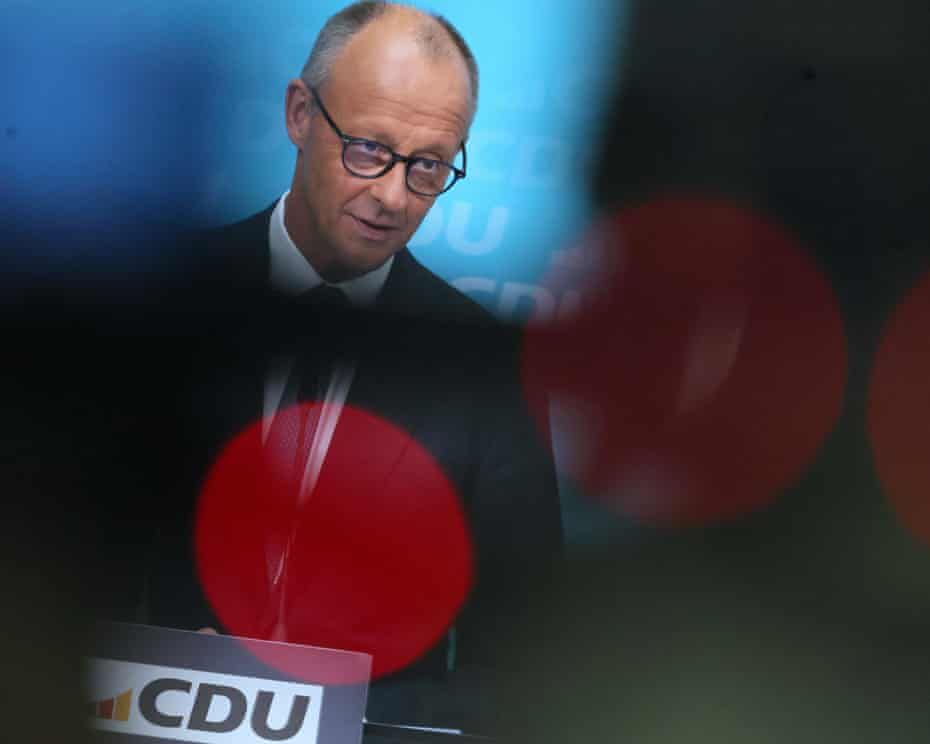
Speaking in Berlin after the result, Merz acknowledged the seriousness of the defeat, describing it as the worst setback suffered by the CDU in years or even decades. He also admitted that the outcome would have to produce political consequences within his party.
The chancellor, however, rejected any suggestion that he should immediately step aside. Instead, Merz said his determination to continue with his programme of economic and social reforms remained unchanged, insisting that abandoning his political course was not an option.
“This is the worst electoral defeat the CDU has suffered in years, in decades,” Merz said, while acknowledging that his own performance and communication with voters had become major issues during the campaign.
AfD Victory Deepens Pressure on the CDU
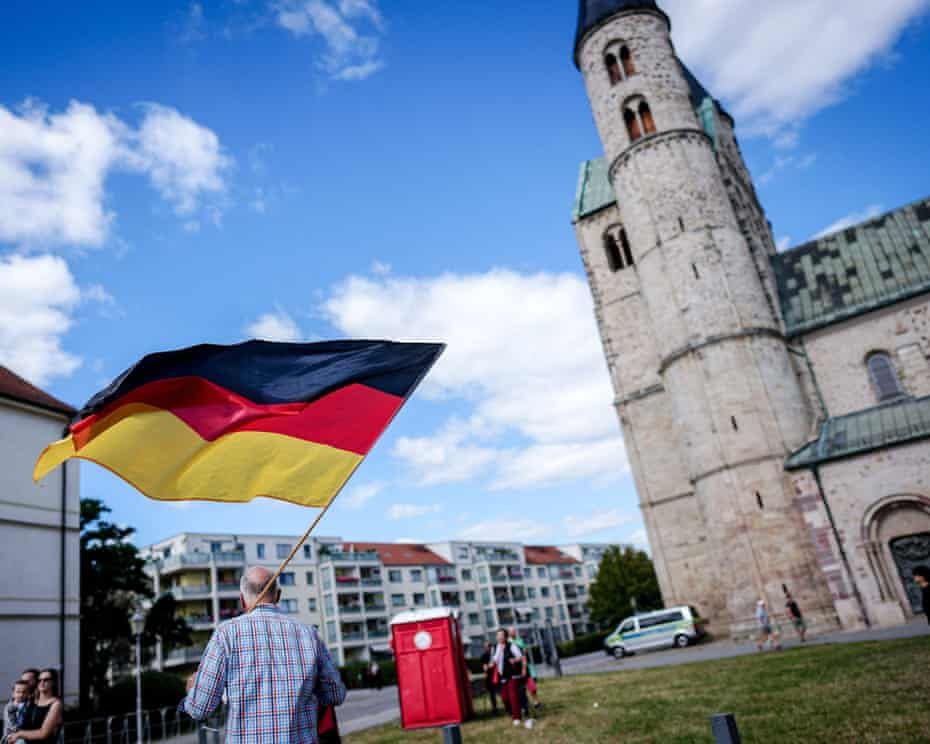
The AfD victory in Saxony-Anhalt was particularly damaging because the eastern state has historically been an important area of support for the CDU. The scale of the result demonstrated the extent to which the far-right party has transformed itself from a protest movement into a major electoral force.
AfD candidate Ulrich Siegmund fell short of securing an outright majority, meaning the party cannot automatically form a government on its own. Nevertheless, it finished only three seats short of the threshold required for a majority in the state parliament.
That narrow gap has raised the possibility of political manoeuvring in which AfD lawmakers could attempt to attract support from politicians belonging to other parties. Such a development would test Germany’s long-standing refusal among mainstream political parties to formally cooperate with the far right.
Siegmund, a 35-year-old former fragrance salesman who became a highly visible campaign figure, used the result to mock Merz and portray him as an effective campaigner for the AfD. His comments reflected the confidence that has emerged within the party following its overwhelming performance.
The CDU’s own state premier, Sven Schulze, conceded that his party had suffered such a severe defeat that it no longer possessed a convincing mandate to govern. The CDU could theoretically attempt to construct a coalition with other parties, but such an arrangement would be politically complicated and potentially unstable.
Merz Admits Communication Failure
For Merz, the election has also become a personal political warning. Exit polling suggested that voters were deeply dissatisfied with the established political parties and their handling of Germany’s economic difficulties, while only a small proportion expressed approval of the chancellor’s performance.
Merz acknowledged that his personal popularity had become an important factor in the election, rather than attempting to distance himself completely from the CDU’s defeat. He said he and his party needed to communicate more effectively with citizens and engage with the full range of emotions influencing voters.
His admission reflects a broader problem confronting Germany’s mainstream political establishment. Economic concerns, dissatisfaction with government policies, immigration, social welfare and fears about the future of major industries have created fertile ground for parties campaigning against the political status quo.
The CDU leader therefore faces a difficult balancing act. He must attempt to win back voters attracted to the AfD without abandoning the political principles and constitutional safeguards that Germany’s mainstream parties have traditionally defended.
Far Right Gains Raise Wider Concerns
The CDU electoral defeat has generated concern well beyond Saxony-Anhalt because the AfD’s performance could influence two other regional elections scheduled for September 20, including the vote in Berlin and another election in the eastern state of Mecklenburg-Western Pomerania.
The AfD is already polling strongly at national level, with party co-leader Alice Weidel declaring after the Saxony-Anhalt result that the party would target 40 percent at the next federal election, scheduled for 2029. Current national polling places the party at roughly 28 percent.
Read also: Miami cargo plane crash kills five, injures five at airport
The party’s growing influence has also raised questions about Germany’s so-called political “firewall”, under which mainstream parties have refused formal cooperation with the AfD. Critics of the strategy argue that keeping the party permanently outside government has not weakened it and may instead have strengthened its appeal among voters who see it as an alternative to the establishment.
The AfD’s regional branch in Saxony-Anhalt has been classified as confirmed rightwing extremist by Germany’s domestic intelligence service. The party has also campaigned for significantly tougher immigration policies, including mass deportations that critics argue could conflict with German and European law.
Its political programme extends beyond immigration, however, with the party also criticising government support for public broadcasters and cultural institutions it considers insufficiently patriotic. Those positions have triggered fears about the future of Germany’s cultural and democratic institutions if the AfD eventually gains control of regional governments.
Chancellor Defends Reform Programme
Despite the political damage, Merz insisted that his government would continue pursuing reforms to Germany’s pension and healthcare systems. His coalition partner, the Social Democratic Party, has signalled some willingness to soften contentious proposals as the government seeks to maintain political stability.
Merz argued that Germany needs sustainable social security systems capable of supporting future generations, saying his determination to pursue reform remained intact. He presented the programme as a long-term responsibility rather than a political project that could be abandoned following a difficult election.
The chancellor also sought to reassure Germany’s international partners and domestic minorities that the country’s institutions would remain stable. He stressed that Germany’s history imposes a particular responsibility on its political leaders to protect democratic values and constitutional principles.
The issue of Ukraine and Russia also featured prominently in Merz’s response. He said his government would remain committed to supporting Ukraine and would not retreat from his fundamental belief that Germany and its allies must defend their freedom against Russian aggression.
Merz further argued that Moscow would welcome the AfD’s electoral success, accusing Russia of supporting the far-right party’s campaign amid continuing concerns over alleged interference and sabotage in Germany.
Pressure Builds Around Merz
Although the CDU leadership has publicly rallied around its chairman, criticism from influential figures has already begun. Some commentators have openly demanded that Merz be replaced, arguing that the Saxony-Anhalt result demonstrated that his leadership has become a liability for the conservative party.
One prominent critic, Der Spiegel editor-in-chief Dirk Kurbjuweit, called for a political fresh start and argued that Merz was the wrong leader for Germany at this moment. Such criticism illustrates how quickly an electoral defeat can evolve into a leadership crisis within a major European governing party.
Yet removing a sitting German chancellor is not a simple political procedure. Merz remains determined to continue governing, and the immediate challenge for the CDU is to prevent the AfD’s regional breakthrough from becoming a wider national collapse.
The economic backdrop makes that task even more difficult. Germany has faced significant pressure in sectors including steel, chemicals and automobiles, while concerns about competitiveness and economic stagnation have contributed to public dissatisfaction.
For now, the Germany far-right politics debate has entered a new phase. The AfD has demonstrated that it can dominate a state election, while Merz must convince voters that the mainstream political establishment can still deliver economic security, effective government and credible solutions to concerns over immigration.
The coming regional elections will therefore be closely watched as a test of whether Saxony-Anhalt was an isolated political shock or evidence of a much larger transformation underway in Germany.
For Merz, the immediate priority is clear: retain control of his government, rebuild confidence in the CDU and prevent the AfD’s latest triumph from becoming the beginning of a broader national political realignment.
About The Author