Nigeria’s Federal Government is exploring new measures to stabilise domestic fuel production by facilitating additional crude oil supply for the Dangote Petroleum Refinery through international trading channels.
Industry officials disclosed that the initiative is being coordinated by the Nigerian National Petroleum Company Limited (NNPCL), which is working with global crude traders to ensure that the refinery continues operating at sustainable levels despite supply challenges.
The move comes as Nigerians face rising petrol prices following recent adjustments in fuel costs, with pump prices now exceeding N1,000 per litre in several parts of the country.
Energy analysts say improving crude availability to local refineries could play a key role in stabilising supply and moderating price volatility in the domestic fuel market.
Dangote refinery crude supply becomes key to stabilising fuel market
The issue of Dangote refinery crude supply has become central to discussions about Nigeria’s energy security and fuel pricing.
Sources within the oil sector revealed that the government is considering arrangements that would allow NNPCL to source crude from international suppliers through third-party trading networks and redirect it to the Lekki-based refinery.
The development follows reports that the refinery recently paused the loading of Premium Motor Spirit (PMS), a move that raised concerns among marketers and consumers about the possibility of another petrol price increase.
Market participants say the temporary halt in petrol loading highlighted the challenges facing domestic refining operations, particularly when crude feedstock supply becomes constrained.
The refinery requires a consistent stream of crude to maintain its production capacity, and disruptions in supply can quickly affect fuel distribution across the country.
Global oil market tensions complicate supply
Another factor influencing the Dangote refinery crude supply situation is the volatility in global oil markets.
Recent geopolitical tensions in the Middle East have disrupted parts of the global energy supply chain and pushed crude prices higher.
Benchmark crude prices have climbed above $90 per barrel in recent weeks, largely due to concerns about potential disruptions along the strategic Strait of Hormuz shipping route.
Industry experts note that rising global crude prices make it more expensive for refiners to procure feedstock, which can subsequently affect the cost of refined petroleum products.
A source familiar with the discussions said NNPCL is leveraging its international trading relationships to obtain crude cargoes at competitive market prices for the refinery.
The arrangement, according to the source, aims to prevent operational disruptions that could worsen the country’s fuel supply situation.
Domestic supply challenges persist
Despite Nigeria’s position as one of Africa’s largest oil producers, domestic refineries have struggled to obtain adequate crude allocations.
Data from the Nigerian Upstream Petroleum Regulatory Commission indicates that the volume of crude supplied to local refineries has often fallen short of industry demand.
Between January and August 2025, domestic refiners reportedly received around 67.66 million barrels of crude, significantly below the more than 120 million barrels requested for the same period.
This shortfall has forced some refineries, including the Dangote facility, to rely increasingly on imported crude supplies.
Market intelligence firm Kpler reported that Nigeria’s imports of crude oil from the United States rose significantly last year.
Imports climbed to more than 41 million barrels in 2025, representing a sharp increase compared to roughly 15 million barrels in 2024.
Analysts say this shift highlights the paradox of Africa’s largest crude oil producer increasingly relying on foreign crude to support its refining operations.
Naira-for-crude policy under scrutiny
Stakeholders within the oil sector say the success of the government’s naira-for-crude policy will determine how effectively the Dangote refinery crude supply challenge is addressed.
Under the arrangement, local refineries are expected to receive crude oil from NNPCL and make payment in naira rather than foreign currency.
Industry experts believe the policy could help reduce pressure on Nigeria’s foreign exchange market while ensuring steady supply for domestic refineries.
However, refinery officials have indicated that the number of crude cargoes currently supplied each month is still below operational requirements.
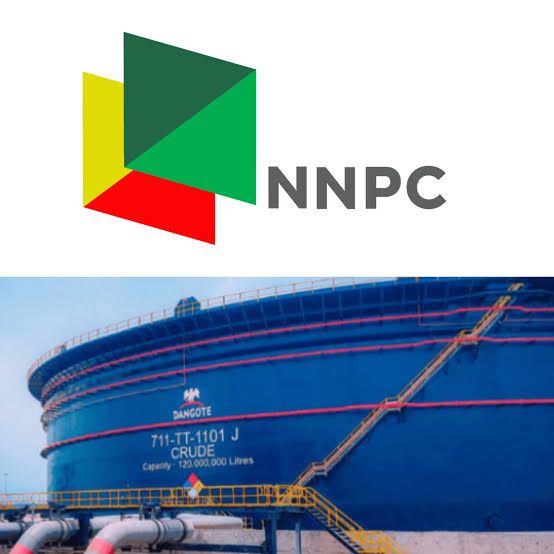
Sources said the refinery typically needs around 13 cargoes of crude monthly to sustain full production, but it currently receives only about five cargoes through existing supply arrangements.
As a result, the refinery must procure additional crude from international markets at prevailing global prices.
Impact on petrol prices
Despite the government’s efforts to improve Dangote refinery crude supply, experts warn that petrol prices may not decline immediately.
The cost of crude oil remains a major factor in determining the final price of refined petroleum products.
Energy analysts say the broader global energy market, as well as logistics costs and operational expenses, also influence petrol pricing in Nigeria.
Nevertheless, industry observers note that the presence of the Dangote refinery has already helped cushion the impact of global supply disruptions.
Without the facility’s refining capacity, analysts believe petrol prices in Nigeria could have risen significantly higher in the current market environment.
Calls for broader market competition
Some energy analysts have also highlighted the importance of encouraging balanced competition within the petroleum sector.
They argue that allowing controlled fuel imports alongside domestic refining could strengthen supply security and help stabilise prices.
According to market experts, a system where domestic refineries provide the majority of supply while limited imports fill the remaining gap could create a more resilient fuel distribution network.
For now, authorities and industry stakeholders continue to monitor developments in the energy market as Nigeria navigates the complex challenges of crude supply, refining capacity, and global oil price volatility.
About The Author