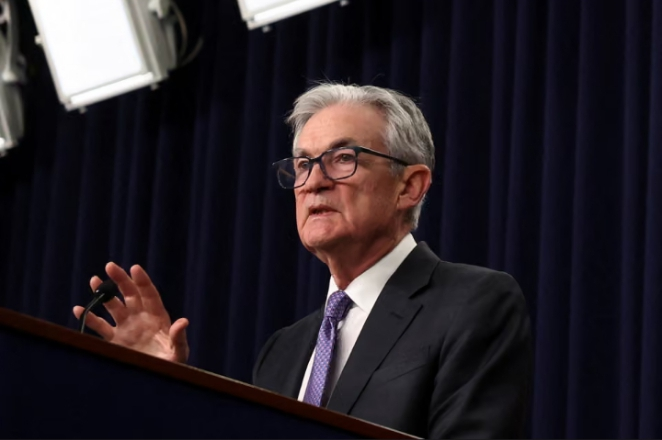
Trump revives Greenland claims– European leaders are scrambling to contain a growing transatlantic crisis after US president Donald Trump once again suggested that American control of Greenland is essential to US national security, triggering alarm across the European Union and Nato.
The EU and Nato response to Trump Greenland claim has exposed deep anxieties about alliance unity, Arctic security and the limits of European power when confronted by pressure from Washington.
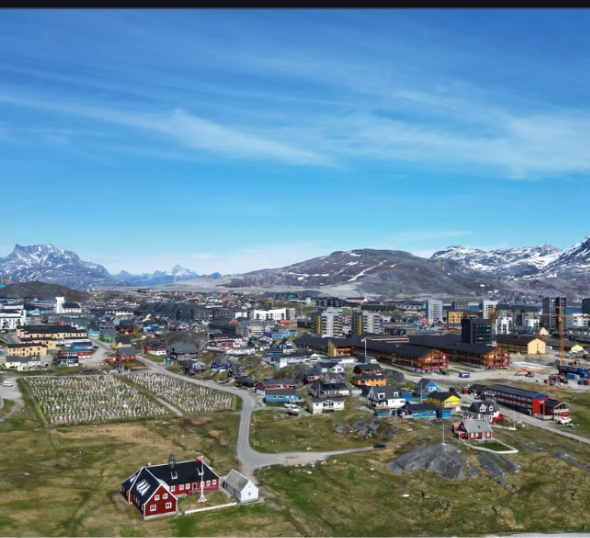
Greenland, an autonomous territory within the Kingdom of Denmark, occupies a strategically vital position in the Arctic, an area of increasing geopolitical competition due to melting ice, emerging shipping routes and access to critical minerals.
While Greenland governs most of its domestic affairs, Denmark retains responsibility for defence and foreign policy, meaning any US attempt to assert control would directly affect both Copenhagen and its European partners.
Trump’s remarks have placed Nato in an especially awkward position. Denmark is a full member of the alliance, and Greenland falls under Nato’s collective defence umbrella.
Any hostile move against the island would therefore amount to one Nato member threatening another, a scenario that alliance officials fear could fatally undermine Nato’s credibility.
European leaders have publicly reaffirmed their support for Danish and Greenlandic sovereignty, but behind closed doors there is uncertainty about how to deter further escalation without provoking a broader confrontation with the United States.
Diplomatic engagement is the first and most immediate option being pursued. Danish and Greenlandic representatives have intensified outreach efforts in Washington, targeting US lawmakers and defence officials in the hope of tempering Trump’s rhetoric.
Their argument centres on the fact that existing agreements already give the United States extensive military access to Greenland.
A defence treaty dating back to 1951, and later updated, allows the US to expand its military presence, build infrastructure and operate strategically from the island without challenging sovereignty.
European diplomats believe that reminding US policymakers of these arrangements could help reassure Washington that its security interests are already protected.
They are also seeking to reframe the issue as one of alliance solidarity, warning that any attempt to seize Greenland would have catastrophic consequences for Nato itself.
The message being conveyed is that an internal conflict within the alliance would hand a strategic victory to rival powers such as Russia and China.
At the same time, Nato has been discussing ways to strengthen its Arctic posture to address US concerns about regional security.
Alliance ambassadors have reportedly agreed in principle on increasing military activity in the Arctic, including larger exercises, more frequent patrols and additional deployments of equipment.
The aim is to demonstrate that Greenland is not a security vacuum and that western allies are committed to defending the region collectively.
Although Trump has claimed that Greenland is surrounded by hostile Chinese and Russian activity, European officials privately dismiss such statements as exaggerated.
Nevertheless, they acknowledge that Arctic competition is real and that visible Nato engagement could serve as a face-saving compromise that reduces pressure for more drastic US action.
Some officials have pointed to existing Nato operations in other regions as potential models for enhanced Arctic cooperation.
Economic leverage represents another, more contentious, tool available to the EU. In theory, the bloc has significant power given the size of its internal market and the depth of economic ties with the United States.
European policymakers could consider retaliatory measures ranging from trade restrictions to limits on investment access if Washington attempted to coerce Denmark or Greenland.
The most powerful option would be the EU’s anti-coercion instrument, often described as a “trade bazooka”, which allows the European Commission to impose sweeping restrictions on goods, services and investments from countries deemed to be applying economic pressure.
However, deploying such measures against the US would require consensus among EU member states, many of which are reluctant to risk a trade war with their most important security partner.
There is also widespread scepticism about whether economic threats would be credible enough to influence Trump’s calculations.
Europe remains heavily dependent on American technology companies across multiple sectors, including defence, artificial intelligence and digital infrastructure.
This dependence weakens the EU’s ability to follow through on sanctions without inflicting serious damage on its own economy.
Beyond diplomacy and sanctions, European leaders are also considering how increased investment in Greenland could reduce its vulnerability to external pressure.
Greenland’s economy relies heavily on annual financial support from Denmark, which accounts for a significant share of its public spending and gross domestic product.
Trump has repeatedly suggested that the US could offer large-scale investment, framing American involvement as an economic opportunity for the island.
In response, the EU has explored ways to expand its own financial commitments to Greenland. Proposals under discussion include matching Danish subsidies in the coming years and opening access to additional EU funding programmes designed for remote or associated territories.
The goal is to ensure that Greenland’s future economic development remains anchored in Europe rather than becoming dependent on US capital.
This approach is particularly significant given Greenland’s long-term political trajectory. Many observers expect the island to eventually seek full independence from Denmark, a move that could reshape power dynamics in the Arctic.
European officials believe that sustained economic engagement now could strengthen ties and reassure Greenlanders that independence would not mean isolation or vulnerability to external exploitation.
The most controversial option under discussion is the potential deployment of European troops to Greenland. While no decision has been taken, some policymakers and analysts argue that a limited military presence, agreed with Denmark and Greenland, could serve as a powerful deterrent.
The logic is that the presence of European forces would raise the political cost of any US attempt to assert control, even without the threat of armed confrontation.
Supporters of this idea argue that the symbolic impact would be significant. The image of US forces confronting or detaining European troops would cause immense damage to America’s global reputation and strain relations with allies and Congress alike.
Critics, however, warn that such a move risks escalating tensions and could be perceived in Washington as a direct challenge.
Several European governments have acknowledged that contingency planning is under way. German and French officials have publicly confirmed that they are considering deterrence options, including potential deployments, should the situation deteriorate.
These discussions reflect a growing recognition in Europe that reliance on diplomatic protest alone may be insufficient in dealing with an unpredictable US administration.
Read also: Americans on the run as US warns of paramilitary threats in Venezuela
Despite the seriousness of the situation, few in Europe believe that an outright military clash between the US and its allies is likely or desirable.
The prevailing hope is that a combination of diplomatic pressure, alliance signalling, economic engagement and limited deterrence measures will convince Trump that the costs of pursuing control over Greenland outweigh any perceived benefits.
The crisis has nonetheless exposed deeper questions about Europe’s strategic autonomy and its ability to defend its interests when they diverge from those of Washington.
The EU and Nato response to Trump Greenland claim is being closely watched as a test of whether Europe can act collectively in the face of pressure from its most powerful ally, or whether internal divisions will once again limit its options.
For now, European leaders are focused on buying time and lowering the temperature. Whether that strategy succeeds may depend less on European unity than on the calculations of a US president who has shown little regard for traditional diplomatic constraints.
About The Author