

The world watches in mounting fear as RSF control of Sudan’s el-Fasher intensifies, trapping civilians and igniting international outrage over reported atrocities across the devastated city.
United Nations officials describe el-Fasher as a city on the brink of total collapse, where hunger, displacement, and targeted killings have become a grim daily reality.
UN humanitarian chief Tom Fletcher issued a dire warning, demanding urgent protection and safe passage for civilians trapped in North Darfur’s capital as Rapid Support Forces advance relentlessly.
Fletcher declared the situation “catastrophic,” emphasizing that families are cornered between artillery bombardments and street battles, with dwindling food supplies and no medical access amid complete communication blackouts.
He stated that the RSF control of Sudan’s el-Fasher represents a humanitarian tipping point, with hundreds of thousands of civilians isolated and facing the horror of systematic violence.

Satellite imagery and field reports reveal entire neighborhoods reduced to rubble, hospitals destroyed, and thousands of displaced residents forced to seek shelter in makeshift camps without clean water.
UN Secretary-General Antonio Guterres condemned the offensive, warning of a “terrible escalation” that risks transforming Sudan’s civil war into a regional catastrophe involving foreign backers and mercenary groups.
Speaking from Kuala Lumpur, Guterres demanded an immediate halt to weapons transfers fueling the conflict, accusing external actors of prolonging Sudan’s agony for geopolitical gain and resource exploitation.
He urged both the Sudanese Armed Forces and the RSF to cease hostilities, stressing that continued aggression will erase any prospect for peace or civilian survival in Darfur.
For more than 18 months, the RSF has encircled el-Fasher, the army’s final northern stronghold, transforming the once-bustling city into a suffocating battlefield of fear and starvation.
Witnesses describe markets turned into morgues, schools converted into shelters, and children dying of malnutrition as humanitarian convoys remain blocked by snipers and exploding shells.
Aid groups say at least 250,000 civilians are trapped inside el-Fasher, with another half a million forced into perilous desert escapes to avoid RSF-controlled corridors.
Doctors report bodies left decomposing on streets, and medical teams operating without electricity or anesthesia, struggling to treat shrapnel wounds and gunfire injuries under constant bombardment.
“The situation is unspeakable,” one aid worker said anonymously. “No one can move without being shot. Civilians are starving and terrified. This is hell on earth.”
Fletcher demanded unimpeded humanitarian corridors, urging immediate ceasefire implementation and calling the RSF control of Sudan’s el-Fasher an unprecedented collapse of international accountability mechanisms.
The RSF, led by General Mohamed Hamdan Dagalo, known as Hemeti, claims victory over government forces, asserting it will maintain order and protect civilians from further harm.
However, rights organizations accuse the paramilitary of ethnic massacres, looting, and using starvation as a weapon, repeating patterns of violence from Sudan’s dark history in Darfur; reeling from Sudan Civil war atrocities.
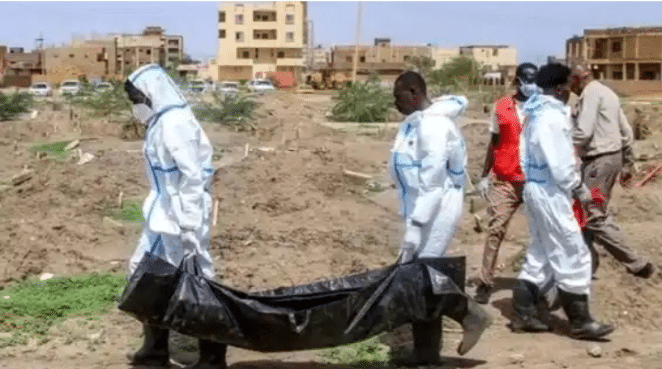
The Sudan Doctors Network alleged that RSF units executed unarmed civilians “on ethnic grounds,” warning that dozens have been killed and bodies dumped in open fields.
Due to the city’s isolation, independent verification remains impossible, though multiple humanitarian monitors corroborate reports of systematic executions and forced disappearances targeting specific ethnic groups.
Governor Minni Minnawi of Darfur, allied with Sudan’s army, demanded an international investigation into alleged massacres, urging global powers not to remain silent as atrocities unfold.
Minnawi condemned the RSF’s “criminal occupation,” accusing it of pursuing the complete ethnic cleansing of Darfur while exploiting the chaos for territorial and political consolidation.
Meanwhile, Sudan’s Information Minister Khaled al-Aisir dismissed RSF victory claims as “psychological warfare,” insisting government forces continue holding key sectors within el-Fasher’s southern perimeter.
He asserted that the “rebellion has collapsed” in several regions and accused RSF media networks of fabricating images to demoralize civilians and discredit the Sudanese military establishment.
Nevertheless, analysts warn that the RSF control of Sudan’s el-Fasher signifies a major shift in the civil war, likely cementing the group’s dominance over the entire Darfur region.
Al Jazeera correspondent Hiba Morgan reported from Khartoum that RSF’s military success could grant it near-total autonomy in western Sudan, potentially setting the stage for secessionist ambitions.
“This could fragment Sudan permanently,” Morgan said. “If Darfur slips fully under RSF rule, the central government loses strategic depth, resources, and its last link to western command.”
Experts argue that the takeover also undermines international mediation, as no peace deal can succeed if one side feels militarily invincible or internationally untouchable.
Guterres warned that “the humanitarian situation in Sudan has become unbearable,” calling for all nations complicit in arming either faction to withdraw their involvement immediately.
Aid officials report warehouses torched, food convoys hijacked, and fuel depots seized by RSF fighters, leaving millions without humanitarian support as the war enters its third year.
Sudan’s civil war, raging since April 2023, has killed tens of thousands and displaced over 12 million, marking one of the worst humanitarian crises of the twenty-first century.
The RSF control of Sudan’s el-Fasher now threatens to widen the conflict into neighboring Chad, South Sudan, and the Central African Republic through refugee flows and cross-border violence.
Regional analysts fear that with el-Fasher under siege, RSF may attempt to cut remaining supply lines from Khartoum, effectively starving resistance and consolidating its new western empire.
Human rights defenders have urged the African Union to deploy emergency observers, warning that silence and delay could enable another genocide reminiscent of Darfur’s early 2000s atrocities.
The International Criminal Court has already opened preliminary investigations into possible war crimes, including the targeting of ethnic groups and destruction of civilian infrastructure in el-Fasher.
Satellite footage analyzed by conflict researchers indicates scorched villages surrounding the city, suggesting deliberate arson aimed at depopulating the area to secure RSF territorial dominance.
Thousands continue to flee toward Chad’s border, braving armed checkpoints and air raids, while many remain missing after being captured along major escape routes.
Despite repeated UN appeals, both warring parties continue rejecting ceasefire proposals, accusing each other of obstruction, betrayal, and international manipulation.
In a statement posted online, the RSF declared its readiness for “governance,” signaling intentions to administer Darfur independently and implement what it described as “self-rule reforms.”
Diplomatic observers view that declaration as an alarming precursor to Sudan’s potential fragmentation, possibly igniting fresh conflicts between local militias and armed tribal factions.
Western governments have issued stern condemnations but stopped short of coordinated intervention, citing concerns over escalation and resource strain in an already destabilized Horn of Africa.
Humanitarian agencies are calling for a no-fly zone to protect civilians and critical infrastructure, but such a move requires Security Council consensus—currently blocked by rival geopolitical interests.
In el-Fasher, communication blackouts persist as residents depend on smuggled satellite phones to contact relatives abroad, pleading for evacuation, food, and medical help that rarely arrives.

Fletcher reaffirmed that “only a sustained ceasefire and unrestricted humanitarian access can avert total collapse,” warning that the RSF control of Sudan’s el-Fasher risks becoming a genocide in slow motion.
International outrage continues to build as graphic testimonies and satellite evidence expose a landscape of ruin, desperation, and unchecked paramilitary brutality against defenseless civilians.
Observers warn that if global powers delay decisive action, Darfur could fall completely under RSF command, entrenching a militarized state built on fear, hunger, and ethnic persecution.
As aid convoys line up at Sudan’s borders, blocked by bureaucracy and gunfire, time is running out for the survivors of el-Fasher’s relentless siege.
The world faces a defining test: whether it will confront the RSF control of Sudan’s el-Fasher with unified resolve—or repeat the indifference that once enabled mass atrocities in Darfur.


