

The Labour poll rise after Burnham Brexit pledge has put the party back on top of the latest Opinium voting-intention survey, with Labour reaching 30 per cent while Reform UK stands at 25 per cent.
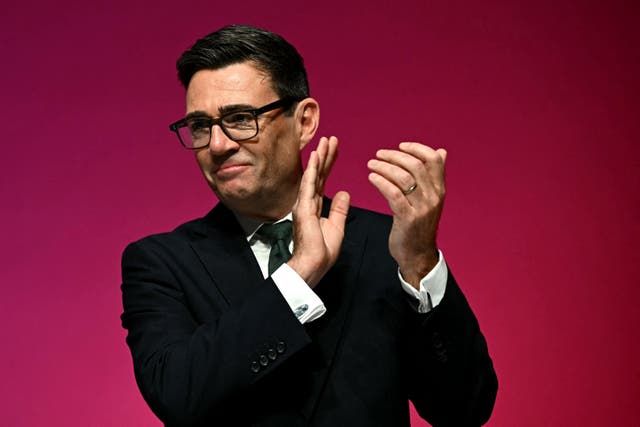
The poll was conducted in the days after Prime Minister Andy Burnham’s Labour Party conference speech, in which he outlined proposals on Britain’s future relationship with the European Union, social care and state pensions.
The findings show that several of Burnham’s announcements attracted support among those surveyed, although the figures measure public opinion at the time of the poll rather than proving that any particular announcement caused the movement in voting intention.
Labour Returns to 30 Per Cent
Labour increased its voting intention by two points to 30 per cent, according to the latest Opinium survey reported by The Independent.
That puts Labour five points ahead of Reform UK, which recorded 25 per cent after rising by one point.
The Conservatives were on 17 per cent, while the Greens reached 11 per cent after gaining one point. The Liberal Democrats stood at nine per cent after losing one point.
Labour’s 30 per cent figure was described as its highest rating since 2024 in the report.
The result also represents a change from Opinium’s previous September polling. On September 23-25, Labour was on 28 per cent, with Reform UK on 24 per cent and the Conservatives on 17 per cent.
The latest survey therefore provides a snapshot of voting intentions following Labour conference and Burnham’s first major party speech as prime minister.
Burnham Opens Door to Rejoining EU
A central feature of Burnham’s conference speech was his criticism of the consequences of Brexit and his pledge to examine options for Britain’s future relationship with Brussels.
He said Brexit had “done more harm than good” and argued that Britain needed a long-term relationship with the European Union that reflected its position as the country’s largest market.
Burnham said the government would use an upcoming UK-EU summit to examine possible changes to the relationship.
He subsequently said the options could potentially extend “all the way” to rejoining the European Union if that was what public opinion ultimately supported.
He also declined to rule out putting a commitment to rejoin the EU in Labour’s next election manifesto.
The latest Opinium survey found that 54 per cent of respondents agreed Burnham was taking the right approach by considering all options for Britain’s future relationship with the EU.
Twenty-five per cent said it was the wrong approach.
Brexit Views Remain Divided
The poll also asked respondents how they assessed the consequences of Brexit.
Forty-six per cent said Brexit had done more harm than good, compared with 13 per cent who believed it had done more good than harm.
A further 21 per cent said Brexit had produced an equal amount of good and harm.
The findings came alongside another major poll reported the same day that examined public attitudes towards Britain rejoining the European Union.
A Messina Group megapoll of 11,461 people found 49 per cent supporting rejoining the EU and 28.5 per cent opposing it, according to The Independent’s report.
Those figures provide additional context for the debate surrounding Burnham’s decision to reopen discussion about Britain’s long-term relationship with the bloc.
National Care Service Gains Public Support
Brexit was not the only major announcement examined by the Opinium survey.
Burnham also unveiled plans for a National Care Service that would provide free personal care based on need rather than ability to pay.
The government says the service would be introduced in phases and would provide personal care while existing arrangements would continue to apply to accommodation and other costs.
The proposal received support from 48 per cent of those surveyed by Opinium, while 15 per cent opposed the idea.
The poll found support for the National Care Service among voters across the major parties, with even Reform UK voters recording a narrow positive margin on the proposal.
Burnham has presented social care reform as one of the major long-term changes of his government.
The government’s stated plan is to establish the service in the next Parliament, with Baroness Louise Casey’s independent commission expected to make recommendations on how and when it should be built.
Triple Lock Change Also Tested
Another major element of Burnham’s conference speech was his proposal to change the state pension triple lock from April 2030.
The government has confirmed that the existing triple lock will remain in place until April 2030.
After that, the proposed system would guarantee annual increases of at least inflation or 2.5 per cent, while introducing a mechanism intended to ensure that pensioners continue to share in rising earnings over time.
Burnham said the resulting savings would help fund the National Care Service.
In the Opinium survey, 40 per cent supported the proposed change, compared with 23 per cent who opposed it.
Another 22 per cent said they neither supported nor opposed the proposal.
The figures were more divided among people aged over 65. Among that group, 31 per cent supported the change while 42 per cent opposed it.
The government maintains that the current triple lock will continue throughout the present Parliament and says the proposed adjustment would still protect pensioners against inflation while helping maintain the value of the State Pension relative to earnings.
Opinium Examines Burnham’s Personal Rating
The survey also measured attitudes towards Burnham himself.
He recorded a net approval rating of plus eight, according to the figures reported by The Independent, making him the only political leader in the survey with a positive net approval rating.
Kemi Badenoch recorded minus one, while Liberal Democrat leader Ed Davey was on minus six.
Reform UK leader Nigel Farage and Green Party leader Zack Polanski were both on minus 22.
Opinium’s head of policy and public affairs, James Crouch, linked the political attention surrounding the figures to Burnham’s conference performance.
“Andy Burnham clearly knows how to deliver a commanding conference speech, backed by major policy announcements, that dominates the political agenda,” Crouch said.
He added: “The question now is simple: can Kemi Badenoch seize the country’s attention next week in anything like the same way?”
His comments were an assessment of the political impact of the conference and did not establish that Burnham’s announcements were responsible for the movement in voting intention.
Reform UK Remains in Second Place
Reform UK recorded 25 per cent in the latest poll, one point higher than its previous result.
The Conservatives remained on 17 per cent, while the Greens rose to 11 per cent and the Liberal Democrats fell to nine per cent.
The movement comes after several weeks of relatively close polling between Labour and Reform UK.
Opinium’s September 23-25 survey had Labour on 28 per cent and Reform UK on 24 per cent, while the Conservatives were again on 17 per cent.
Earlier in September, Opinium recorded Labour on 27 per cent and Reform UK on 25 per cent in its September 9-11 survey, showing how closely the two parties had been positioned before the Labour conference.
Read more: Ukraine to hit Russian refineries as Zelenskyy says Moscow has adopted ‘new doctrine’ of airstrikes, Russia asks diplomats to leave
The latest figures therefore show a five-point gap between Labour and Reform UK, but polling remains a snapshot of voting intention rather than a forecast of an election result.
Burnham’s Conference Agenda
Burnham’s conference programme extended beyond Brexit, pensions and social care.
He also outlined plans for electoral reform and argued for a different approach to economic growth, public services and the distribution of political power.
His government has presented the National Care Service as part of a broader attempt to address long-standing problems in social care, while the proposed pension changes are intended to provide a source of funding for the new system.
The Brexit announcement, meanwhile, marked a significant change in the political discussion around Britain’s relationship with the EU, with Burnham saying the government should examine the full range of options.
The latest polling suggests that substantial numbers of voters expressed support for several of those individual proposals.
However, the survey should be read as a measurement of public opinion following a major political speech, rather than evidence that any single policy announcement directly produced Labour’s movement in voting intention.
For Burnham and the parties challenging Labour, the figures provide a fresh snapshot of the political landscape after a conference week dominated by Brexit, social care, pensions and the government’s wider programme for Britain.

