For more than 500 days, the El Fasher siege has trapped over 250,000 civilians in a humanitarian nightmare that shows no sign of relief or mercy.
The once-thriving capital of North Darfur now lies in ruin, pounded daily by artillery and drone strikes as the Rapid Support Forces (RSF) tighten their blockade.
New humanitarian assessments describe El Fasher as “uninhabitable,” a wasteland of shattered homes, mass hunger, and desperation, where survival depends on luck and dwindling supplies.
The Sudan conflict that erupted between the national army and the RSF in 2023 has reduced the city to dust, with civilians paying the highest price.
MedGlobal, a U.S.-based humanitarian organization, conducted interviews with nearly 900 people who escaped the siege, revealing lives stripped of safety, food, and hope.
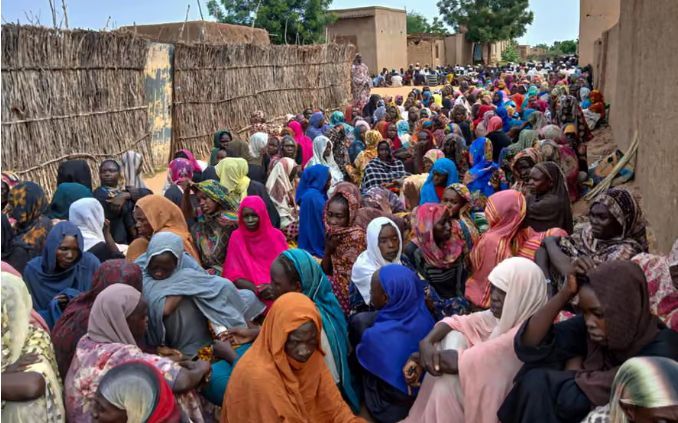
More than 90% of respondents said their homes were destroyed or looted before fleeing, while a quarter had lost a family member within three months.
Those who managed to escape walked for days through perilous terrain to reach Northern State, where aid workers found alarming levels of malnutrition among survivors.
Three-quarters of those interviewed said they “never or rarely” had food during the El Fasher siege, while half said they lacked access to clean water.
MedGlobal’s executive director, Joseph Belliveau, described the situation as “a siege that has pushed people to the edge of survival—starving, wounded, and hopeless.”
Belliveau said testimonies painted a picture of “ubiquitous violence, severe shortages of essentials, and a total collapse of medical care.”
One woman told researchers, “In El Fasher, I smell death rather than life. Hope is gone, and every day feels like the last.”
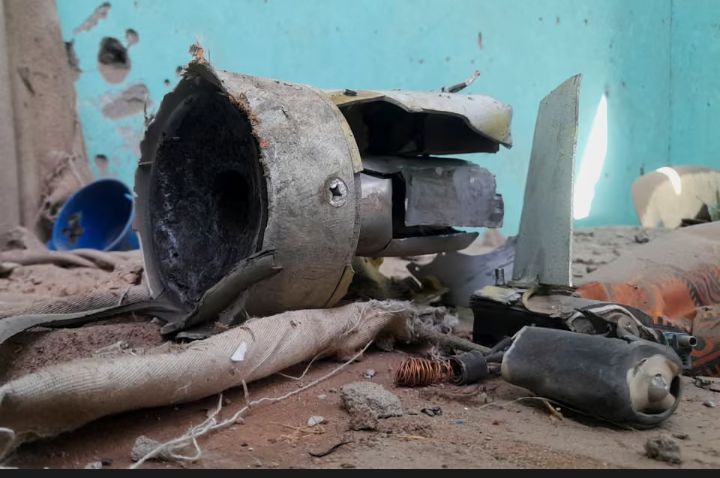
The RSF attacks have transformed El Fasher into a killing field. A recent drone strike on a displacement shelter killed 57 people, including 17 children.
According to MedGlobal, 81% of residents said they “never felt safe” moving around, while most families were forced to relocate at least three times.
“The destruction of homes and hospitals has made El Fasher uninhabitable,” the organization warned, citing near-total devastation of infrastructure across the city.
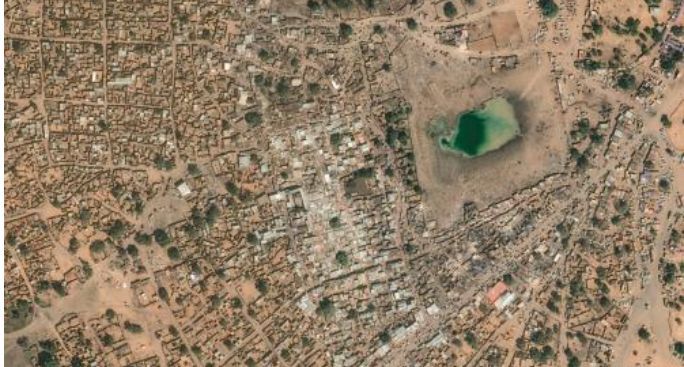
Satellite images confirm that entire neighborhoods have been erased, and marketplaces once filled with life now stand as smoking craters of collapsed tin and ash.
Despite the dire situation, humanitarian access remains blocked. The RSF has surrounded the city with vast earthen berms, cutting off escape routes and supply convoys.
Hopes for relief briefly surfaced last month when U.S. envoy Massad Boulos claimed to have negotiated aid access alongside the United Arab Emirates (UAE).
However, those talks failed. The RSF rejected the arrangement and instead tightened its encirclement, effectively trapping El Fasher’s remaining inhabitants under a death grip.
The Sudanese army has responded with limited air operations, airdropping supplies into the besieged city to sustain its defenders and civilians for short periods.
Even so, the aid remains insufficient. Food scarcity has reached catastrophic levels, with one in five children under five now suffering from acute malnutrition.
Infants are hardest hit—nearly 28% under 18 months show severe wasting. Mothers, too, are collapsing under hunger, with 38% of pregnant women severely undernourished.
The toll on adolescent girls is worst of all: 60% of those aged 15 to 19 are malnourished, with many collapsing during daily searches for food.
El Fasher’s only functioning hospital, Al Saudi, has become a target. Last week, an RSF shelling killed 13 people there, including medical staff treating civilians.
Health workers now perform surgeries without anesthesia, operating by flashlight in underground rooms to avoid being struck during relentless bombardments.
One resident, Abdessalam Kitir, described how he used milk from his last surviving goat to feed an orphaned baby whose family was killed by an RSF strike.
“The baby lost everyone,” he said. “We buried the parents in pieces. I carried him to the hospital, but even that is not safe.”
Such stories echo across Darfur, where civilian suffering mirrors the horror of El Fasher. Families hide in trenches, moving only at night to find water.
Half of those interviewed said they had personally endured violence, while 71% had witnessed others being beaten, killed, or mutilated during RSF raids.
The United Nations has condemned both sides. Volker Türk, UN High Commissioner for Human Rights, said he was “appalled by the continued slaughter of civilians in El Fasher.”
While the RSF bears primary responsibility for the siege, the Sudanese military also stands accused of war crimes, including drone strikes on civilian areas east of the city.
Earlier this week, at least 16 people were killed when army drones hit a small town sheltering displaced families attempting to flee the Darfur conflict.
The Raoul Wallenberg Centre for Human Rights labeled Sudan’s war a “war on children,” citing starvation, forced displacement, and deliberate targeting of young people.
The center’s legal team said nations such as the UAE, accused of supplying the RSF with weapons, may be violating the international Genocide Convention.
The UAE denies any involvement, but satellite evidence and intercepted logistics indicate its aircraft and funding networks have sustained RSF operations in western Sudan.
Meanwhile, the UK’s Independent Commission for Aid Impact (ICAI) praised London for doubling its Sudan aid budget to £230 million last year amid mounting civilian casualties.
Despite this, relief agencies say only a fraction of promised assistance reaches those trapped inside the siege, due to RSF blockades and constant shelling.
Across the region, the humanitarian collapse is accelerating. Diseases such as cholera and measles spread quickly through makeshift shelters, claiming more children every day.
Water sources are contaminated by decomposing bodies, while famine-like conditions have forced families to grind animal feed into powder for sustenance.
Local doctors estimate at least 500 people die weekly inside the El Fasher siege, though communication blackouts make confirmation nearly impossible.
Eighty-six percent of residents report “no or rare access” to phones or internet, isolating them from the outside world and silencing their cries for help.
Civilians dig underground shelters to survive air raids, turning basements and latrines into bunkers where families huddle together for days without food or light.
An aid worker described it as “a city of ghosts—people barely breathing, waiting to die, whispering prayers between shell bursts.”
Global outrage has been muted. While Western governments condemn atrocities in statements, few have taken decisive action to pressure the RSF or its foreign backers.
The African Union remains paralyzed, divided over how to confront Sudan’s warring factions, while regional powers use the conflict to pursue their own strategic goals.
Observers warn that if El Fasher falls, Darfur could descend into total anarchy, leaving millions more exposed to mass displacement and ethnic violence.
Already, the Darfur civilians face one of the worst humanitarian crises in Africa, with aid agencies comparing conditions to the early 2000s genocide.
Those who escape tell stories of entire neighborhoods burned, women abducted, and boys forced to join RSF militias or face execution.
International analysts fear the El Fasher siege may be a prelude to wider regional destabilization, as neighboring states absorb waves of desperate refugees.
Chad and South Sudan are struggling to manage the influx, their own fragile economies strained by the growing number of displaced Sudanese families crossing the border.
Meanwhile, famine warnings are escalating. The World Food Programme predicts that without full access, more than half of Darfur’s population could face starvation by year’s end.
Aid organizations say they need urgent international air corridors to deliver supplies, but neither side has agreed to consistent humanitarian passage.
Inside the city, morale has collapsed. “Every day we expect death,” said one survivor. “The only question is whether it comes from hunger or a shell.”
Some cling to faith, gathering secretly for prayer under bombed-out roofs. Others whisper of surrender, knowing the RSF shows no mercy to prisoners.
Even the dead cannot rest. Mass graves are hurriedly dug at night to avoid sniper fire, often without identification or ceremony.
Despite everything, small acts of humanity persist. Teachers hold informal lessons for children using charcoal on walls, and women organize secret kitchens for the weak.
“These are not victims,” said a volunteer nurse. “They are survivors. The world may have forgotten them, but they have not forgotten how to endure.”
Humanitarian observers say the El Fasher siege stands as a defining moral test for the international community—one it is failing catastrophically.
Without intervention, they warn, the siege could evolve into a complete annihilation of a trapped population already starved, bombed, and broken by war.
Yet amid the darkness, those still alive continue to hope for a humanitarian breakthrough—one that could reopen aid routes and end this cycle of terror.
Whether that hope will ever materialize depends on global willpower. For now, El Fasher remains a city held hostage, a silent witness to Sudan’s descent into despair.
About The Author