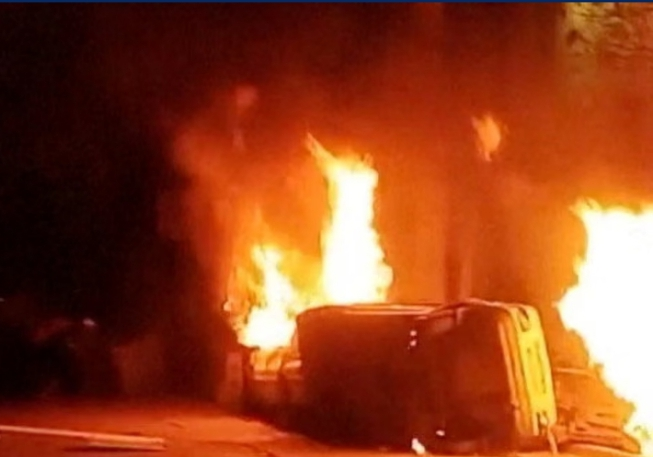
Caracas explosions- Caracas was jolted awake before dawn as explosions echoed across neighbourhoods, intensifying a fast-moving confrontation between Venezuela’s government and the United States administration of Donald Trump.
Venezuelan authorities said loud blasts, aircraft noise, and fires struck the capital and surrounding states, describing events as a coordinated military assault threatening regional stability and sovereignty.
President Nicolás Maduro’s government accused Washington of launching attacks aimed at destabilising the country, seizing resources, and forcing political change through overwhelming external pressure.
In an early morning statement, officials rejected what they called blatant military aggression, insisting Venezuela was exercising its right to self-defence under international law.
Residents in Caracas reported shaking buildings, shattered windows, and electricity outages near military installations, prompting widespread fear and confusion during the early hours of Saturday.
Security forces quickly sealed off areas around the Miraflores presidential palace, while soldiers guarded strategic sites amid smoke rising from nearby facilities.
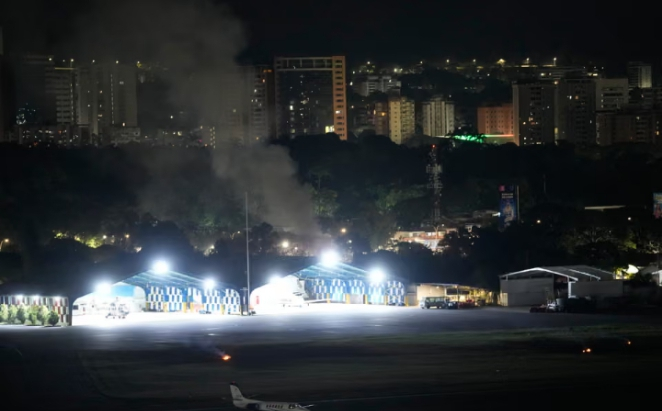
Eyewitnesses described hearing multiple detonations near La Carlota airbase and Fuerte Tiuna, two locations long associated with Venezuela’s military command structures.
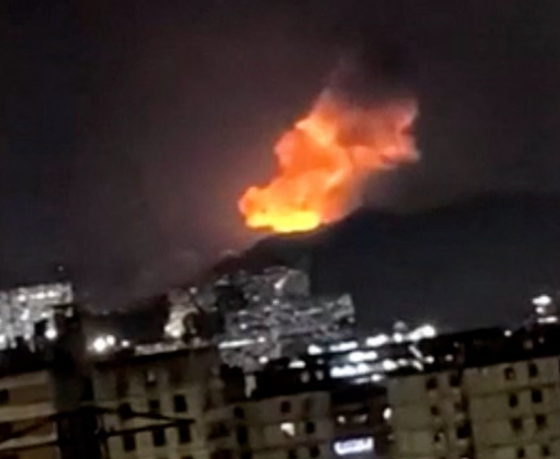
“The whole ground shook,” said Carmen Hidalgo, a young office worker, describing panic as people rushed into streets searching for safety and information.
Reuters images showed flames and smoke columns above parts of the capital, while residents evacuated buildings near government compounds under heavy military presence.
The government confirmed attacks in Caracas and three additional states, Miranda, La Guaira, and Aragua, suggesting a broad operational footprint beyond the capital.
Officials claimed the strikes were ordered directly by Donald Trump, though the White House and Pentagon offered no immediate public comment on the allegations.
Venezuela’s foreign ministry said the objective was control of strategic resources, particularly oil and mineral reserves critical to the nation’s economic survival.
Calling the situation extremely serious, authorities warned such actions risk plunging Latin America into chaos and undermining decades of regional diplomatic norms.
Maduro ordered all national defence plans implemented, declaring a state of external disturbance and granting security forces expanded emergency powers nationwide.
In a televised address, the government urged citizens to mobilise peacefully in defence of sovereignty, using strong rhetoric against perceived imperialist aggression.
“The entire country must mobilise to defeat this attack,” a statement said, appealing to social and political groups across Venezuela for unity.
Neighbouring Colombia’s president, Gustavo Petro, said on social media that Venezuela was under attack, calling urgently for a UN security council meeting.
Petro claimed missiles were being used against Caracas, urging international institutions to establish legality and prevent further escalation in the region.
Colombia activated emergency coordination units near the border, reflecting concerns about spillover effects and refugee movements if fighting intensifies.
Analysts noted the explosions followed months of escalating pressure from Washington, including naval deployments and air operations near Venezuela’s northern coast.
Since August, Trump has ordered a significant military buildup in Caribbean waters, officially framed as counter-narcotics operations targeting illicit trafficking routes.
Critics argue those actions increasingly blurred into coercive measures aimed at weakening Maduro’s grip on power and emboldening opposition forces.
Venezuela’s leadership has repeatedly accused the United States of economic warfare through sanctions, blaming them for shortages and financial collapse.
Saturday’s events marked the most dramatic escalation yet, transforming diplomatic hostility into what Caracas describes as direct military confrontation.
International reactions remained cautious, with several governments calling for restraint and verification before assigning responsibility for the reported strikes.
The United Nations said it was monitoring developments closely, while diplomats privately expressed alarm at potential consequences for hemispheric security.
In Caracas, daily life ground to a halt as schools closed, transport slowed, and residents stocked supplies amid uncertainty about further attacks.
Hospitals were placed on alert, though authorities did not immediately release casualty figures, citing ongoing assessments and security considerations.
Opposition figures offered mixed reactions, some condemning foreign intervention while criticising Maduro for provoking international isolation through governance failures.
Supporters of the government rallied in central districts, waving flags and chanting slogans against the United States and foreign interference.
State media broadcast images of damaged facilities, reinforcing official narratives of resistance and national unity under external threat.
Independent journalists faced restrictions accessing affected areas, raising concerns about information gaps and competing claims shaping public understanding.
The newsmen reported at least seven explosions around 2am local time, corroborating accounts from residents across multiple neighbourhoods.
Low-flying aircraft sounds persisted for hours, adding to anxiety as people feared renewed strikes or aerial surveillance operations.
Military analysts said confirming responsibility would require satellite imagery, radar data, and independent investigations beyond initial eyewitness reports.
Washington’s silence fuelled speculation, though past US interventions in Latin America have heightened sensitivity to perceived aggression claims.
For Maduro, the crisis reinforces longstanding narratives portraying his government as defending sovereignty against powerful external adversaries.
For Washington, accusations risk diplomatic fallout if substantiated, potentially triggering condemnation and multilateral responses through the United Nations.
As daylight returned to Caracas, smoke lingered over key sites, symbolising uncertainty about whether escalation or diplomacy would follow.
Citizens awaited clarity, balancing fear with resilience, while regional leaders weighed urgent steps to prevent broader conflict.
The unfolding situation underscored fragile geopolitics in the Americas, where historical grievances and contemporary power struggles collide dangerously.
Whether Saturday’s explosions mark a brief shock or sustained confrontation remains unclear, but their impact already reverberates far beyond Venezuela’s borders.
Read more here: Multiple blasts rock Caracas as Venezuela faces heightened regional, political tensions
About The Author