

Explosions hit Ecuador in a coordinated series of attacks that officials have blamed on Ecuador criminal gangs allied with ex-FARC dissidents seeking violent revenge.
The overnight detonations destroyed two strategic bridges and triggered widespread fear, coming just hours after the Guayaquil car bombing that left several people wounded and one dead.
Residents woke to scenes of twisted steel and smoking rubble. Police officers blocked the roads while drones scanned for secondary explosives, deepening fears of an escalating Ecuador security crisis.
President Daniel Noboa addressed the nation early Thursday, calling the bombings “a cowardly act of terror” and warning that “Ecuador will never yield to organized crime.”
He vowed that the government would retaliate against those responsible, ordering a military lockdown in key provinces. “We will hunt them down,” Noboa declared during his televised address.
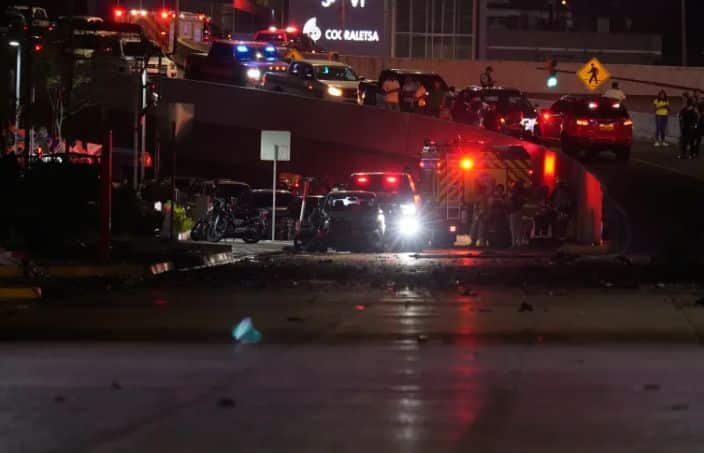
Officials said the explosions hit Ecuador’s southern region, particularly bridges connecting Azuay and El Oro provinces, and another in Naranjal, a town roughly 180 miles southwest of Quito.
According to initial reports, the explosives were placed overnight to cripple traffic routes and delay military reinforcements following raids against illegal mining networks controlled by Ecuador criminal gangs.
Transport Minister Roberto Luque called the incidents “acts of terrorism” designed to paralyze public life. “They want chaos, they want panic — but they will fail,” he said.
The police confirmed no immediate casualties, though several vehicles were damaged and multiple highways closed. Engineers are now inspecting whether both bridge structures risk partial collapse.
Eyewitnesses described hearing “two thunderous booms” within minutes. “The bridge shook like an earthquake,” said driver Manuel Torres. “We thought war had arrived in Ecuador.”
Hours before the blasts, Guayaquil police responded to a devastating Guayaquil car bombing that targeted a crowded shopping mall, sending glass shards flying across busy streets.
The explosion killed one person and injured several others, including two children. A second vehicle containing explosives was found nearby but defused by the bomb squad.
Residents say fear has become a daily companion. “We don’t sleep anymore,” said shopkeeper Maria Lopez. “Each night, we wonder if explosions hit Ecuador again.”
Interior Minister John Reimberg accused the notorious Los Lobos gang — now branded a terrorist organization by the United States — of collaborating with Colombian ex-FARC dissidents.
He said the attacks were retaliation for a military operation that dismantled illegal mining operations and captured several foreign-linked militants. “This was vengeance,” he asserted.
Security forces have since deployed armored units and helicopters across Guayas and El Oro provinces, describing the situation as “critical.” The Ecuador security crisis deepened further overnight.
Marcela Aguinaga, governor of Guayas province, condemned what she called “an orchestrated campaign of terror.” She urged citizens to stay calm and cooperate with ongoing security checks.
U.S. officials swiftly condemned the attacks. The State Department called them “brazen terrorist assaults against the Ecuadorian people” and pledged continued intelligence and logistical support.
“We stand with Ecuador,” a U.S. embassy statement read. “No democratic nation should face such sustained violence from organized criminal entities and armed insurgent remnants.”
For years, Ecuador was considered a peaceful Andean nation, spared from Colombia’s insurgent turmoil. But as explosions hit Ecuador again, its geography now invites drug cartels and militant groups.
Experts say the convergence of Ecuador criminal gangs and ex-FARC dissidents has turned border provinces into conflict corridors, linking cocaine trafficking routes and gold-smuggling operations.
“The groups share profits, weapons, and logistics,” said one security analyst. “They’re not just smugglers anymore — they’re insurgents reinvented through organized crime.”
Ecuador’s once-stable society is unraveling under the strain. Guayaquil, once a bustling port city, now sits at the heart of violence, becoming symbolic of the Ecuador security crisis.
Local residents describe constant tension. “Every explosion reminds us we’re losing our peace,” said teacher Carlos Jimenez. “Even our children flinch when fireworks go off now.”
The Guayaquil car bombing marked the fifth major detonation in just two months, according to police. Investigators believe it may be linked to the same criminal alliance.
Forensic teams are combing debris for chemical traces, while drones patrol highways connecting affected provinces. Military units have begun 24-hour surveillance of strategic bridges and tunnels.
Officials say the attackers are adapting rapidly, using commercial drones and modified mining explosives — evidence that the ex-FARC dissidents bring battlefield experience to local gangs.
“These are not amateurs,” said an army commander. “They understand demolition tactics and psychological warfare. Each time explosions hit Ecuador, they’re testing our response limits.”
President Noboa’s government faces mounting political pressure to restore order. Protests over economic hardship have intersected with public anger at escalating insecurity.
“The state is losing control,” warned an opposition senator. “People can’t travel safely, and criminals decide which roads we drive. It’s a national emergency.”
Despite that, many citizens still back Noboa’s hardline approach. “We finally have a president who fights back,” said resident Veronica Silva. “He doesn’t hide when explosions hit Ecuador.”
The violence reflects a regional shift: as Colombia and Mexico intensify their anti-cartel efforts, criminal networks relocate operations into Ecuador’s weaker enforcement zones.
Guayaquil’s ports, once the pride of the Pacific coast, now double as smuggling gateways. Police estimate that over 30 percent of cocaine exports now pass through Ecuadorian docks.
Noboa recently requested U.S. assistance in training bomb squads and border patrols, calling it essential to breaking what he called “the infrastructure of death.”
However, critics argue foreign support will not address the roots of the Ecuador security crisis, which include poverty, corruption, and a collapsing prison system.
Prisons have become recruitment hubs for Ecuador criminal gangs, with ex-FARC dissidents using them to forge alliances and exchange combat training for logistical support.
Inmates operate sophisticated networks, coordinating assaults and car bombings directly from within penitentiaries, often using smuggled phones and bribed guards.
Authorities admit the fight is far from over. “We are confronting a hybrid enemy,” said Defense Minister Luis Vera. “This war mixes ideology, drugs, and terror.”
As night falls, soldiers stand watch on the damaged bridges, scanning the horizon for more threats. Fear lingers like smoke after the explosions hit Ecuador once more.
Across social media, citizens demand action and unity. “We cannot surrender to fear,” one message read. “Our homeland must not become another battlefield.”
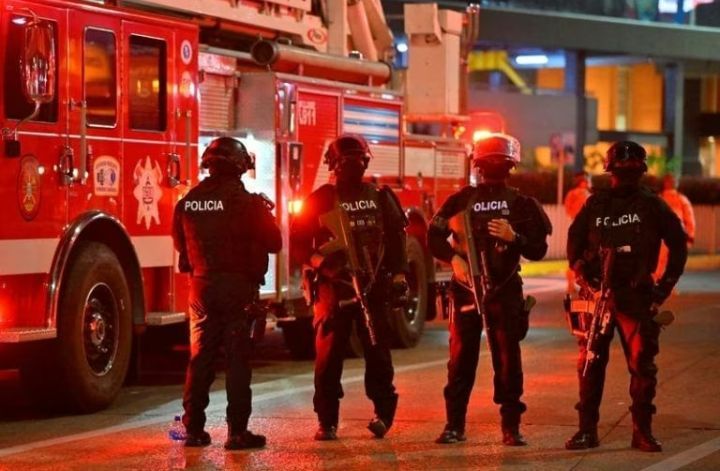
The aftermath paints a grim picture — wrecked infrastructure, frightened communities, and a government walking a fine line between authority and desperation.
Analysts warn that without swift reforms, the Ecuador security crisis could spiral beyond control, drawing in neighboring countries and international criminal syndicates.
For now, the nation watches nervously, holding its breath as each night brings the same question — will explosions hit Ecuador again before dawn breaks?
About The Author


