At least one person was killed and 11 others wounded during Yemen STC protest violence in Aden when security forces opened fire on a crowd linked to the Southern Transitional Council (STC) attempting to storm the al-Maashiq Presidential Palace.
The deadly clash occurred as Yemen’s internationally recognised government convened its first session in the southern port city, drawing both political and civilian attention.
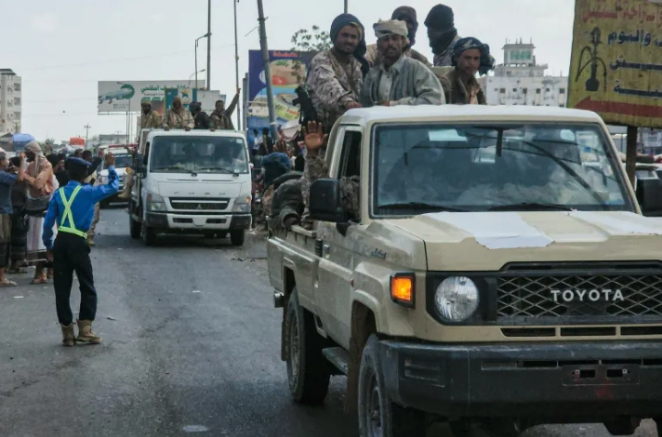
Eyewitnesses reported chaotic scenes as armed security personnel confronted protesters, firing warning shots and live ammunition to prevent entry into the palace grounds.
Several wounded individuals were seen being carried away by medical staff as smoke and debris filled the streets. “It was terrifying. People were running in all directions,” one local resident told newsmen.
The Aden Governorate Security Committee said its forces responded lawfully to attempts to commit “acts of sabotage” by protesters. A statement added that security personnel would not tolerate attacks or any involvement in chaos, framing the response as necessary to maintain public order in the interim capital.
The Southern Transitional Council condemned what it called “excessive use of force” against civilians, claiming at least 21 people were injured. The STC called for the establishment of an independent investigation committee and appealed to the international community to intervene over what it described as systematic repression in southern Yemen.
The STC, formed in 2017 and backed by the United Arab Emirates, seeks self-determination and independence for southern Yemen. Until early January, the group controlled Aden and much of the south before a Saudi-backed government offensive forced its leadership to retreat to the UAE. “The government does not represent the will of the people of the South,” the STC said in a statement on Friday.
Yemen has been mired in instability since 2014, when Houthi rebels captured the capital, Sanaa, and much of northern Yemen. The ongoing conflict between the internationally recognised government, southern separatists, and Houthi forces has created a protracted humanitarian crisis affecting millions of civilians across the country.
The recent Aden clashes highlight the fragile political landscape in Yemen, where local grievances intersect with regional rivalries. Saudi Arabia’s support for the government and the UAE’s backing of the STC have complicated reconciliation efforts, leaving citizens caught between competing authorities.
Prime Minister Shaya Mohsen al-Zindani held the first government meeting in the al-Maashiq palace, intending to assert state authority in the south.
However, the session coincided with widespread protests, showing that political control in Aden remains contested and that the legitimacy of central governance is still challenged by local factions.
Local residents described the scene as tense, with gunfire echoing across central Aden. Some civilians barricaded themselves indoors while others attempted to flee the area. “I have never seen anything like it. The city feels like a battlefield,” said another eyewitness. Hospitals reported a surge of injured protesters arriving for treatment, stretching medical resources thin.
Security officials stated that the response to the STC-linked protesters followed legal guidelines, emphasizing that their duty was to protect the palace and maintain law and order.
“We had no choice but to act. These individuals were trying to breach government premises with weapons,” one official explained, underscoring the official narrative of lawful action.
The STC reiterated that any government presence in southern governorates would not translate into political obligations for local representatives. This position challenges the authority of the Saudi-backed government and reinforces the STC’s call for autonomy and recognition of southern self-determination.
Analysts say the clash in Aden underscores the deep divisions between Yemen’s central government and southern separatists.
The long-standing grievances over marginalization, economic neglect, and political exclusion continue to fuel unrest, complicating peace talks and post-conflict reconstruction efforts in the south.
International observers have been urged to monitor the situation, as the STC accused authorities of suppressing southern Yemen’s population. Humanitarian agencies fear that the cycle of protests and violent crackdowns could escalate, worsening already dire living conditions, displacing more families, and hampering aid distribution.
Saudi Arabia’s involvement remains a double-edged factor. While supporting the internationally recognised government, coalition airstrikes on STC-aligned areas have also drawn criticism for contributing to civilian casualties. The STC’s relocation of its leadership to the UAE further signals the complexity of regional influence on Yemen’s internal conflict.
The Aden confrontation also raises questions about the future of Yemen’s transitional governance structures. Experts argue that without inclusive dialogue and guarantees of local representation, incidents like these will likely continue. “Sustainable peace requires addressing southern demands, not suppressing them,” said a political analyst in Sana’a.
As the situation develops, Yemen STC protest violence highlights the urgent need for reconciliation between the central government and southern authorities. Both sides face pressure to avoid further bloodshed while navigating overlapping alliances and historical grievances.
The deadly clash in Aden reflects broader challenges in Yemen’s recovery, illustrating the persistent instability in southern governorates. Civilians, caught in the conflict between the STC and government forces, remain the most affected, facing insecurity, limited access to services, and ongoing uncertainty about political outcomes.
Efforts by international mediators to bridge gaps between the STC and the Yemeni government have yet to yield significant progress. Observers warn that without a clear resolution, southern unrest may intensify, potentially destabilizing other parts of Yemen and threatening the fragile ceasefires elsewhere.
Read also: Status quo collapsed at Al-Aqsa Mosque as Ramadan begins in Jerusalem
In the coming weeks, the government and STC must decide whether to engage in dialogue or allow tensions to escalate. The outcome will likely influence the political trajectory of southern Yemen and the broader efforts to end years of violent conflict in the region.
About The Author