The Wandsworth prisoner mistaken release scandal has ignited political outrage, forcing the government to defend its record on justice and public safety amid growing calls for accountability.
Deputy Prime Minister David Lammy faces escalating criticism after reports confirmed that a 24-year-old Algerian national was erroneously freed from HMP Wandsworth last week — just days after a similar blunder involving convicted sex offender migrant Hadush Kebatu.
The Met Police manhunt in London is now underway to recapture the fugitive, with officials acknowledging “serious failures” in prison release procedures. The revelation came only minutes after Lammy faced questioning in Parliament, where he refused to clarify whether more asylum-seeking offenders had been wrongly discharged.
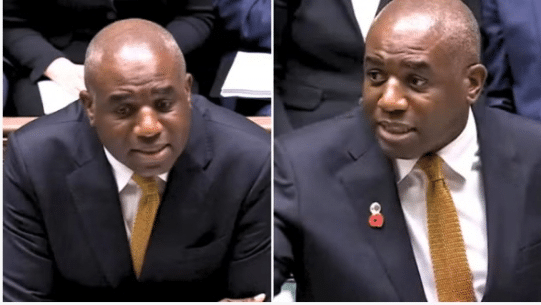
The Wandsworth prisoner mistaken release came to light hours after Lammy appeared before MPs for Prime Minister’s Questions (PMQs), where he repeatedly dodged queries on potential mistaken releases.
His hesitancy to provide clear answers has since spiraled into the David Lammy PMQs controversy, prompting sharp rebukes from both opposition and government benches.
The Conservative Party confirmed it learned of the Wandsworth error just 15 minutes before PMQs began. A spokesman accused Lammy of deliberately concealing the information, saying: “If we knew, one can only assume the Justice Secretary knew.”
Opposition figures, including Jess Brown-Fuller of the Liberal Democrats, have demanded Lammy return to Parliament immediately. “The public deserves a full explanation about how this has happened again,” she declared, urging transparency and stronger oversight mechanisms within the Prison Service investigation.
The Met Police manhunt in London began after the Prison Service formally alerted authorities of the mistaken release on Tuesday, November 4. According to official statements, the man — a 24-year-old Algerian national — was freed in error on October 29.
In a statement, the Metropolitan Police confirmed: “Officers are carrying out urgent enquiries in an effort to locate him and return him to custody.” The force has deployed specialized units to track the suspect’s movements across Greater London and beyond.
Critics argue that the police response, though swift, highlights systemic communication failures between the Ministry of Justice and the Prison Service. Security analysts warn that these recurring mistakes are undermining public confidence in the country’s correctional institutions.
In a formal statement issued later that afternoon, Lammy described himself as “absolutely outraged and appalled” by the Wandsworth prisoner mistaken release, emphasizing that “victims deserve better and the public deserves answers.”
He confirmed that an independent Prison Service investigation led by Dame Lynne Owens has been launched to determine how such a serious procedural failure occurred.
“We will leave no stone unturned to identify the causes, strengthen safeguards, and ensure the public is protected,” Lammy vowed.
However, critics remain unconvinced. Shadow ministers have accused Lammy of political evasion and hypocrisy, noting that the government pledged “the toughest checks ever” only a week earlier — the same day another wrongful release was discovered.
The Wandsworth prisoner mistaken release marks the second such incident in less than two weeks, reigniting debate about the competence of Britain’s prison management system.
The first involved Hadush Kebatu, an Ethiopian-born sex offender who was supposed to be transferred to an immigration detention centre but was instead released from HMP Chelmsford.
The Hadush Kebatu wrongful release case triggered widespread criticism and promises of reform, but the latest blunder suggests deeper institutional rot. Justice campaigners have described the situation as “symptomatic of systemic collapse,” pointing to overworked staff, outdated tracking systems, and lack of ministerial oversight.
“The recurrence of these errors is not coincidence — it’s the outcome of a broken administrative structure,” said criminology expert Dr. Sophie Reeves. “When documentation errors become routine, public safety is immediately endangered.”
As outrage grows, political commentators are branding the episode as the defining moment of the David Lammy PMQs controversy. Several MPs have openly questioned whether Lammy should continue as Justice Secretary, citing a failure of leadership at the highest levels of government.
Conservative MP James Cartlidge told Parliament: “He’s the Justice Secretary. He’s responsible for the justice system. He needs to take responsibility.”
Lammy’s retort — “Get a grip, man, I know I’m the Justice Secretary” — has since gone viral, intensifying calls for a public apology. Analysts warn that the controversy could inflict lasting damage on the Deputy Prime Minister’s credibility and Labour’s broader law-and-order narrative.
Responding to journalists, a Downing Street spokesman said ministers “should respond as fully as they are able” to questions in the Commons but declined to confirm whether Lammy knew about the incident before PMQs.
The Prison Service investigation is now probing how the prisoner’s file was processed and whether human error or systemic malfunction led to the premature release. Officials are reportedly reviewing digital logs, staff rosters, and internal communication channels between prison management and the Ministry of Justice.
Early findings indicate possible administrative confusion during a transfer process, with key data incorrectly entered into the system — a mistake that went unnoticed for nearly a week.
For many observers, the Wandsworth prisoner mistaken release is more than an isolated blunder; it symbolizes a justice system under severe strain. Rising inmate populations, chronic staff shortages, and digital inefficiencies have created conditions ripe for repeated administrative errors.
Public sentiment reflects growing disillusionment. Victims’ advocacy groups have criticized what they call a “cascade of incompetence,” urging the government to publish a full timeline of events. “This isn’t about politics — it’s about public safety,” said a spokesperson for the Justice Reform Alliance.
Former prison governor Peter Dawson told reporters: “The system is bursting at the seams. Until staffing and management structures are stabilized, these mistakes will keep happening.”
The Prison Service investigation, now supervised by Dame Lynne Owens, aims to map every procedural step involved in the mistaken release. Officials have been tasked with identifying accountability gaps and recommending structural reforms across all high-security facilities.
This follows a similar inquiry launched after the Hadush Kebatu wrongful release, which revealed that “process confusion and data entry delays” were central to the error. Sources suggest the Owens review will deliver its interim report within three weeks, followed by a public briefing to Parliament.
Lammy has pledged that “no officer or administrator will be shielded from scrutiny,” promising disciplinary measures if negligence is proven.
The David Lammy PMQs controversy shows no signs of fading. Within Westminster, pressure is mounting for the Deputy Prime Minister to deliver a personal statement clarifying exactly when he was informed of the Wandsworth blunder.
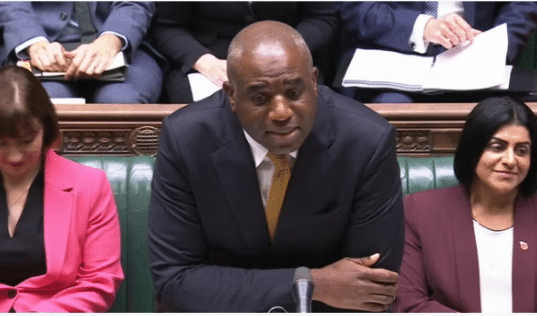
Liberal Democrat justice spokesperson Jess Brown-Fuller has urged Lammy to “show transparency, not political defensiveness,” while Tory backbenchers are reportedly preparing a formal parliamentary question on the sequence of government communications.
Observers warn that if the fugitive remains at large for long, the Met Police manhunt in London could evolve into a full-blown political scandal — one that reshapes public debate on justice reform and ministerial accountability.
The Wandsworth prisoner mistaken release has exposed deep fractures in the United Kingdom’s criminal justice apparatus. As the Met Police manhunt in London continues, questions surrounding government transparency, administrative integrity, and ministerial competence persist.
Unless the Prison Service investigation produces swift and convincing reforms, this case — alongside the Hadush Kebatu wrongful release — may stand as a symbol of institutional decay and political failure at the very heart of British governance.
About The Author