Zohran Mamdani’s New York election victory has sparked widespread optimism across Uganda, uniting citizens who view his achievement as evidence that African excellence can flourish even beyond continental borders.
The story of Zohran Mamdani’s New York election victory continues to inspire debates about Uganda’s global footprint, leadership identity, and the potential for transnational citizens to transform global democracy with principle.
For many in Kampala, Zohran Mamdani’s New York election victory represents an awakening of national pride, proving that integrity and hard work remain powerful currencies in international politics and public service.
Mamdani’s triumph is not merely a personal achievement but a defining chapter in the conversation surrounding African representation abroad and the transformative power of diaspora leadership and influence.
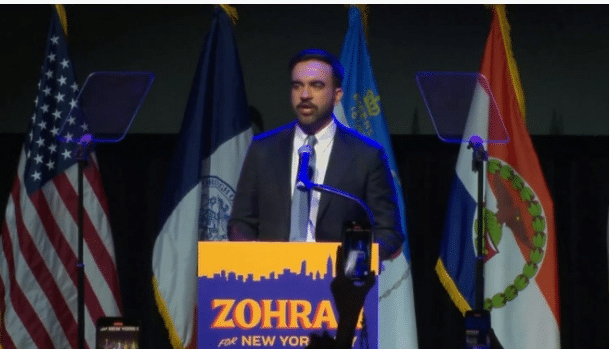
His success underscores a growing phenomenon—the Ugandan diaspora influence—which now shapes global narratives in politics, education, and social reform through visionary individuals who remain deeply connected to their roots.
Born in Kampala to renowned scholar Mahmood Mamdani and filmmaker Mira Nair, Zohran’s life illustrates how Ugandan heritage and multicultural exposure can merge to produce dynamic, inclusive leadership.
Despite his rise in U.S. politics, Zohran Mamdani Uganda connection remains strong. He retained his Ugandan citizenship after becoming a naturalized American, symbolizing dual allegiance and enduring national loyalty.
That decision has resonated among Ugandans at home and abroad, many of whom see it as a gesture of identity preservation, pride, and conscious rejection of total assimilation abroad.
In the wake of Zohran Mamdani’s New York election victory, commentators describe him as a political bridge linking Africa’s moral values with the progressive aspirations of Western democracies.
His political agenda—centered on housing justice, immigration reform, and workers’ rights—reflects the ethical grounding many associate with African communalism and the pursuit of equity and human dignity.
The symbolic weight of Zohran Mamdani’s New York election victory extends far beyond the boroughs of Queens. It has rekindled hope across African youth seeking purpose in global citizenship.
Students in Ugandan universities have discussed Mamdani’s campaign speeches as models of civic clarity, transparency, and empathy—qualities increasingly demanded within the country’s evolving political environment.
The New York election 2025 season saw fierce competition and public scrutiny, yet Mamdani’s message of inclusion and solidarity prevailed, reinforcing his credibility as an advocate of justice and equality.
His triumph has become a benchmark for what African political inspiration can achieve when authenticity and integrity are placed above populism, propaganda, and transactional politics.
Zohran Mamdani’s New York election victory also challenges stereotypes about African migrants. It demonstrates that immigrants are not merely survivors abroad but contributors reshaping the democratic values of their host societies.
Across Ugandan media, Mamdani’s name trends daily, symbolizing intellectual humility and civic courage. Many commentators hail his balanced leadership as a product of global learning fused with African discipline.
As social media fills with praise, Ugandans express pride that one of their own now influences progressive legislation in America while still embracing his origins without apology or dilution.
This dual identity reinforces the argument that belonging to more than one nation need not diminish patriotism; it can amplify empathy, perspective, and cross-cultural understanding among leaders.
Political analysts note that Zohran Mamdani’s New York election victory mirrors a generational shift—where diaspora Africans wield political agency without severing cultural ties or historical consciousness.
The Ugandan diaspora influence is steadily expanding through policymakers, entrepreneurs, and scholars contributing to both home and host nations, embodying resilience and intellectual contribution on a global scale.
Through Mamdani’s leadership, the concept of representation acquires new meaning: Africans abroad are no longer peripheral voices but central participants in shaping equitable global governance.
Experts suggest that his ascent may inspire Ugandan youth to seek active civic roles, advocating for reform, accountability, and innovation in their communities rather than despairing over systemic challenges.
The magnitude of Zohran Mamdani’s New York election victory has prompted Uganda’s political class to reflect on what authenticity, service, and credibility truly mean in leadership today.
Critics of Uganda’s current establishment argue that Mamdani’s example exposes the stagnation of domestic politics and the urgent need for meritocratic systems grounded in integrity and public trust.
Meanwhile, scholars emphasize that Zohran Mamdani Uganda connection transcends symbolism; it testifies to the enduring power of cultural identity as an anchor amid globalization’s shifting dynamics.
His decision to champion marginalized communities in New York speaks directly to his inherited empathy—a trait deeply rooted in African communal values and collective consciousness.
Indeed, the ripple effect of Zohran Mamdani’s New York election victory stretches beyond Uganda. Across Africa, young activists now invoke his journey as proof that principled politics is achievable.
African political inspiration drawn from Mamdani’s success lies in his ability to combine intellect with accessibility, courage with diplomacy, and activism with institutional engagement.
He embodies the belief that politics must serve humanity rather than ambition, a conviction that echoes powerfully among Ugandans weary of divisive rhetoric and entrenched self-interest.
Observers contend that his inclusive policies could influence future bilateral relations between Uganda and the United States, particularly regarding migration, education, and youth empowerment programs.
Zohran Mamdani’s New York election victory reinforces an essential message—Africa’s influence on the global stage does not depend solely on aid but on the quality of its global citizens.
As one analyst noted, “Mamdani proves that integrity travels well. His authenticity reminds us that moral leadership transcends borders and ideology.”
Such recognition has ignited a new wave of optimism in Kampala, where young people increasingly envision international engagement as both patriotic and transformative.
The Ugandan diaspora influence has therefore evolved from nostalgic attachment to active participation, empowering citizens abroad to invest intellectually and economically in their homeland’s development.
Ugandan educators now cite Mamdani’s career as a case study in values-driven governance, encouraging students to redefine leadership through ethical conviction and social accountability.
His ascent within the framework of New York election 2025 validates the principle that identity can coexist with modern progressivism, producing leaders who act both locally and globally.
From the slums of Queens to lecture halls in Kampala, Mamdani’s story resonates as a blueprint for transnational resilience, visionary politics, and cultural integrity.
Zohran Mamdani’s New York election victory thus stands not merely as a political triumph but as a moral statement—one that rekindles Uganda’s faith in justice and ethical leadership.
By integrating Ugandan compassion with American pragmatism, Mamdani has illuminated a path forward for young Africans determined to serve with integrity in increasingly interconnected democracies.
Ultimately, his victory signals the dawn of a more inclusive political era, where diaspora voices amplify Africa’s relevance in global decision-making without compromising their cultural authenticity.
Through dedication, transparency, and empathy, Zohran Mamdani’s New York election victory continues to echo across continents, reminding the world that African excellence endures, adapts, and inspires.

Zohran Mamdani’s New York election victory inspires hope in Uganda, highlighting the Ugandan diaspora influence, Zohran Mamdani Uganda connection, and African political inspiration shaping global leadership.