US-South Korea military drills shortened
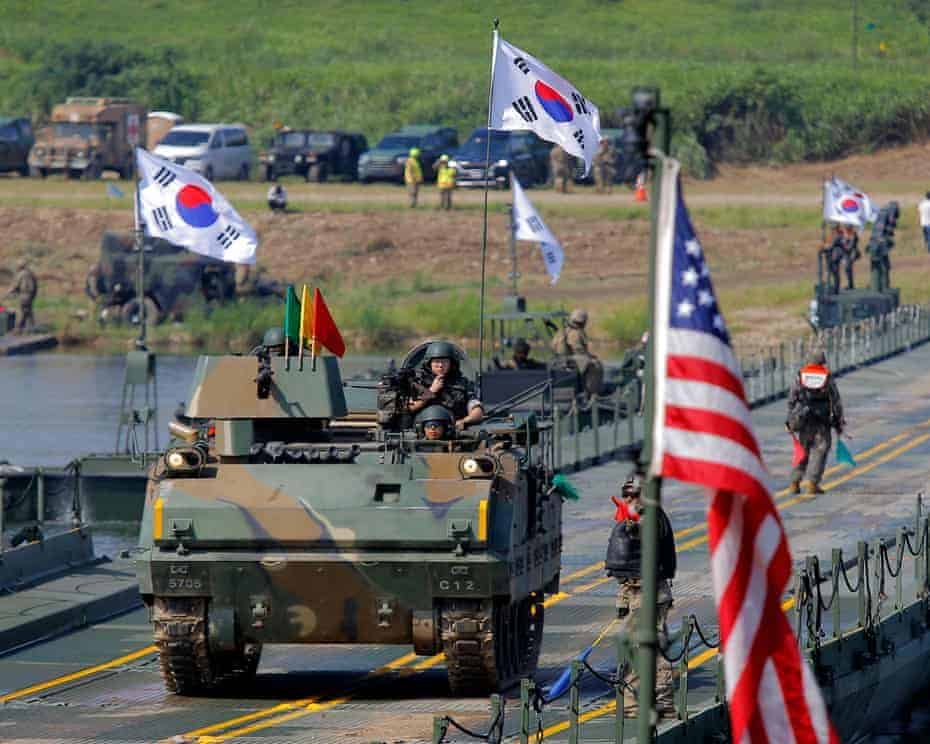
US-South Korea military drills will end six days early after Washington requested changes to the Ulchi Freedom Shield exercise, reinforcing speculation about Donald Trump’s renewed diplomatic outreach to Kim Jong-un.
South Korea’s Joint Chiefs of Staff confirmed Wednesday that the annual exercise, which began Monday, will conclude Friday, August 21, instead of continuing according to its original schedule for region.
The decision follows Trump’s directive to scale back American participation, with the US president arguing that large military exercises could undermine his relationship with North Korean leader Kim Jong-un today.
Seoul said the request came from the American side, while Foreign Minister Cho Hyun acknowledged that South Korean officials were surprised because they had not received advance information about Washington’s decision.
Alongside the shortened command exercise, some field training activities will also be reduced, although American and South Korean military authorities were still discussing precisely which drills would remain affected during.
A Pentagon official separately confirmed that the United States was substantially reducing joint exercises with South Korea, providing further evidence that Washington intends to change its approach toward Pyongyang in.
Trump has described the exercises as costly and hostile, while emphasizing what he calls his “very good relationship” with Kim, whose government has consistently condemned the drills amid renewed diplomatic.
The latest development represents a significant adjustment because the Ulchi Freedom Shield exercise traditionally demonstrates military readiness between Washington and Seoul while preparing forces for potential conflict with Pyongyang across.
South Korean broadcasters and local media had earlier reported that the exercise’s second stage could be cancelled entirely, particularly the simulated counterattack scenario strongly opposed by North Korea during the.
Read also: Trump threatens to bomb Oman as Iran talks stall
Those reports gained attention because Pyongyang has long portrayed US-South Korea military drills as preparations for invasion, despite Washington and Seoul repeatedly describing them as defensive readiness exercises for years.
Lieutenant General Scott Winter, deputy commander of the United Nations Command, had previously described this year’s exercise as “bigger and better than ever” before this week’s reduction.
The abrupt change creates a striking contrast between the military exercise originally planned and the scaled-back programme now being implemented following Trump’s intervention from Washington under the revised schedule now.
Trump’s push for Kim Jong-un talks
Trump’s push for Kim Jong-un talks comes as the president reportedly encourages aides to arrange another meeting with the North Korean leader, potentially during an Asian trip later this year.
Reports indicate that Trump has privately discussed meeting Kim during his next Asia visit, possibly in November, when he could attend the Asia-Pacific Economic Cooperation summit in China according to.
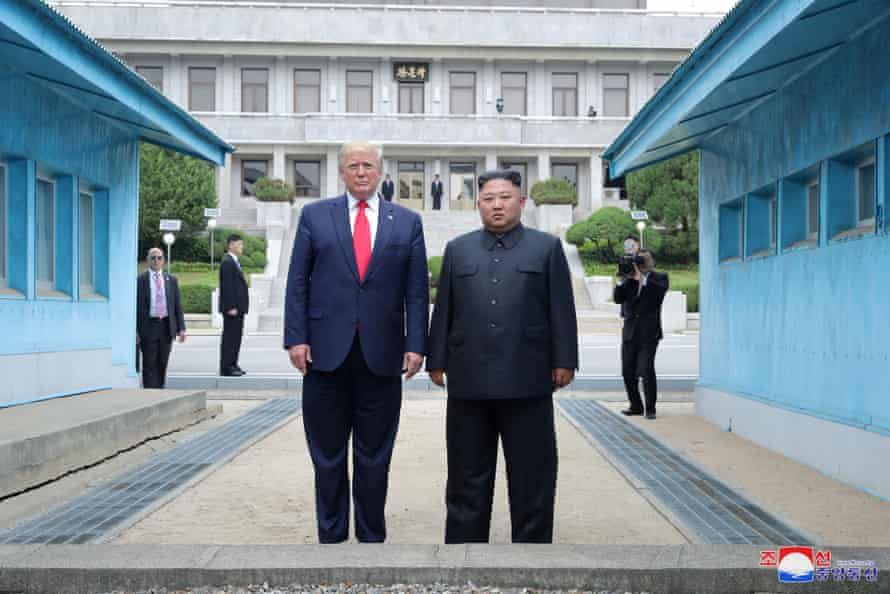
Trump has already met Kim three times, including a historic encounter at the Korean Demilitarized Zone in 2019, making renewed diplomacy a realistic possibility for Washington in recent weeks and.
The president also recently shared an old photograph of himself with Kim, while suggesting that the North Korean leader had responded to his latest overtures for dialogue since then publicly.
Trump’s renewed outreach could explain Washington’s decision to reduce military activities that Pyongyang considers threatening, although the administration has not publicly confirmed diplomacy directly caused the changes at this stage.
Analysts nevertheless warn that further concessions could follow if discussions restart, potentially involving additional reductions in exercises or even changes to American troop numbers stationed in South Korea according to.
South Korea’s government has said it will continue coordinating with Washington, but President Lee Jae Myung has simultaneously renewed calls for greater military independence from American security arrangements in coming.
That tension highlights a difficult balance for Seoul, which depends heavily on the United States for deterrence while also seeking greater control over its own defence decisions while managing.
The American military presence on the Korean Peninsula dates from the Korean War, which ended with an armistice in 1953 rather than a formal peace treaty for decades already today.
Because no permanent peace treaty replaced the armistice, North and South Korea technically remain at war, making military preparedness a central feature of regional security strategy across Northeast Asia today.
American forces have remained in South Korea for decades, while Camp Humphreys has developed into the largest American military base outside the United States for regional security now.
Annual exercises therefore serve practical and political purposes, testing operational readiness while demonstrating the strength of the alliance against potential threats from North Korea against potential threats there today globally.
What the shorter drills mean
The early conclusion of US-South Korea military drills may ease immediate tensions with Pyongyang, but it could also raise questions about deterrence and Washington’s long-term security commitment for now today.
Previous cancellations and reductions under Trump occurred before exercises began, making this decision unusual because changes were announced after the current military training programme had already started this week there.
About The Author