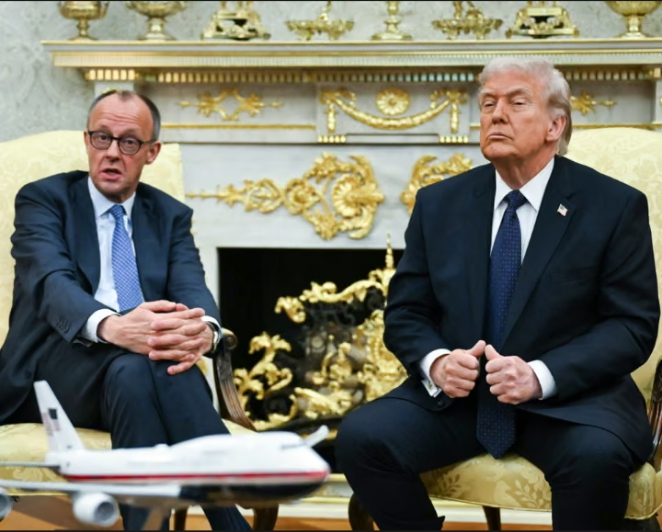
US President Donald Trump has rejected claims surrounding the US Israel Iran attack, insisting that Israel did not pressure Washington into launching military strikes and that the United States acted on its own strategic judgment.
Speaking to reporters, Trump said suggestions that Israel forced America’s hand were inaccurate. Instead, he argued that Israel had been prepared to strike Iran independently and that his administration chose to act first in order to control the timing and limit wider escalation.
“I think they were going to attack first, and I didn’t want that to happen. So, if anything, I might have forced Israel’s hand,” Trump said. His remarks shift responsibility firmly onto Washington and present the decision as a calculated move rather than a reaction to Israeli pressure.
The president explained that negotiations with Tehran had been ongoing before the strikes were carried out. However, he said his assessment was that Iran was preparing imminent action, which prompted what he described as a necessary and pre-emptive response.
“We were having negotiations with these lunatics, and it was my opinion that they were going to attack first,” he said. The language underscored his long-standing hardline rhetoric toward Iran and suggested that diplomatic engagement alone was insufficient to prevent confrontation.
Trump claimed the strikes had a significant impact on Iranian military capabilities. He described the operation as “very powerful” and asserted that “virtually everything they have has been knocked out,” though detailed independent assessments of the damage have yet to be fully outlined publicly.

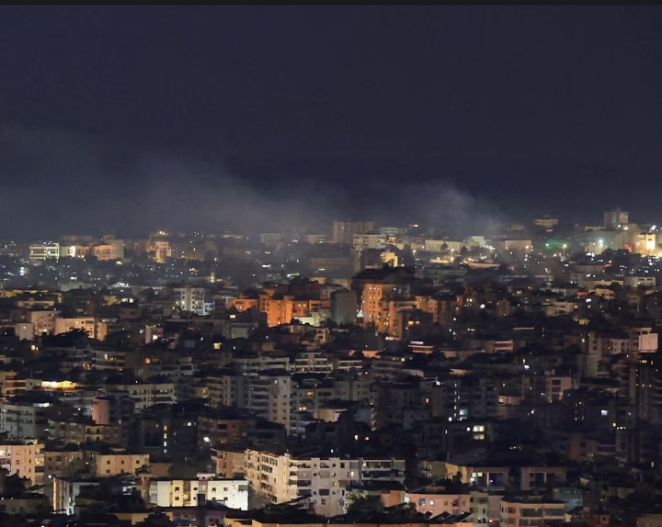
At the same time, he expressed surprise at the scale of Iran’s retaliation. According to the president, Tehran launched strikes across parts of the Middle East, targeting multiple neighbouring states and expanding the regional dimension of the conflict.
“Now those countries are all fighting against them and fighting strongly against them,” Trump added, suggesting Iran’s actions had strengthened opposition against it rather than isolating the United States diplomatically.
However, his account appears to differ from comments made earlier in the week by US Secretary of State Marco Rubio. Rubio indicated that the United States struck Iran after Israel was already planning its own attack, implying closer alignment with Israeli preparations.
The contrast between the two narratives has prompted questions about coordination between Washington and Jerusalem. Both officials defend the strikes as justified, but their descriptions of the sequence of events differ in emphasis.
The US–Israel relationship remains one of the most significant strategic alliances in the Middle East. Military cooperation, intelligence sharing and diplomatic coordination have historically shaped responses to Iran’s regional activities.
Analysts note that the question of who acted first carries political implications. If Israel had been on the verge of launching its own strike, the US action could be interpreted as either supportive coordination or as an attempt to manage and moderate escalation.
Trump’s framing suggests he believes acting first allowed Washington to dictate the pace and scope of events. By presenting the operation as decisive and overwhelmingly effective, he appears to be reinforcing a deterrence message aimed at Tehran.
The broader geopolitical backdrop adds further complexity. Tensions between the United States and Iran have simmered for years, marked by sanctions, proxy conflicts and periodic military flare-ups. The latest exchange represents one of the most direct confrontations in recent times.
Regional governments have heightened security alerts amid fears of further retaliation. Diplomatic channels are reportedly active, though public statements from leaders across the region remain firm and cautious.
Within the United States, debate has intensified. Supporters of the administration argue that the strikes were necessary to protect American interests and deter aggression. Critics question whether diplomatic options were sufficiently pursued before resorting to force.
Trump’s emphasis on pre-emption reflects a broader strategic doctrine that prioritises deterrence through strength. By asserting that Iran would have attacked first, he frames the operation as defensive despite initiating the military action.
International leaders have urged restraint, warning that continued escalation could destabilise global markets and security frameworks. Energy prices and regional stability remain closely linked to developments in the Middle East.
Despite differing narratives within the administration, both Trump and Rubio maintain that the strike was necessary. The key divergence lies in how each describes the lead-up to the operation and Israel’s role in shaping events.
As tensions remain elevated, the coming days will determine whether diplomatic efforts can prevent further escalation. For now, Trump’s insistence that Israel did not force the US hand reinforces his claim that the Trump Israel Iran attack decision was deliberate, strategic and driven by Washington’s own calculations.
Read also: Airlines in Middle East rule out services resuming before Thursday as travel chaos deepens
About The Author