

US President Donald Trump said that most figures his administration had considered as potential successors in Iran are now dead, raising fresh questions about Washington’s long-term strategy amid escalating regional tensions and Iran leadership.
Speaking to reporters, Trump was asked who he envisioned leading Iran if the current leadership were to fall. He responded bluntly: “Most of the people we had in mind are dead.” He added that individuals from “another group” the administration had assessed as possible alternatives may also have been killed, citing incoming reports.
The remarks come as fighting linked to the US-Israel confrontation with Iran continues to reverberate across the Middle East, complicating diplomatic calculations in Washington and European capitals.
Trump did not elaborate on the identities of the figures he referenced, nor did he clarify whether they were opposition leaders, internal regime rivals, or external political actors.
His comments suggest that recent military operations may have reshaped the landscape of potential political transition inside Iran. Analysts note that speculation about post-conflict leadership scenarios has intensified in recent weeks, particularly following high-profile strikes targeting Iranian-linked infrastructure and military sites.
During the same exchange with reporters, Trump was also pressed on the economic fallout from the conflict, particularly rising energy prices. Global oil markets have reacted sharply to instability in the Gulf region, where Iran plays a central role in production and transit routes.
Asked about increasing fuel costs for American consumers, Trump insisted that any surge would be temporary. “As soon as this ends, those prices are going to drop, I believe, lower than even before,” he said, projecting confidence that markets would stabilise quickly once hostilities subside.
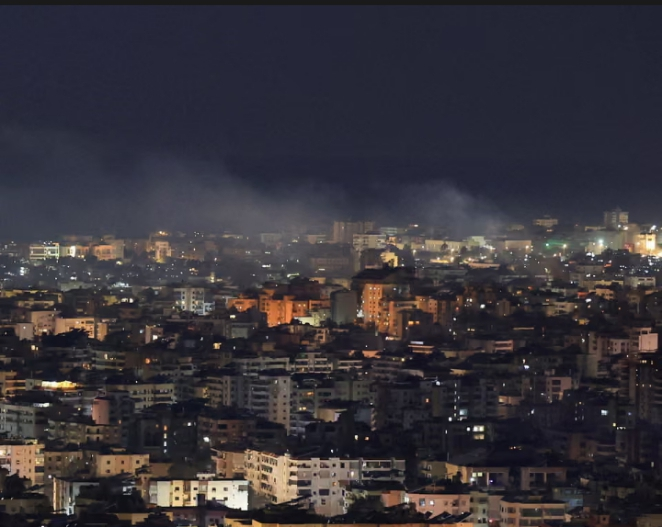
Oil prices have historically been sensitive to geopolitical shocks in the Middle East. Disruptions, or even the threat of them, to shipping lanes such as the Strait of Hormuz can trigger immediate volatility.
While Trump did not mention specific routes or supply chains, his remarks appeared aimed at reassuring domestic audiences concerned about inflationary pressures.
German chancellor Friedrich Merz, who was present during the media availability, had limited opportunity to speak but underscored broader economic anxieties. He highlighted the interconnected impact of energy markets on the global economy.
“This is true for the oil prices, and this is true for the gas prices as well,” Merz said, noting that Europe remains particularly sensitive to fluctuations in energy supply. “That’s the reason why we all hope that this war will come to an end as soon as possible.”
Merz’s remarks reflect ongoing European concerns about energy security, especially after recent years of supply disruptions and price spikes. European governments have worked to diversify energy sources, but renewed instability in the Middle East risks undermining those efforts.
The exchange also highlighted a contrast in tone between Washington and Berlin. While Trump projected optimism about swift economic recovery and falling fuel prices, Merz emphasised uncertainty and the need for a rapid de-escalation to limit broader damage.
Trump’s assertion that many potential Iranian successors are dead may further complicate diplomatic efforts. Leadership vacuums can increase instability, particularly if multiple factions compete for influence without a clear transition framework.
So far, the White House has not released additional details clarifying the president’s comments. It remains unclear whether US intelligence assessments formally identified alternative leadership figures or whether Trump was speaking more generally about opposition elements.
The situation inside Iran remains fluid, with information tightly controlled by authorities and difficult to independently verify. Any confirmed loss of prominent political or military figures could significantly alter internal power dynamics.
As markets continue to monitor developments, energy traders are weighing both immediate supply risks and longer-term geopolitical outcomes. The trajectory of oil and gas prices will likely depend on whether the conflict widens, stabilises, or moves toward negotiated settlement.
Read also: Israeli Death Ray Iron Beam revealed as energy-based defense breakthrough
For now, Trump’s remarks underscore both the unpredictability of regime-change scenarios and the broader economic stakes tied to the confrontation.
With global energy markets on edge and diplomatic channels under strain, uncertainty remains the defining feature of the crisis.

