The Israeli Death Ray Iron Beam has been officially revealed as part of the world’s arsenal, marking a dramatic shift from ammunition-based systems to energy-based defense technology on the modern battlefield.
The so-called Iron Beam represents a revolutionary move away from interceptor missiles toward directed energy. Instead of firing rockets, it converts electricity into a focused laser weapon designed for precision targeting.
Developed by Rafael Advanced Defense Systems, the Iron Beam is positioned as a complementary layer to Israel’s multi-tiered missile defense network. It operates alongside established systems such as Iron Dome.
Unlike traditional interceptors that can cost around $150,000 per launch, the laser system reportedly costs roughly $3 per burst. This dramatic cost difference may redefine battlefield economics in sustained conflicts.
The Israeli Death Ray Iron Beam engages targets at the speed of light. Because it is a laser-based system, there is virtually no delay between detection, tracking, and engagement once a firing solution is achieved.
However, the technology requires what experts call “dwell” time. The beam must remain fixed on a target long enough to generate sufficient heat to disable or destroy it.
The system works by concentrating thermal energy onto a coin-sized spot. This focused energy heats the surface to extreme temperatures, potentially igniting propellant or causing structural failure in incoming threats.
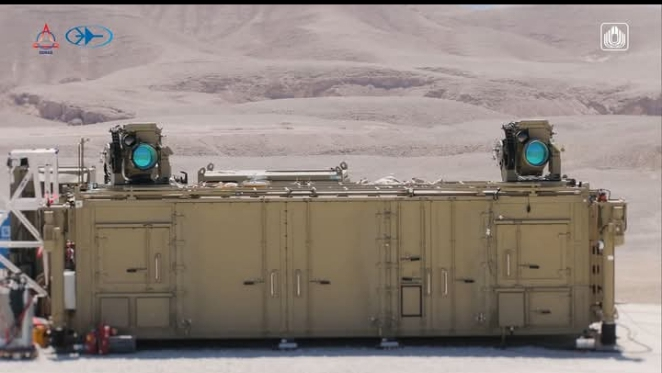
As a directed energy weapon, it shares characteristics with other DEW platforms under development globally. Instead of explosive force, it relies purely on sustained thermal damage to neutralize threats.
The Iron Beam is particularly effective against slower-moving rockets, artillery shells, and drones. These targets provide the necessary engagement window for the laser to maintain dwell time.
Weather sensitivity remains a limitation. Heavy rain, dust, fog, or atmospheric interference can weaken or scatter the laser beam, reducing effectiveness during adverse conditions.
This vulnerability means the system may not fully replace traditional interceptors. Instead, it is likely to serve as a cost-effective supplement in favorable weather environments.
One notable strategy involves firing multiple “coin-sized” beams simultaneously. Once the first strike registers on target, additional beams can be redirected to the exact impact point.
By concentrating energy repeatedly on the same location, the system accelerates structural breakdown. This technique increases the probability of disabling rockets mid-flight before they reach populated areas.
Israel’s layered defense doctrine has evolved over years of regional conflict. Integrating laser systems into that architecture signals a significant modernization step.
The Israeli Death Ray Iron Beam also reflects broader global interest in directed energy. Military powers worldwide are investing in lasers for air defense, naval systems, and counter-drone operations.
Energy-based defense systems offer logistical advantages. They reduce reliance on physical munitions stockpiles and minimize the need for constant interceptor replenishment.
Because the laser converts electricity into weaponized energy, operational sustainability depends largely on power availability rather than ammunition supply chains.
Critics note that atmospheric conditions remain a serious constraint. Unlike missile interceptors, lasers can be disrupted by environmental factors beyond operator control.
Supporters argue that in clear conditions, the system provides nearly unlimited engagements at minimal cost, transforming defensive calculations during prolonged rocket barrages.
The Israeli Death Ray Iron Beam may represent a transitional phase in modern warfare. As laser output and atmospheric compensation technologies improve, reliability is expected to increase.

While it does not eliminate the need for kinetic interceptors, it could drastically reduce their usage rate, preserving high-cost missiles for more complex threats.
As energy-based defense technologies mature, military doctrines may shift toward hybrid systems blending lasers, missiles, and electronic warfare into a unified shield.
The public unveiling of this laser capability underscores how rapidly directed energy weapons are moving from experimental prototypes to operational deployment.
Whether the Israeli Death Ray Iron Beam becomes a battlefield standard will depend on performance under combat conditions and its resilience in varying environments.
What is clear is that the transition from “ammunition-based” to “energy-based” defense is no longer theoretical. It is now an operational reality shaping the future of modern warfare.
Read also: Trump says US-UK relationship strained amid tensions over Iran strikes
https://ireport247news.com/trump-says-us-uk-relationship-strained-amidst/
About The Author