Donald Trump has expressed disappointment over the current state of affairs, saying it is “sad to see” the US-UK relationship strained. He criticized Sir Keir Starmer for hesitating to support US strikes in Iran, contrasting the UK’s approach with France, which he described as “great.” Observers say this tension highlights how alliance coordination suffers under pressure.
The US President emphasized that the US does not rely on Britain to carry out Middle East operations, but the lack of support remains a concern. He stated, “It’s very sad to see that the relationship is obviously not what it was,” reflecting frustration over coordination gaps. Analysts note this is a clear sign of the US-UK relationship strained.
After the UK allowed American forces to use Cypriot bases against Iranian missile depots, Trump highlighted the difference in responsiveness. “They’ve all been great.
The UK has been much different from others,” he said, underscoring Britain’s delayed alignment. This contrast reinforces the view that the US-UK relationship strained in military cooperation.
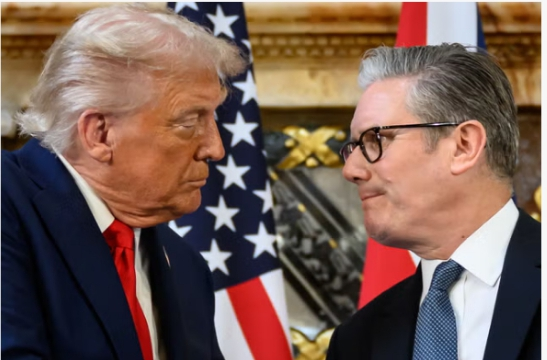
Trump also singled out Starmer personally, claiming, “It’s not going to matter, but [Starmer] should have helped… he should have.” By framing the UK’s actions as insufficient, he signals that the US-UK relationship strained, with leadership decisions in Britain affecting strategic military outcomes.
Political commentators suggest Trump’s repeated use of “sad to see” signals disappointment not just in policy but in the broader alliance. While France is praised for decisiveness, the UK is portrayed as hesitant, creating tension. Experts agree that the US-UK relationship strained during high-stakes operations against Iran.
The Cypriot bases now provide strategic access for US forces, but Trump’s remarks imply the UK is not meeting expectations. He lamented that “it’s very sad to see” Britain’s approach, making clear that the US-UK relationship strained.
Comparing allies, Trump said, “They’ve all been great,” highlighting that Britain lags behind in providing rapid support. Analysts see this contrast as a public nudge for the UK to align more fully in future operations, further emphasizing that the US-UK relationship strained.
Historical context amplifies Trump’s critique: previous US administrations valued close ties with Britain, but he argues the current situation is different.
The statement “the relationship is obviously not what it was” underscores how diplomatic and military coordination issues contribute to a US-UK relationship strained.
Starmer’s domestic political position may also influence how the UK responds in future conflicts. Trump’s insistence that “[Starmer] should have helped… he should have” frames inaction as a leadership failure, showing that policy choices have direct consequences, with the US-UK relationship strained as a result.
Meanwhile, US forces continue operations in the Middle East, including strikes on Iranian missile facilities. Trump’s note that the US “did not need Britain to wage war” reinforces autonomy but also implicitly underscores friction in the alliance, highlighting that the US-UK relationship strained despite independent capabilities.
Observers note that Trump’s message may affect NATO discussions and regional coordination, as allies reconsider how quickly they support US-led missions. By emphasizing the UK’s hesitation, he makes clear that the US-UK relationship strained under operational pressure.
Public perception in the UK is divided: some see Trump’s statements as political posturing, while others view them as a legitimate critique of alliance reliability. The repeated use of “sad to see” conveys a sense of disappointment, framing the US-UK relationship strained in a highly public way.
Trump’s remarks reinforce that France and other allies are performing differently. “They’ve all been great” contrasts with Britain’s caution, signaling that the US-UK relationship strained and needs closer alignment for urgent operations.
By highlighting Starmer’s role, Trump shows how domestic politics intersect with international obligations, suggesting that leadership in the UK directly impacts alliance dynamics, underscoring the US-UK relationship strained.
Experts note that “sad to see” functions not just as criticism but as a narrative tool shaping expectations for ally performance. The way Trump frames Britain’s role may influence how future operations are coordinated, emphasizing that the US-UK relationship strained.
Read also: US orders ‘non-emergency’ staff to leave Bahrain, Jordan and Iraq amid regional tensions
Even with Cypriot bases open, Trump signals that Britain’s delayed support threatens operational cohesion. He stresses that despite US independence, historical norms of partnership are under pressure, illustrating that the US-UK relationship strained in both perception and practice.
In conclusion, Trump’s repeated phrase “sad to see” captures his dissatisfaction with Britain’s response, contrasts it with France’s decisiveness, and highlights Starmer’s leadership gap. Overall, the US-UK relationship strained amid Iran strike tensions remains a central concern for policymakers.
About The Author