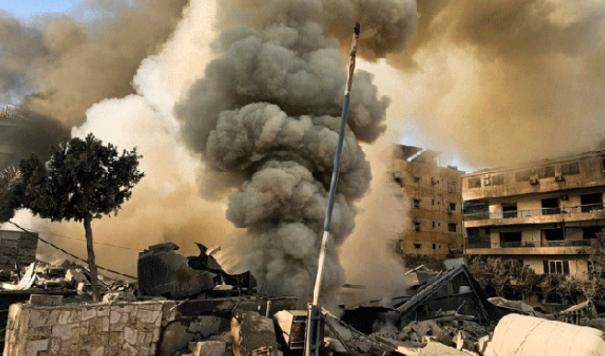
Airlines in Middle East rule out services resuming before Thursday, dashing hopes of a swift return to normal air travel as the US-Israel war on Iran continues to disrupt regional skies.
Major carriers including Etihad Airways, Emirates and Qatar Airways confirmed that scheduled commercial operations would remain suspended for days, with only limited repatriation and cargo flights operating across parts of the Gulf.
The prolonged shutdown has intensified travel chaos across the region, with thousands of passengers stranded and governments scrambling to evacuate their nationals. In the United Arab Emirates, small numbers of evacuation flights began departing after missile and drone activity forced widespread airspace closures.
Airlines said that while some aircraft were repositioned and a handful of outbound services operated under strict safety controls, regular timetables would not resume before midweek at the earliest.
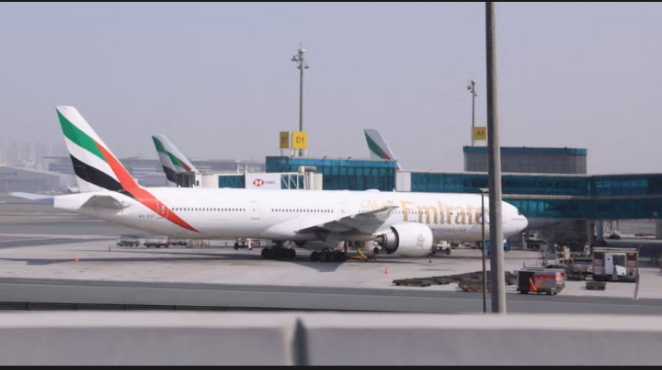
Etihad, based in Abu Dhabi, said its commercial passenger services would remain suspended until at least Thursday afternoon local time. Emirates announced that its scheduled operations would be halted until midnight Wednesday, prioritising customers booked on earlier disrupted services once flights resume.
Qatar Airways indicated that its airspace remained closed and promised further updates, underlining the uncertainty surrounding the evolving conflict.
The aviation analytics company Cirium estimated that more than 11,000 flights into, out of and within the Middle East had been cancelled since the escalation began, affecting over a million travellers.
The scale of disruption has rippled far beyond the region, particularly along key long-haul corridors linking Europe, Asia and Australia through Gulf hub airports.
In the United States, the state department urged citizens to leave more than a dozen Middle Eastern countries using available commercial routes, citing security risks. However, Washington stopped short of organising direct evacuation flights, placing pressure on airlines and allied governments to facilitate departures.
The warning followed projections by Donald Trump that the conflict could last several weeks, deepening concerns that air travel disruption may become protracted.
In the United Kingdom, Prime Minister Keir Starmer said rapid deployment teams were being sent to assist British nationals in the region.
Foreign secretary Yvette Cooper confirmed that about 130,000 Britons had registered their presence in affected areas, with hundreds of thousands believed to be in Gulf states facing potential retaliatory strikes.
Other governments are mounting similar efforts. Germany’s foreign ministry said tens of thousands of its citizens were stranded across airports, cruise ships and hotels, and outlined plans to deploy aircraft to evacuate vulnerable travellers, including children and pregnant women.
Australia also reported that approximately 24,000 of its nationals were in the Middle East, many caught in transit at major connecting hubs.
Industry analysts warned that the suspension of services through Gulf hubs could lead to significant fare increases on alternative routes. John Grant of aviation data firm OAG said the sudden loss of Middle Eastern capacity would push demand onto already full direct Asia-Europe services.
With Easter approaching, available seats are expected to become increasingly scarce, driving up ticket prices in the short term.
Airspace closures remain extensive. Iran, Iraq and Israel have shut their skies entirely, while partial restrictions continue in Bahrain, Kuwait, Saudi Arabia and Syria. Jordan temporarily closed its airspace overnight, compounding the logistical complexity for carriers attempting to reroute aircraft safely.
Tour operator Tui announced plans to coordinate with Gulf carriers to begin repatriation flights for thousands of stranded holidaymakers.

Its chief executive said the company expected to operate initial services in cooperation with regional airlines, aiming to return customers home as quickly as possible.
For now, the message from carriers is clear: airlines in Middle East rule out services resuming before Thursday, and even that timeline depends on security conditions stabilising.
Until there is a diplomatic breakthrough or a significant de-escalation in hostilities, passengers across continents face ongoing uncertainty, higher fares and limited travel options.
Read also: Iran-US war latest: Israeli troops enter Lebanon after Rubio warns ‘hardest hits yet to come’