The fragile pause in the Middle East has collapsed. A new US Iran strikes escalation began Sunday night as US forces launched a fresh wave of attacks, with President Donald Trump declaring “We’re beating them up” while Tehran responded with missiles fired at US-aligned nations across the Gulf.
US Central Command said the strikes were aimed at “degrading their ability to attack civilian mariners and commercial ships freely transiting the Strait of Hormuz.” Iran hit back, targeting US interests in Jordan, Kuwait, Oman and Qatar, and condemned Washington for making months of diplomacy “futile.”
With oil prices jumping above $74 a barrel and shipping routes under threat, the conflict is now testing both global energy markets and the interim truce signed just last month.
How the Latest Wave of Attacks Unfolded
At 9pm GMT on Sunday, US Central Command announced it had begun “a new wave of strikes against Iran” to protect commercial shipping. Centcom said about 140 strikes were carried out on Saturday night alone, with operations continuing into Monday.
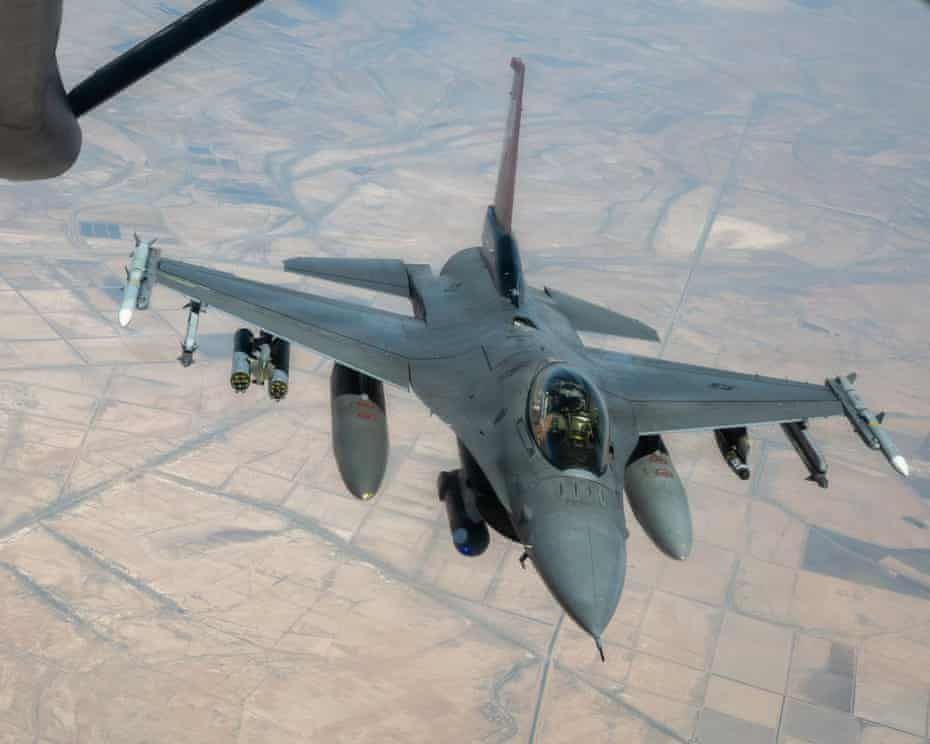
President Trump, referring to the weekend operations, told reporters: “We’re beating them up.” The White House said the directive was to “hold Iranian forces accountable” for attacks on vessels in one of the world’s most critical energy chokepoints.
Iran’s response was swift. Jordan’s army said it shot down four Iranian missiles. Kuwait’s armed forces reported responding to “hostile aerial targets” on Monday. Qatar and the United Arab Emirates, both of which had avoided direct strikes for weeks, also came under fire. Iranian media reported explosions around the port cities of Sirik and Bandar Abbas, and on nearby Qeshm Island.
The Iranian foreign ministry issued a sharp rebuke: “The US regime has also caused the return of insecurity in the strait of Hormuz and disruption of international commercial shipping by openly interfering in the process of Iran implementing the necessary arrangements in the strait of Hormuz.”
Tehran also said talks held with Oman in Muscat on Saturday failed because of “overt and covert” US pressure. Iran’s top negotiator, Mohammad Bagher Ghalibaf, posted on X: “The era of one-sided deals is OVER. We told you: keep your word or pay the price. Reality is knocking.”
Strait of Hormuz Conflict Threatens Global Energy and Trade
The Strait of Hormuz conflict is at the heart of the escalation. The waterway carries about a fifth of the world’s oil and liquefied natural gas. Before the war began in late February, it was one of the busiest shipping lanes on the planet.
Iran has moved to establish a “Persian Gulf Strait Authority” to collect fees for passage and has warned vessels not to sail without its authorization. On Sunday, the authority said transit was “not currently possible” due to US military movements and that permits would be issued “as soon as stability and calm are restored.”
The US, which revoked the licence for Iranian crude sales last week, rejected Iran’s claims. The US Navy-led Joint Maritime Information Centre said an “expanded” southern route near Oman remained open for two-way traffic despite a “severe security threat.”
The economic fallout was immediate. Oil futures opened more than 3.5% higher in Tokyo on Monday, with US benchmark WTI climbing above $74 a barrel. The spike comes at a politically sensitive time for Trump ahead of November’s US congressional elections, where petrol prices are a key issue.
European officials are now considering proposals to allow navigation fees in the strait as a way to manage traffic and reduce confrontation, though no agreement has been reached.
Diplomacy ‘Futile’ as Truce Crumbles
The latest violence casts serious doubt on the interim US-Iranian agreement signed last month, which aimed to reopen the strait and pause hostilities for 60 days of further negotiations. That deal is now effectively suspended.
Iran’s foreign ministry said the new US attacks had “rendered futile all efforts of the past few months to reduce tension and establish peace in the West Asian region.”
Trump has said in the past week that he considers the ceasefire over, but left the door open to more talks. However, with missiles now flying at Qatar and the UAE – both mediators in previous rounds – the space for negotiation has narrowed sharply.
Centcom reported that US forces hit more than 300 Iranian military targets over three nights this week. Iran’s Revolutionary Guards claimed retaliatory strikes in Jordan, Kuwait, Oman and Qatar, though those claims could not be independently verified.
Regional Impact and Military Positioning
The Middle East missile attacks have forced a recalculation for Gulf states. Qatar, which hosted ceasefire talks, and the UAE, a major trade hub, are now directly in the line of fire. Both countries activated air defences on Sunday and Monday.
The US has positioned additional naval assets in the region to safeguard “freedom of navigation.” Centcom said it is targeting Iranian drone sites, missile launchers and coastal defence batteries that it accuses of harassing commercial ships.
Iran, meanwhile, is framing the conflict as a defense of sovereignty. By asserting control over Hormuz, Tehran is seeking leverage not just militarily but economically, turning shipping fees into a bargaining chip.
What Happens Next
Analysts now see three broad paths forward. A widened conflict remains possible if further US Central Command operations provoke Iranian proxies to escalate across the region.
There is also pressure from major oil-importing nations that could push both sides back to talks on a neutral shipping regime for the strait.
Read also: Bangkok Pub fire Tragedy” kills 27, injures dozens at popular live music venue
The third possibility is a prolonged standoff, with a war of attrition in the waterway that keeps energy prices high and trade routes risky for months.
For now, shipping companies are rerouting where possible and paying higher insurance premiums. Consumers are likely to feel the impact at the pump within weeks.
The White House says it remains committed to “degrading” Iran’s capacity to threaten maritime traffic. Tehran says it will not back down until the US stops “interfering.” With both sides claiming the other broke the truce first, de-escalation looks distant.
As one regional diplomat told the Guardian, “We went from talking about fees to talking about missiles in less than a month. That tells you everything.”
About The Author