

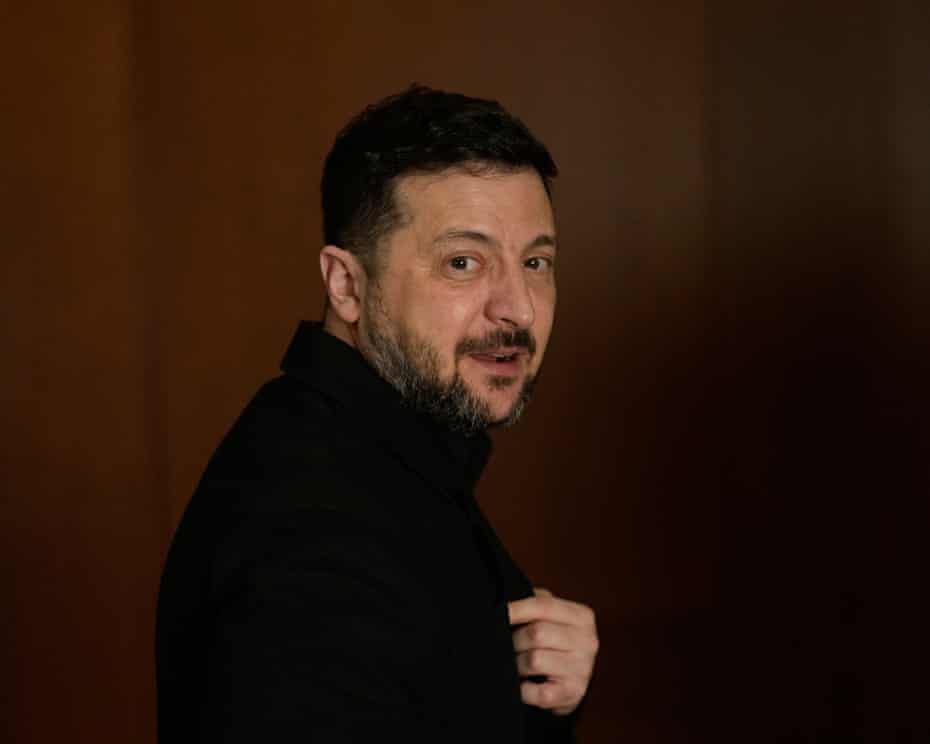
US ignoring Russia-Iran military collaboration – Zelenskyy’s warning
As global tensions stretch from Eastern Europe to the Persian Gulf, Ukraine’s President Volodymyr Zelenskyy warns that the US ignoring Russia-Iran military collaboration could reshape security calculations worldwide. From Kyiv’s embattled streets to the deserts of the Middle East, satellite imagery and strategic intelligence reveal a web of cooperation between Moscow and Tehran that has gone largely unheeded.
“They trust Putin, but the world cannot afford complacency,” Zelenskyy said, framing a crisis that is as technological as it is geopolitical. Analysts note that if these warnings are ignored, the consequences could ripple across continents, affecting military alliances, energy markets, and civilian populations alike.
Zelenskyy emphasized that US policymakers, including Trump-era negotiators, have not fully grasped Moscow’s broader strategy. “We have to recognize that partially Americans feel that the Donbas is nothing for us,” he added, highlighting a disconnect between regional realities and US perceptions.
How Russian satellites are aiding Iranian attacks
According to Zelenskyy, Russian satellites aiding Iranian attacks have played a decisive role in the Middle East. The satellites reportedly captured energy infrastructure, military bases, and strategic positions in Gulf states and Israel, which Russia then shared with Iran.
Military analysts warn that this cooperation allows Iran to launch more precise strikes, increasing the risk of escalation between Iran and the US. “The Kremlin’s intelligence capabilities are not limited to Europe; they extend into the Middle East, amplifying the reach of regional conflicts,” said a defense expert. This development has drawn attention from nations across Asia and Africa, which could be affected by spillover effects.
The implications are far-reaching: advanced satellite reconnaissance, combined with Tehran’s missile capabilities, creates a multi-continent security challenge. Countries previously removed from conflict zones may find themselves navigating economic disruptions, strategic uncertainty, and heightened military alert levels.
White House response to Middle East threats
Critics argue the White House response to Middle East threats has been inadequate. Zelenskyy said US negotiators “spent too much time” in Moscow and insufficient attention has been given to Kyiv’s warnings.
While officials have highlighted efforts to monitor Iranian missile launches, some policymakers acknowledge that the full scale of Russian-Iranian collaboration is poorly understood. Analysts suggest that US reliance on traditional intelligence methods may lag behind Russia’s evolving approach, leaving regional allies exposed to surprise attacks.
Geopolitical risks in Ukraine and Iran conflicts
The risks of geopolitical conflicts in Ukraine and Iran overlap, creating new challenges for international security. Zelenskyy highlighted that Russian ambitions extend beyond Ukraine: if Moscow secures Donbas, it may target other Ukrainian cities such as Dnipro and Kharkiv, while simultaneously supporting Iran in Middle Eastern operations.
This dual-threat dynamic affects Europe, Asia, and North Africa, where countries are already dealing with migration, energy instability, and military tension. “Ignoring the links between these conflicts risks a wider regional war,” a security analyst commented. Coordinated efforts are needed to prevent escalation and stabilize vulnerable regions.
Europe and NATO security strategy
Zelenskyy stressed that Europe and NATO security strategy must evolve to account for both Russian actions in Ukraine and Iranian strikes in the Middle East. He suggested creating a cooperative bloc including Ukraine, the UK, Turkey, and Norway.
Such alliances could manage regional security on multiple fronts, including controlling access to seas and protecting critical infrastructure. Analysts note that Europe alone lacks sufficient military power to deter Russian advances without external partners. Integrating NATO resources with Ukraine’s and Turkey’s forces could strengthen deterrence, improve intelligence-sharing, and reassure smaller nations in Eastern Europe and the Middle East.
Global consequences of ignoring intelligence on Russia-Iran collaboration
The global consequences of overlooking Russia-Iran collaboration are far-reaching. Economically, energy markets face instability as Iranian-backed strikes target oil and gas infrastructure. Humanitarian crises could escalate in regions directly affected by conflict, from Ukraine to the Gulf states.
In Asia, countries reliant on stable oil shipments are watching closely, while African and Latin American nations fear disruptions in trade routes and potential spillover of arms proliferation. Experts warn that “failure to integrate intelligence from multiple regions may result in unexpected shocks across continents.”
Voices from the region: Iran, Russia, and Gulf states
Iranian officials have largely denied cooperation with Russian intelligence, while Moscow calls such claims “Western exaggeration.” Gulf states, particularly Saudi Arabia and the UAE, are quietly bolstering their missile defenses. Israel has accelerated airbase security measures in response to satellite-enabled reconnaissance by Russia and strikes by Iran.
Security think tanks highlight the need for transparent dialogue between all affected nations. “This is not just a US problem; it is a global security issue that demands multilateral coordination,” one Middle East analyst noted.
Economic and human dimensions of military collaboration
Beyond military and political risks, the economic and human dimensions of Russia-Iran collaboration are significant. Disruptions to energy supplies can increase global fuel prices, affecting both developed and developing nations.

Humanitarian organizations warn that escalating conflicts in Ukraine and the Middle East may lead to refugee crises, displacement, and civilian casualties. Countries in Africa, Latin America, and Asia could see indirect consequences through higher costs of imports, reduced investment, and destabilized food security.
The need for global strategic coordination
Zelenskyy’s warnings underline that US ignoring Russia-Iran military collaboration is not just a regional concern—it is a global security issue. Experts advocate for coordinated intelligence, transparent diplomacy, and a reinforced NATO presence.
Read also: Trump’s Iran war powers under scrutiny: U.S. Senate moves to limit military action amid global concerns
As conflicts intersect across continents, ignoring these warnings could allow localized tensions to escalate into broader crises. Strengthening alliances, improving satellite and reconnaissance monitoring, and integrating US, European, and regional strategies are crucial steps. “The world cannot afford to react too late,” Zelenskyy said.
Read more: Ireport247news
About The Author

Hey everyone, I checked out PGbetvip; the VIP bonuses were alright but they could be improved greatly in my mind. So what do you think about pgbetvip personally? Does it deliver what it promises?
Struggling to log into Rich9login. Keeps saying wrong password, even though I’m sure I got it right. Support’s taking ages to respond. Anyone else having issues with rich9login? If you do, please tell me, let’s compare our experience!
Fancy a classy joint, huh? Royalscasino had the nice visuals, that’s for sure. Though that’s about it. Does the payout match the branding? Let’s see now, share your wins or your losses on royalscasino, I’m reading.