

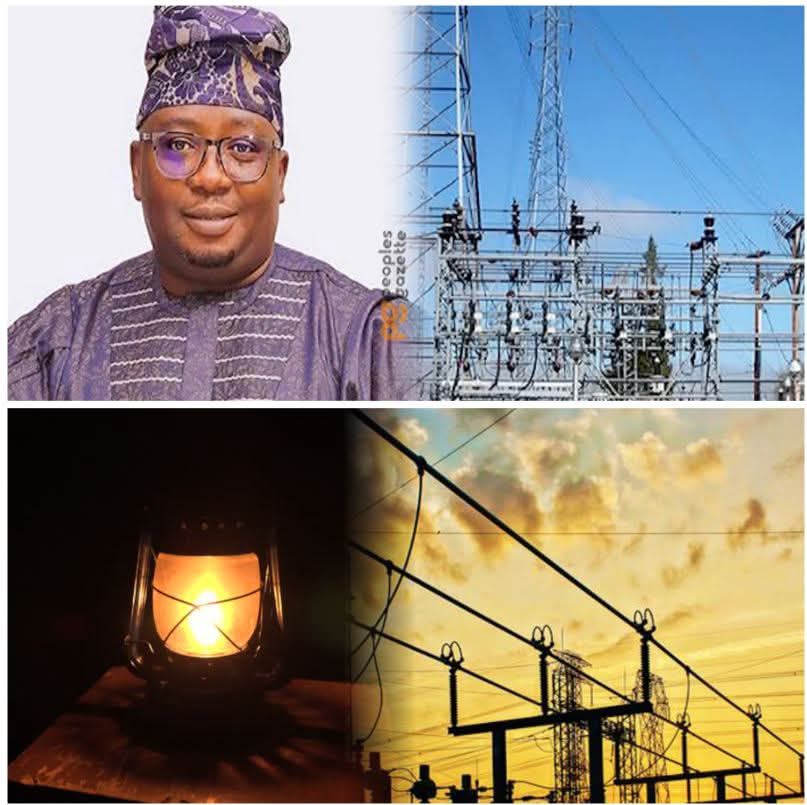
Power Crisis Deepens in Nigeria as Minister Adebayo Adelabu’s Two-Week Electricity Recovery Promise Falls Short
Nigeria’s persistent electricity crisis has taken a more troubling turn as the two-week deadline promised by Minister of Power, Adebayo Adelabu, to stabilise supply has elapsed without significant improvement, leaving millions of households and businesses still grappling with erratic power.
Despite assurances of imminent relief, national grid generation has remained largely stagnant, fluctuating between 3,000 and 4,000 megawatts—far below the country’s estimated demand and even lower than levels recorded in 2025.
The development has raised fresh concerns about the structural weaknesses of Nigeria’s electricity value chain and the feasibility of short-term fixes.
Two Weeks After Promise, Nigerians Still in Darkness
When Adelabu publicly apologised to Nigerians over worsening outages two weeks ago, he attributed the crisis largely to gas supply disruptions and pledged that improvements would be visible within a fortnight.

That timeline has now lapsed, with only marginal gains recorded.
Across major cities and rural communities alike, electricity supply remains inconsistent. While generation has improved slightly from lows of around 2,900MW, it still falls short of delivering meaningful relief to consumers.
For many Nigerians, the promised turnaround has yet to materialise, reinforcing long-standing frustrations with the power sector.
Gas Shortages Continue to Cripple Generation
At the heart of the crisis is a familiar issue—insufficient gas supply to thermal power plants.
Nigeria relies heavily on gas-fired plants for electricity generation, making the sector highly vulnerable to disruptions in gas availability.
According to industry operators, gas suppliers have become increasingly reluctant to continue deliveries due to mounting debts owed by generation companies.
The Chief Executive Officer of the Association of Power Generation Companies, Joy Ogaji, confirmed that gas producers are now demanding payment assurances before supplying fuel to power plants.
This has significantly constrained output, forcing generation companies (GenCos) to operate below capacity.
Load Rejection Worsens Supply Constraints
Beyond gas shortages, another critical factor undermining electricity supply is load rejection by distribution companies (DisCos).
Industry data indicates that even the limited electricity generated is not fully utilised. DisCos have been accused of rejecting allocated power, citing commercial and technical constraints.
According to operators, DisCos often decline electricity supply when:
- The infrastructure cannot efficiently deliver power to end-users
- The load is sent to areas with low revenue potential
- Losses in the distribution network are too high
This situation has resulted in what experts describe as “stranded power”—electricity that is generated but not consumed.
Structural Bottlenecks Across the Power Value Chain
Nigeria’s electricity sector continues to face deep-rooted structural challenges spanning generation, transmission, and distribution.
Generation Constraints
Although the country has an installed capacity of about 15,500MW across over 30 power plants, actual available capacity is significantly lower—around 7,000MW—due to:
- Gas supply limitations
- Maintenance issues
- Financial constraints
- Transmission Limitations
The Transmission Company of Nigeria (TCN) has repeatedly stated that it has expanded its wheeling capacity to 8,700MW. However, questions remain about the real-world efficiency of that capacity.
Distribution Challenges
DisCos, on their part, argue that they can only distribute power where infrastructure exists and where it is commercially viable.
This misalignment between generation, transmission, and distribution continues to create inefficiencies that prevent optimal utilisation of available electricity.
Data Reveals Scale of the Problem
Industry figures highlight the magnitude of inefficiencies in the system.
According to the Association of Power Generation Companies:
- Average generation in January stood at 4,541MW
- Nearly 2,985MW of that power was not utilised
- In February, about 3,274MW of generated electricity went unpicked
These figures suggest that Nigeria is losing a substantial portion of its already limited electricity due to systemic inefficiencies.
Blame Game Intensifies Among Sector Players
As the crisis persists, tensions among key stakeholders have escalated.
Generation companies blame DisCos for rejecting load, while distribution companies point fingers at transmission inefficiencies.
DisCo operators argue that electricity is often sent to locations where demand is weak or infrastructure is inadequate, making it commercially unviable to accept the load.
Meanwhile, TCN maintains that its infrastructure upgrades have significantly improved capacity and insists that the real issue lies in poor demand nomination by DisCos.
This ongoing blame game underscores a lack of coordination across the sector—one of the biggest obstacles to achieving stable power supply.
There is also a growing call for improved governance and accountability across the sector to ensure that reforms translate into tangible outcomes.
Economic Impact: Businesses and Households Bear the Burden
The continued power crisis is taking a heavy toll on Nigeria’s economy.
Businesses—especially small and medium enterprises—are increasingly reliant on diesel and petrol generators, driving up operating costs.
Households are also facing:
- Higher energy expenses
- Reduced productivity
- Increased cost of living
Sectors such as manufacturing, education, and healthcare are particularly affected, as unreliable power supply disrupts operations and limits growth potential.
Why Quick Fixes May Not Work
Energy experts warn that the expectation of resolving Nigeria’s power crisis within weeks is unrealistic given the complexity of the challenges.
The sector’s problems are deeply entrenched and require:
- Long-term infrastructure investments
- Financial restructuring of GenCos and DisCos
- Sustainable gas supply agreements
- Policy consistency and regulatory enforcement
Without addressing these fundamental issues, short-term interventions are unlikely to yield lasting results.
The Way Forward: Coordinated Reforms Needed
To move beyond recurring crises, analysts say Nigeria must adopt a more coordinated and strategic approach to power sector reform.
Key priorities include:
- Clearing outstanding debts owed to gas suppliers and GenCos
- Strengthening transmission infrastructure to reduce bottlenecks
- Incentivising DisCos to improve network efficiency
- Expanding renewable energy sources to reduce dependence on gas
The failure of the two-week electricity recovery promise highlights the depth of Nigeria’s power sector challenges.
While the apology and assurances from Minister Adebayo Adelabu signaled urgency, the lack of meaningful improvement underscores the limitations of short-term solutions in addressing systemic issues.
As generation remains below optimal levels and structural inefficiencies persist, Nigerians continue to endure unreliable power supply—raising critical questions about when, and how, lasting stability will be achieved.
more news at ireport247news