

Paris pickpocket gang leader Roberto Hamidovic has been sentenced to eight years in prison for human trafficking after a court found him responsible for a network that used children to steal from tourists across Paris.
Hamidovic, 48, was described as the head of a family network that deployed groups of child pickpockets, mostly girls, some reportedly as young as 10, around the Paris Métro, Disneyland Paris and other major tourist locations.
According to police evidence presented in court, the children generated an average of about €25,000 (£21,500) each day for the network.
The Paris court heard that children who failed to surrender enough money could face physical and sexual abuse. The adults accused of running the network, however, were said to have enjoyed expensive clothes, hotels, restaurants, cars and casino visits.
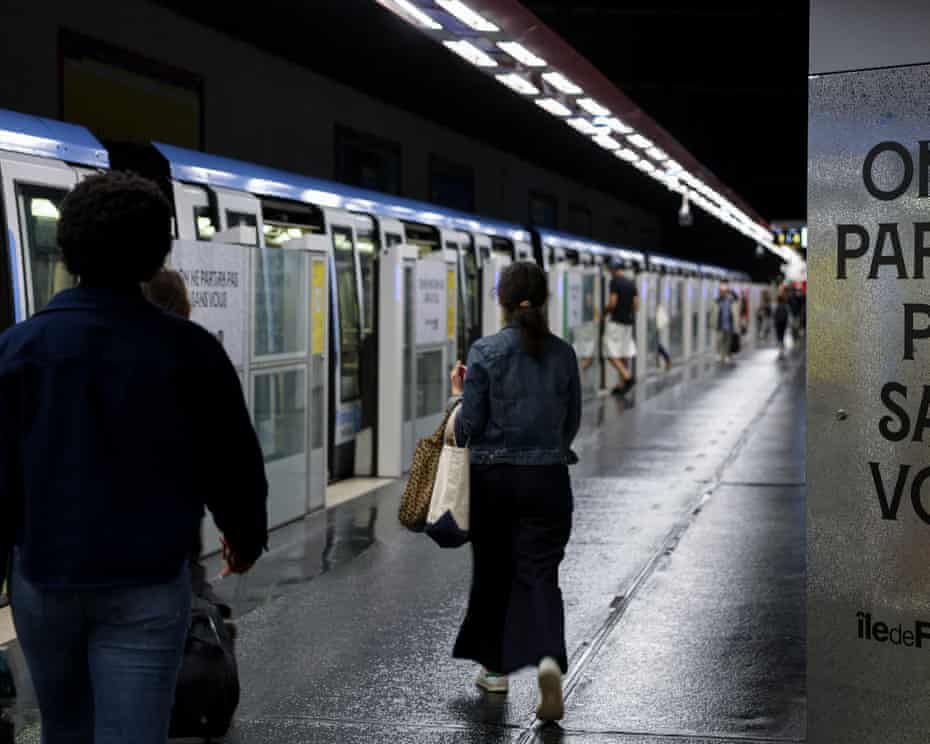
Paris Pickpocket Gang Leader Receives Maximum Sentence
The court sentenced Hamidovic to the maximum eight-year prison term and imposed a €500,000 (£430,000) fine.
His wife, Lejla Hamidovic, received six years in prison and a €300,000 fine, while two of the couple’s sons, a nephew and two female relatives received prison sentences ranging from five to seven years.
The seven defendants had faced charges including human trafficking, organised theft, corruption of minors, money laundering and criminal association.
All of the defendants denied the charges.
The court also ordered the convicted family members to be extradited and prohibited them from entering France after their release. The case followed years of investigations into a network that detectives said extended across several European countries.
Children Used in Organised Theft
Prosecutor Alice Guillet told the court that minors were allegedly used by the family “to ensure a kind of impunity”.
According to the prosecution, some of the children were instructed to tell police that they were 12 years old, which was intended to place them below France’s age of criminal responsibility and result in their release.
Guillet described the girls’ circumstances as particularly “challenging and painful”, saying they were “children without roots, without a future, whose parents sometimes don’t even know their birth date”.
Investigators said groups of between six and nine youngsters were dispatched each day to locations including the Paris Métro, Charles de Gaulle airport and Disneyland Paris.
At Disneyland, the children reportedly mixed with crowds during evening parades while looking for opportunities to steal from foreign tourists.
Participate in the poll: https://ireport247news.com/2027-oyo-governorship-poll/
Investigators also described another method in which the group allegedly waited around bank cash machines, watched customers enter their PIN numbers and then surrounded them before taking money and wallets.
Hamidovic Family Had Long Criminal History
The case has been linked to an earlier investigation involving Hamidovic’s uncle, Fehmi Hamidovic, who was arrested by French police in 2010 alongside members of the wider family.
Fehmi, who had previously been convicted of people trafficking in Austria, was arrested near Rome with two of his sons and other members of the clan during a major investigation involving France and Italy.
Paris judicial police chief Christian Flaesch said at the time: “It feels like we have broken up a completely medieval structure.”
Fehmi Hamidovic was eventually convicted and sentenced to seven years in prison in 2013. Roberto Hamidovic subsequently took control of the family network, which investigators believed was responsible for a significant proportion of thefts in the Paris Métro.
Hamidovic disputed the prosecution’s portrayal of his activities in court, claiming that he worked as a secondhand car dealer and earned between €2,000 and €5,000 per month.
Investigation Traced Network Across Europe
The investigation also examined the role of Hamidovic’s son, Roberto Hamidovic Jr, known as Gony.
According to an investigation by Le Monde, the 22-year-old helped oversee the pickpocket groups and arranged taxis to transport them between locations across Paris.
Investigators said the wider operation involved children being moved between tourist destinations and other locations where they could target visitors.
The investigation also found evidence of significant spending by members of the family, while authorities estimated that Hamidovic and his wife had accumulated about €2 million.
Much of that money was reportedly believed to be held outside France, while the couple also spent time in Pula, a Croatian Adriatic resort.
Prosecutor Highlights Cycle of Child Exploitation
During the trial, Guillet argued that the case involved an intergenerational cycle in which children who were allegedly forced into theft eventually became involved in exploiting younger children themselves.
“During this trial, the issue of determinism arose, an issue that is glaringly obvious from the very first line of the case file,” Guillet said.
She questioned what opportunities the defendants had to break away from the pattern after allegedly being forced to steal during their own childhoods.
“What chance did they have of not putting the younger children to work in turn as soon as they were old enough?” Guillet added.
“The chances were slim, if not nonexistent. They went from being victims to perpetrators … we have to stop this defeatism and fatalism.”
Guillet argued that long prison sentences followed by extradition were necessary to disrupt the network after previous convictions had failed to prevent its continuation.
“In the face of such a system, the only tool is severity. This sends a message,” she said.
Lawyer Challenges Human Trafficking Conviction
Hamidovic’s lawyer, Emperatriz Aguirre, rejected the severity of the sentences and challenged the evidence supporting the human trafficking conviction.
Read also: Iran US talks: Tehran denies dropping conditions as Trump signals more negotiations
“The sentences are too severe because they relate to the crime of human trafficking for which there was no tangible evidence,” Aguirre said after the verdict.
The children involved in the alleged operation were not called to testify in court, with authorities seeking to protect their identities.
Following the arrests, many of the children reportedly disappeared, while others were placed in foster care by social services.
Almost half of those taken into care are believed to have subsequently run away, according to the Guardian.
The case has therefore raised questions not only about organised theft and human trafficking, but also about the difficulties authorities face in protecting children caught inside long-running criminal networks.
The conviction marks a major development in a case that investigators have pursued for years, with authorities examining alleged criminal activity extending beyond France into other parts of Europe.

