The trade relationship between the United States and Nigeria underwent a significant reversal in 2025, with fresh data showing a sharp swing in America’s favour.
After years of deficits driven largely by crude oil imports, the United States recorded a substantial goods trade surplus with Africa’s largest economy, reflecting shifting trade flows, policy changes, and evolving market dynamics.
Data released by the United States Census Bureau indicate that between January and October 2025, the US exported goods valued at $5.94bn to Nigeria while importing $4.49bn worth of Nigerian products.
This resulted in a goods trade surplus of approximately $1.45bn for Washington, marking a dramatic turnaround from the $1.37bn deficit recorded during the same period in 2024.
The reversal underscores Nigeria’s growing role in reshaping US–Africa trade balances at a time of heightened global trade tensions and renewed tariff-focused policies under US President Donald Trump.
US exports to Nigeria jump 60% amid shifting trade policies
A closer look at the figures shows that the trade surplus was driven largely by a surge in American exports and a simultaneous decline in imports from Nigeria.
Cumulatively, US exports to Nigeria rose from $3.71bn in the first 10 months of 2024 to $5.94bn in the corresponding period of 2025—an increase of $2.23bn or just over 60 per cent.
By contrast, US imports from Nigeria fell by $582m year on year, declining from $5.07bn to $4.49bn. Analysts say the combined effect of stronger export performance and softer imports significantly altered the bilateral trade balance.
October 2025 provided a clear snapshot of this shift. In that single month, the US exported $532m worth of goods to Nigeria while importing $369m, resulting in a $162m surplus. This compared with a $103m deficit recorded in October 2024, when imports exceeded exports.
Although exports dipped slightly between September and October 2025, the sharper fall in imports widened the monthly surplus, highlighting how reduced Nigerian shipments played a key role in strengthening the US position.
Nigeria’s outsized role in US–Africa trade
Nigeria’s trade performance stood out even more when placed within the broader African context.
While the United States still recorded a year-to-date goods trade deficit of $3.74bn with Africa as a whole, Nigeria emerged as one of the few major economies on the continent where America enjoyed a sizeable surplus.
Out of total US exports to Africa amounting to $34.08bn in the first 10 months of 2025, Nigeria accounted for $5.94bn, representing about 17 per cent of all US goods shipped to the continent.
On the import side, Nigeria supplied $4.49bn worth of goods, roughly 12 per cent of total US imports from Africa.
In October alone, Nigeria contributed nearly one-third of the total US trade surplus with Africa, underscoring its growing importance in Washington’s continental trade calculus.
Without Nigeria’s $1.45bn surplus, the US trade deficit with Africa would have widened significantly, according to analysts reviewing the data.
Among Africa’s major trading partners, only Egypt recorded a larger surplus with the United States during the period, while countries such as South Africa and Algeria continued to post large deficits.
Tariffs, protectionism and non-oil exports
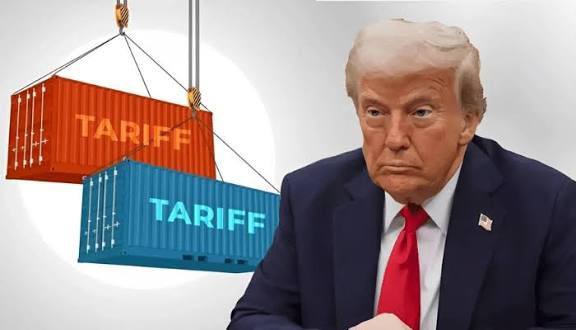
The trade developments occurred against the backdrop of renewed protectionist rhetoric and tariff-driven trade policies linked to President Trump’s administration.
In late July 2025, the US introduced a “reciprocal” tariff regime that raised Nigeria’s tariff rate from 14 per cent to 15 per cent, with implementation beginning in August.
While crude oil exports were largely exempted, the higher tariffs applied to a broad range of non-oil Nigerian exports, contributing to uncertainty among importers and weakening demand for some categories of goods.
Industry observers note that this helped explain the decline in US imports from Nigeria, particularly in non-energy segments.
Despite these challenges, Nigerian officials have played down fears of long-term damage. President Bola Tinubu has said Nigeria’s expanding non-oil revenue base and ongoing economic reforms provide buffers against external trade shocks.
According to him, diversification efforts are reducing Nigeria’s vulnerability to policy changes in key export markets.
Government response and diversification strategy
The Minister of Industry, Trade and Investment, Jumoke Oduwole, has also emphasised that Nigeria would not rush into retaliatory trade measures. Instead, she said the country would stay focused on domestic reforms, investment support, and market diversification.
Oduwole highlighted Nigeria’s growing engagement under the African Continental Free Trade Area, as well as expanding trade relationships with countries such as Brazil, China, Japan, and the United Arab Emirates.
She noted that non-oil exports grew by 24 per cent year on year in the first quarter of 2025, reflecting early gains from diversification policies.
With uncertainty surrounding the future of the African Growth and Opportunity Act, Nigerian authorities are increasingly prioritising South–South trade and regional value chains as part of a longer-term resilience strategy.
Mixed reactions from economists and exporters
Trade experts and economists have offered differing perspectives on the implications of the data. Some stakeholders, including export promotion groups, have called on the US to review its tariff regime, warning that prolonged restrictions could limit Nigeria’s non-oil export potential.
Others argue that the current situation presents an opportunity. Development economist Aliyu Ilias said Nigeria could leverage the disruption to forge new partnerships and strengthen its position within emerging global alliances.
He noted that several major economies are also facing US tariffs, creating openings for alternative trade arrangements.
Similarly, Muda Yusuf, Chief Executive Officer of the Centre for the Promotion of Private Enterprise, downplayed the broader economic impact, noting that Nigeria’s overall trade exposure to the US remains relatively limited and heavily concentrated in crude oil.
However, Yusuf identified US visa restrictions as a more significant long-term challenge to bilateral trade, arguing that barriers to travel and business mobility could have deeper implications than tariffs alone.
Outlook for US–Nigeria trade
As global trade patterns continue to evolve, the fact that US exports to Nigeria jump 60% within a year highlights the fluid nature of bilateral trade relations.
Whether the surplus is sustained will depend on policy choices in Washington, Nigeria’s success in expanding non-oil exports, and broader geopolitical developments.
For now, the data signal a rare moment of advantage for the United States in its trade with Africa’s largest economy—one that both countries are likely to watch closely in the months ahead.
About The Author