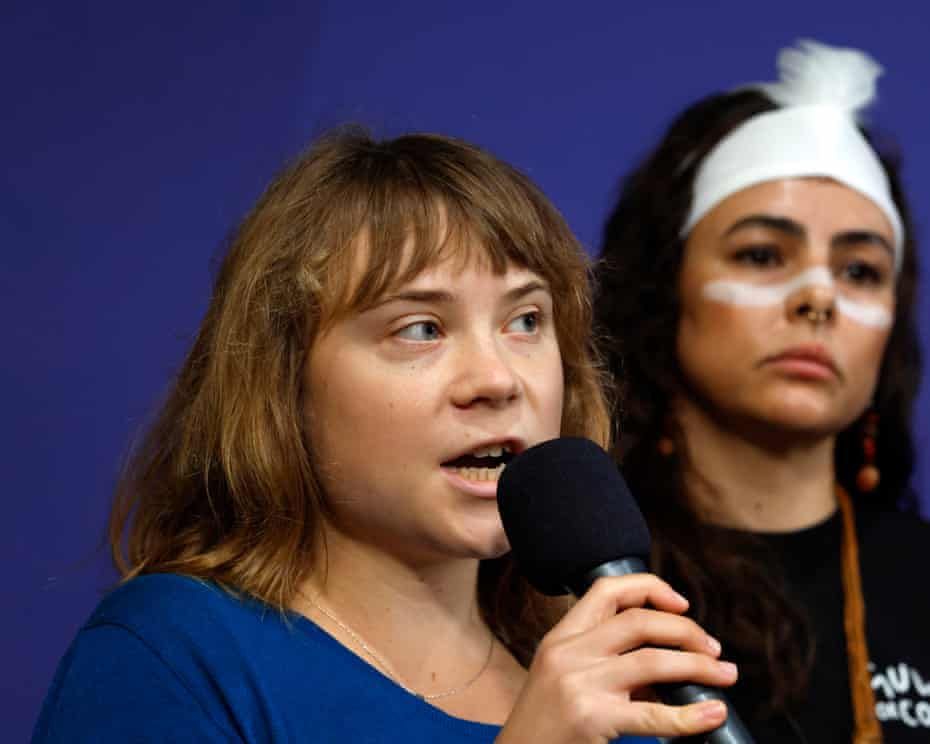
Greta Thunberg has warned that the planet is being destroyed by human activity and accused governments of failing to protect people from the worsening climate crisis, declaring at COP31 that “no one is coming to our rescue”.
The Swedish climate activist delivered the warning during a press conference at the United Nations climate summit in Antalya, Turkey, where she appeared alongside campaigners and political representatives from several countries.
Her intervention came as world leaders, including British prime minister Andy Burnham, addressed delegates on the third day of discussions, with activists demanding stronger commitments and practical action.
“The planet is not dying, it is being killed and we know by who,” Thunberg said.
She continued: “It is being killed by the very same people thought to come to our rescue. No one is coming to our rescue.”
Thunberg also urged people to defend human rights when governments and institutions threaten them, arguing that citizens must take responsibility rather than depend entirely on political leaders.
“When our human rights are being threatened by states and other institutions, it’s our duty to stand up and be the adult in the room and fight for everyone’s human rights,” she said.
Thunberg links environmental destruction to human rights
The activist warned that the consequences of climate breakdown extend beyond rising temperatures and environmental damage.
She argued that continued government inaction could create a future characterised by more genocides, ecological destruction and the erosion of fundamental human rights.
“We are heading towards a future of more genocides and more ecocides and the complete compromise of our basic rights and where basic necessities become luxuries,” Thunberg said.
She added that the situation had become increasingly difficult to ignore at international climate gatherings.
“It’s more clear than ever in spaces like these that the situation could not be any less under control, the planet is not dying, it is being killed.”
Her remarks reflected the growing intersection between environmental activism, international conflicts and demands for accountability from governments.
Thunberg has not attended a COP summit since 2021, when she famously dismissed the Glasgow climate negotiations as “blah, blah, blah”.
Although climate change remains central to her activism, her recent campaigns have increasingly included other causes, particularly the plight of Palestinians.
Her appearance in Antalya attracted considerable attention, with delegates and journalists gathering around her after the press conference.
Activists demand end to Turkish energy supplies to Israel
Thunberg and the campaigners who appeared alongside her also called for an end to Turkish energy shipments to Israel.
The Swedish activist argued that the energy trade was connected to the continuing violence in Palestine, saying the situation was “directly feeling the genocide in Palestine.”
Mohammed Usrof, founder of the Palestinian Institute for Climate Strategy, accused the fossil fuel economy of supporting military operations and environmental destruction.
He said the conflict had personally affected him, claiming that 20 members of his family had been killed.
“This militarized fossil economy continues to profiteer off genocide but also the complete devastation of our land,” Usrof said.
He also described the destruction as an intentional act of ecological devastation and called for Israel to be removed from the United Nations climate framework and the UN itself.
Usrof urged countries, including Turkey, to stop providing fuel that supplies the Israeli military.
The Palestinian issue has become particularly prominent at this year’s summit, with several speakers connecting the environmental consequences of warfare to the wider climate justice debate.
Palestine receives support as Israel remains absent
Palestinian prime minister Mohammed Mustafa received a standing ovation after addressing delegates at the summit.
He called on world leaders to support Palestinians and insisted that the destruction of Gaza should not prevent his country from pursuing its climate commitments.
“Our message from Palestine is clear: no people should be deprived of the right declined of the right [to climate justice] because of occupation,” Mustafa said. “We still need your support.”
Turkey’s COP31 president, Murat Kurum, confirmed that Israel had not been invited to the leaders’ summit.
“As the host country for the leaders’ summit, we did not send an invitation to Israel,” Kurum said, according to local media reports cited by The Guardian.
He explained that climate justice could not be separated from peace, adding that Turkey would not remain silent about the killings in Gaza.
The summit’s Palestinian pavilion has also attracted attention, with a section designed to resemble a tent, featuring black fabric hanging from the ceiling.
The display was intended to reflect conditions in Gaza and draw attention to the destruction experienced by Palestinians.
However, no residents from Gaza were physically present at the gathering. The territory’s borders remain sealed, preventing survivors from travelling to the international summit, although some Palestinians have participated through video links.
Climate activists challenge world leaders over empty promises
Other campaigners at the press conference questioned whether governments were doing enough to address the consequences of climate change.
Sagar Dhakal, a Nepalese member of parliament, described helping to recover people from the debris of a deadly landslide caused by a melting glacier along the Nepal-Tibet border earlier this year.
He said the experience was difficult to describe and called for developed countries to provide greater assistance to vulnerable nations.
“If we all work together we can prevent the next disaster,” he said.
Rikki Dank, an Indigenous Australian activist taking her country’s government to the UN human rights committee over fossil fuel exports, criticised the government’s energy policies.
She challenged Australian prime minister Anthony Albanese to listen to communities opposing fracking, pollution and the expansion of fossil fuel projects.
“Our prime minister needs to stop speaking and start listening when we say no to fracking of our country, to stop speaking and start listening when we say no to poisoning of our water and our sacred sites,” Dank said.
She also called on the government to respect public opposition to new coal, oil and gas developments.
Celine Isimbi, a climate campaigner born to refugee parents from Rwanda and the Democratic Republic of Congo and now living in Canada, criticised prime minister Mark Carney for not attending the summit.
However, she also questioned the effectiveness of leaders who were present but failed to deliver meaningful support.
“Showing up means nothing when families are under rubble, when families have to be rescued from flash flooding,” she said.
“Whether they show up or don’t show up, what changes for us on the ground is nothing because they aren’t putting their money where their mouths are, they aren’t meeting our material demands.”
Burnham faces pressure to deliver concrete climate action
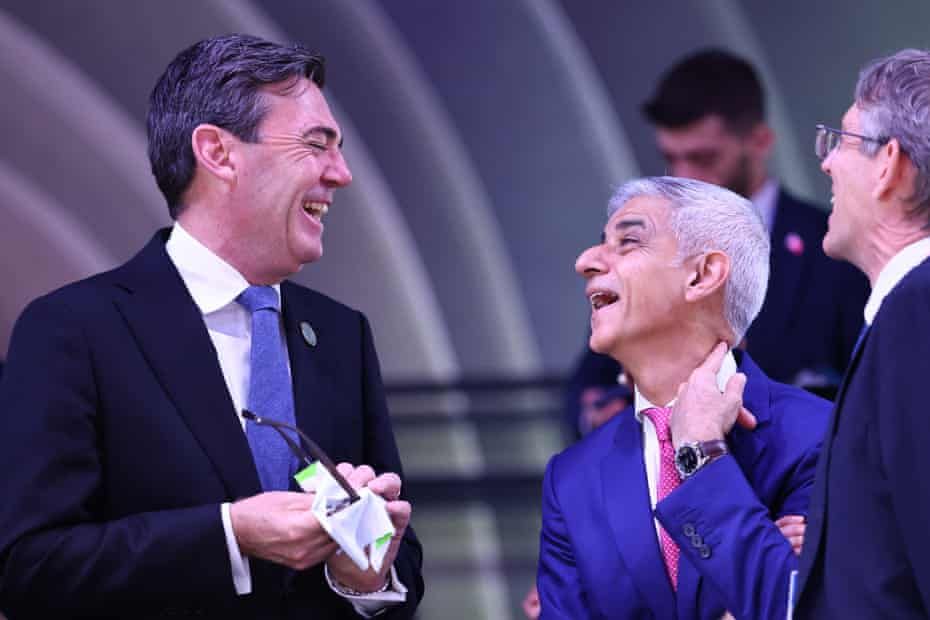
British prime minister Andy Burnham’s participation at COP31 received a cautious welcome from environmental organisations.
Burnham had told delegates that Britain was ready to play its full part in tackling climate change and expressed support for Turkey’s push to increase electrification.
However, campaigners warned that attending the summit and making supportive statements would not be sufficient without measurable commitments.
Beth John, Oxfam GB’s climate justice adviser, described Burnham’s appearance as a positive signal but insisted that meaningful action was more important.
“Showing up is not enough: a crisis of this scale needs substantive action, not just signals. The real test of climate leadership is delivery, not declarations,” she said.
Leon Sealey-Huggins, a senior climate justice campaigner at War on Want, also questioned the proposed global target of increasing electrification by 35 per cent.
He warned that the target could reinforce existing inequalities if wealthier countries continued consuming significantly more energy than poorer nations.
According to scenarios used in International Energy Agency analyses, the United States is projected to consume five times more energy per person than South Asia and 17 times more than Africa.
Sealey-Huggins argued that the electrification ambition would also depend on financial support reaching countries where millions of people still lack access to electricity.
He highlighted the estimated 730 million people worldwide without electricity, stressing that climate commitments must include the resources needed to deliver them.
Developing countries demand climate finance and fairness
Several leaders from vulnerable countries used their speeches to demand greater financial assistance from wealthy nations.
Nthomeng Majara, deputy prime minister of Lesotho, said smaller countries were suffering severe consequences despite contributing very little to global greenhouse gas emissions.
She identified changing rainfall patterns, recurring droughts, floods and land degradation as major threats to food production and security.
Majara called for climate finance to become more accessible, warning against funding arrangements that would increase the debt burden of vulnerable economies.
Fatafehi Fakafanua, prime minister of Tonga, urged developed countries to fulfil their responsibilities by reducing emissions and helping smaller economies transition towards cleaner energy.
“At forums like this, we’ve been told that we ask too much – that our red lines are unreasonable,” he said.
He called on the summit to become a turning point in the delivery of climate commitments.
Matthew Wale, prime minister of the Solomon Islands, described his country as being in “perpetual climate disaster recovery mode”.
He said the nation was dealing with the effects of a prolonged El Niño event while recovering from a category five cyclone.
Wale demanded transparent timelines showing when promised climate funding would actually reach vulnerable countries, alongside independent monitoring of financial commitments.
Scientists warn about the 1.5C climate target
The wider summit discussions have also been shaped by growing concern over the possibility of exceeding the internationally agreed 1.5C temperature limit.
Scientists warned that the world was on course for an “irrecoverable overshoot” of the target, adding urgency to calls for stronger emissions reductions.
Small island nations have repeatedly urged major polluters to take more ambitious action to limit global heating and protect communities facing rising climate risks.
While some developed countries have emphasised electrification, campaigners argue that the transition must also address dependence on fossil fuels and provide adequate financing for poorer nations.
As leaders conclude their public speeches, attention is shifting towards negotiations behind closed doors, where governments will face pressure to turn their promises into practical agreements.
Thunberg’s warning that nobody is coming to rescue the planet has captured the frustration of activists demanding more than diplomatic statements.
Their central message at COP31 is that climate action must be measured by what governments deliver to vulnerable communities, not simply by the speeches made at international gatherings.
About The Author