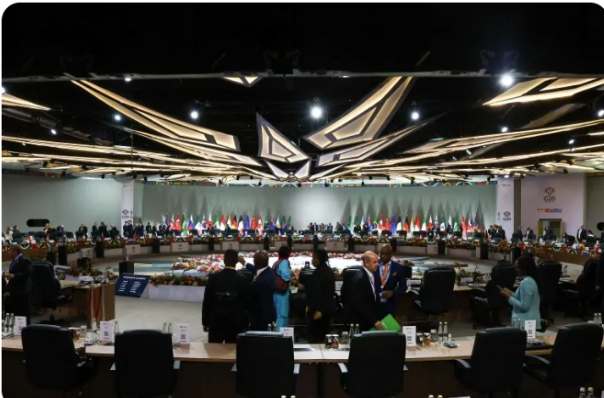
South Africa hosted its first-ever G20 summit on African soil, marking a historic moment as South Africa G20 summit prioritizes developing nations. Leaders gathered to tackle global inequities.
The summit’s declaration emphasised, “We must prioritise the poorest nations in all our economic and climate initiatives.” The Global South development agenda dominated discussions, despite a Trump-led US boycott G20.
President Cyril Ramaphosa opened proceedings, asserting, “Africa’s voice matters. Our priorities must shape global economic governance.” South Africa sought to ensure climate action for poor countries remained central to the agenda.
The final document targeted armed conflicts in Sudan, Ukraine, the Democratic Republic of the Congo, and the occupied Palestinian territory. “Peace is inseparable from development,” Ramaphosa insisted, echoing the Global South development agenda.
Climate change was a major concern. The declaration noted that disasters disproportionately impact vulnerable populations. “We cannot allow climate shocks to deepen inequality,” the summit read, promoting climate action for poor countries.
Debt relief was another top priority. The G20 pledged, “Predictable, coordinated debt restructuring will empower developing economies,” highlighting the critical role of debt relief for developing economies in sustainable growth.
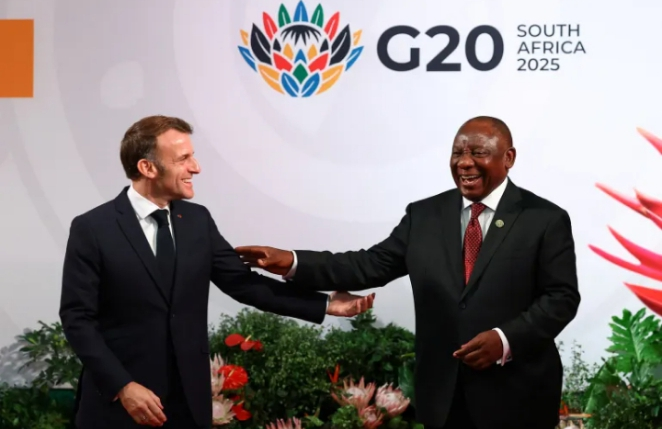
Leaders from Europe, Asia, and Africa debated implementation strategies. French President Emmanuel Macron said, “Our duty is to engage collectively; challenges cannot wait.” His statement reinforced the South Africa G20 agenda.
China positioned itself as a cooperative partner. President Xi Jinping declared, “Collaboration with Africa is essential for global stability,” advancing the Global South development agenda in practical development initiatives.
Trump’s boycott drew international attention. US Secretary of State Marco Rubio dismissed the summit as “distraction-focused,” illustrating the Trump boycott of G20 summit, yet other nations pushed ahead with concrete plans.
President Ramaphosa framed the G20 as a bridge between wealthy and developing nations. “We aim to harmonise global policies while prioritising Africa,” he noted, supporting debt relief for developing economies and local growth.
Experts welcomed South Africa’s assertiveness. Dr. Thandiwe Moyo explained, “This summit is historic. Africa asserting its role signals a shift in global governance towards inclusive representation.”
Renewable energy featured prominently. “Critical minerals must become a development catalyst, not mere export commodities,” the declaration read, linking industrialisation with climate action for poor countries for long-term sustainability.
Food security and agricultural development were also emphasised. African nations urged increased support. “Development is incomplete without ensuring nutrition and resilient agriculture,” Ramaphosa said, reinforcing South Africa G20 agenda priorities.
Trade policies were discussed extensively. Leaders agreed, “Global markets must empower, not exploit developing nations,” reflecting Global South development agenda objectives in trade and investment agreements.
Health and pandemic preparedness were a major focus. The summit pledged equitable vaccine distribution. UN Secretary-General António Guterres stated, “No nation is safe until all nations are safe,” echoing climate action for poor countries and public health links.
Technology transfer and innovation were highlighted. African delegates argued, “Innovation must be shared to lift economies sustainably,” integrating South Africa G20 agenda principles into practical development programs.
Critics argue that G20 lacks binding authority. Ramaphosa responded, “Consensus may be slow, yet moral leadership can drive progress,” reinforcing debt relief for developing economies as a global responsibility.
Security and human rights intersected with development concerns. The declaration stressed civilian protection in conflict zones, highlighting the importance of stability in Global South development agenda discussions.
Financial reforms were recommended to strengthen global institutions and better support developing countries. The summit called for increased transparency, accountability, and effective frameworks for debt relief for developing economies.
Energy transition discussions underscored urgency. African leaders demanded funding for renewable infrastructure. “Climate resilience is non-negotiable,” a South African minister said, highlighting the link with climate action for poor countries.
Macron acknowledged challenges of the US boycott. “Despite absenteeism, the summit must press forward,” he said, emphasising the Trump boycott of G20 summit as a minor obstacle to meaningful outcomes.
The summit spotlighted youth and education. Delegates urged investment in vocational training and STEM fields. “Future leaders must be empowered today,” Ramaphosa asserted, linking skills development to Global South development agenda.
Women’s economic empowerment featured in discussions. Policies promoting equitable participation were proposed. “Gender equity strengthens all development outcomes,” the summit declared, reinforcing the South Africa G20 agenda.
Infrastructure investment was central. Projects connecting Africa to global markets were prioritised. Leaders stressed sustainable financing to support growth and strengthen frameworks for debt relief for developing economies.
Digital economy advancement was highlighted. African representatives stressed bridging the digital divide. “Connectivity is a development catalyst,” one official stated, supporting the broader Global South development agenda.
The summit explored climate-resilient agriculture. Delegates argued for integrating technology into farming. “Smart agriculture protects livelihoods,” Ramaphosa explained, linking innovation with climate action for poor countries and poverty reduction.
Historical context was addressed. Africa’s representation in previous G20 meetings was limited, making this summit unprecedented. “We are reclaiming our space in global decision-making,” Ramaphosa declared, emphasising South Africa G20 agenda.
Geopolitical tensions were debated. European and Asian leaders stressed cooperation despite differences. “Boycotts cannot undermine progress,” Macron said, referencing the Trump boycott of G20 summit, while affirming a united front.
Specific developing countries highlighted their priorities. Nigeria and Kenya pushed for sustainable finance initiatives. “The Global South cannot wait for piecemeal support,” a Nigerian delegate emphasised, reinforcing Global South development agenda.
Energy and mineral policies were discussed at length. African leaders urged value addition locally. “Raw exports are not enough; we need beneficiation,” Ramaphosa said, reinforcing climate action for poor countries and economic sovereignty.
Trade and investment mechanisms were proposed. Delegates recommended preferential access for developing nations. “Economic inclusion is key to reducing inequality,” a Kenyan minister stated, linking the proposal to South Africa G20 agenda.
The summit concluded with optimism. “Africa has proven it can host and lead critical global discussions,” Ramaphosa stated. South Africa G20 summit prioritises developing nations now sets a new benchmark for inclusion.
Looking forward, the declaration stressed review and accountability. Commitments to reduce poverty, promote renewable energy, and implement climate action for poor countries policies remain central to follow-up measures.
“The world must listen to those most affected,” Ramaphosa concluded, underscoring the summit’s broader vision and the enduring impact of Global South development agenda in global policymaking.
The legacy rests on action. From debt relief to industrialisation, each decision links back to the central goal of South Africa G20 summit prioritises developing nations, ensuring Africa’s voice shapes the world stage.