Visa curbs– Britain has tightened visa access for the Democratic Republic of the Congo, escalating pressure on governments it accuses of blocking the return of undocumented migrants.
The Home Office said the decision followed what it called persistent failure by Kinshasa to cooperate with the UK’s new, stricter migrant returns policy.
Under the measures, Congolese nationals will lose fast-track visa services, alongside preferential treatment previously granted to senior officials and decision-makers.
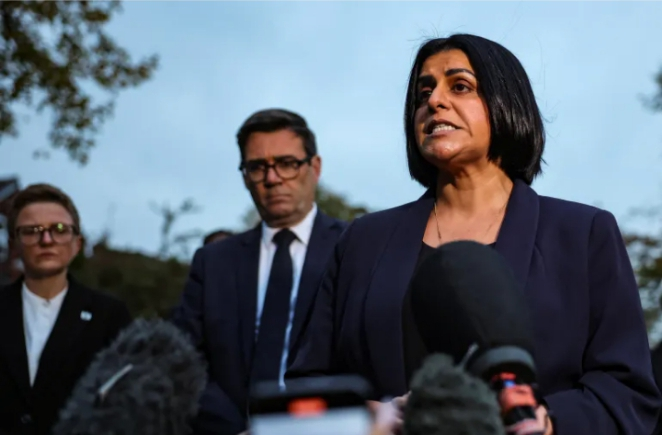
Home Secretary Shabana Mahmood framed the move as a warning shot, signalling Britain’s readiness to escalate restrictions if cooperation does not improve quickly.
She said the UK expected countries to accept responsibility for their citizens who have no legal right to remain in Britain or who commit criminal offences.
Mahmood stressed that visa access was a privilege, not an entitlement, and could be withdrawn entirely if the DRC continued to resist migrant returns.
At the same time, the Home Office announced new return agreements with Angola and Namibia, praising both governments for agreeing to take back their nationals.
Officials described the deals as a breakthrough, marking the first concrete outcomes of sweeping asylum reforms unveiled by the Labour government last month.
Those reforms aim to make refugee protection temporary, accelerate deportations, and sharply reduce legal obstacles used to delay removals from Britain.
The DRC, Angola, and Namibia offered no immediate public response, leaving diplomatic fallout from the announcement still uncertain.
According to the Home Office, the DRC failed to meet newly imposed benchmarks for cooperation, prompting the withdrawal of streamlined visa processing.
Mahmood warned Parliament that Britain would not hesitate to impose a complete visa suspension if engagement from Kinshasa remained inadequate.
“We expect countries to play by the rules,” she said, arguing that refusal to accept returns undermined border control and public confidence.
She thanked Angola and Namibia for what she described as constructive engagement, urging other governments to follow their example.
The visa crackdown forms part of Prime Minister Keir Starmer’s broader strategy to curb irregular migration and blunt the political rise of the far right.
Labour’s centre-left government argues that public anger over migration has been fuelled by perceptions of disorder and systemic unfairness.
More than 39,000 people have crossed the English Channel in small boats this year, surpassing 2024 totals but below the record highs of 2022.
Mahmood insisted the reforms, modelled partly on Denmark’s tough asylum regime, would deter dangerous crossings and disrupt smuggling networks.
She described the existing system as “out of control,” saying difficult decisions were unavoidable if Britain wanted credible border enforcement.
Under the new framework, refugee status will be reviewed every thirty months rather than granted indefinitely.
Refugees deemed no longer at risk will be required to return to their countries of origin once officials classify conditions as safe.
The pathway to permanent residency has also been extended from five years to twenty, a shift critics say undermines long-term stability.
Ministers have further pledged to restrict the use of the European Convention on Human Rights to block deportations.
Since July last year, Britain has removed more than 50,000 people without the right to remain, a twenty-three percent increase.
Foreign Secretary Yvette Cooper said diplomats had been instructed to prioritise return agreements in bilateral relations.
Human rights advocates have condemned the policy, warning it abandons Britain’s historic commitment to protecting refugees.
Former Labour leader Jeremy Corbyn labelled the reforms draconian, accusing the government of pandering to racist right-wing narratives.
Mark Davies, a former Foreign Office adviser, described the approach as shameful and legally precarious.
The Refugee Council cautioned that harsher rules would not stop crossings and risk trapping families in prolonged insecurity.
Read also: 2025: The world in retrospect and 2026 Projections — Is global war on the horizon?
Official figures show asylum claims reached roughly 111,000 in the year to June 2025, the highest level on record.
Despite this, the number of initial approvals fell, highlighting growing restrictiveness in decision-making.
Most migrants still arrive legally, but net migration peaked at 906,000 in 2023 before dropping sharply under tighter rules.
The DRC visa curbs signal a tougher diplomatic posture, as Britain links mobility access directly to migration enforcement cooperation.
Whether the strategy reduces irregular arrivals or deepens international tensions remains an open and politically charged question.