Saudi Coalition – Saudi Arabia has warned it will counter militarily any separatist actions undermining de-escalation in southern Yemen, escalating pressure on former allies amid widening territorial and political fractures.
Riyadh’s message targets the Southern Transitional Council, urging its forces to withdraw peacefully from Hadramout and al-Mahra, provinces seized during a rapid eastward push.
Defence Minister Khalid bin Salman framed the warning as a last appeal to reason, signalling Saudi readiness to act if diplomacy fails or civilian lives face renewed danger.
The Saudi-led coalition insists de-escalation remains its priority, yet emphasises that violations will be met directly and immediately, underscoring shrinking patience with unilateral separatist expansion.
Coalition spokesman Turki al-Maliki accused STC forces of grave abuses against civilians, allegations adding moral urgency to Saudi warnings while deepening mistrust between erstwhile partners.
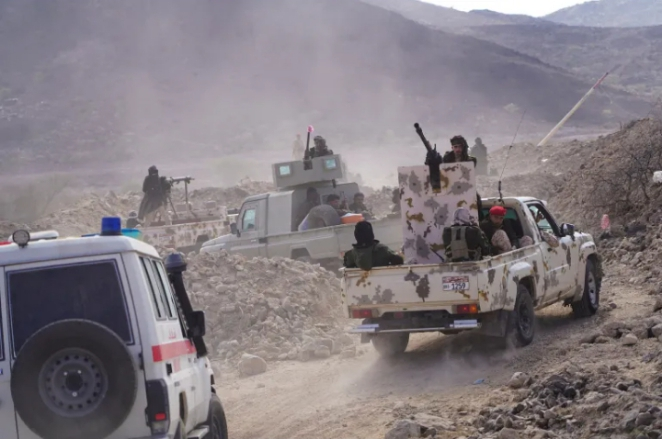
These statements followed STC claims that Saudi aircraft struck separatist positions in Hadramout, accusations Riyadh has not detailed publicly, intensifying uncertainty and regional speculation.
Washington responded with calls for restraint and diplomacy, highlighting international anxiety that southern Yemen’s conflict could unravel broader efforts to calm a decade-long war.
Earlier this month, STC-aligned forces captured strategic areas from the Saudi-backed government, overturning years of tactical cooperation against Iran-aligned Houthi rebels.
The speed of the advances shocked Yemeni officials, revealing how fragile the coalition government remains despite international recognition and sustained Gulf support.
Hadramout, Yemen’s largest province, holds symbolic and economic significance, making its seizure a strategic turning point rather than a peripheral battlefield shift.
Al-Mahra’s location near the Omani border further complicates regional calculations, raising concerns about smuggling routes, external influence, and border security.
Saudi officials argue that separatist entrenchment risks civilian harm and long-term fragmentation, threatening any credible path toward national reconciliation.
Members of Yemen’s Presidential Leadership Council welcomed Riyadh’s firm language, portraying Saudi Arabia as a guarantor of stability against centrifugal political forces.
Rashad al-Alimi, council head, warned that STC movements constituted serious violations against civilians, strengthening the government’s case for coalition intervention.
The STC rejects such characterisations, maintaining it represents southern aspirations ignored by successive governments since Yemen’s unification collapsed into conflict.
Backed historically by the United Arab Emirates, the STC seeks to revive an independent South Yemen, a goal clashing directly with Saudi preferences for territorial unity.
This divergence strains Saudi-UAE relations, exposing rival visions within an alliance otherwise aligned on regional security and economic integration.
Abu Dhabi has welcomed Saudi efforts publicly, yet the episode highlights competing proxies and priorities inside Yemen’s fragmented political landscape.
Yemen’s government urged the coalition to take all necessary measures to protect civilians and support national forces in Hadramout after separatists consolidated control.
A Yemeni military official disclosed that roughly 15,000 Saudi-backed fighters amassed near the border, though no advance orders had been issued.
Their deployment signals readiness without commitment, a calibrated posture balancing deterrence, diplomacy, and domestic Saudi sensitivities after years of costly war.
Separatist leaders insisted they remain undeterred by alleged Saudi strikes, vowing to defend gains and pursue southern self-determination.
Such defiance suggests miscalculation risks are growing, with local clashes potentially dragging regional powers into renewed confrontation.
International actors fear escalation could derail prisoner exchanges and confidence-building measures achieved between the government and Houthis.
The Houthis, controlling most northern territories since 2014, remain Yemen’s most powerful armed faction, benefiting strategically from southern disunity.
Analysts warn that a fractured anti-Houthi camp strengthens Tehran-aligned rebels by default, complicating any inclusive political settlement.
Saudi Arabia’s evolving Yemen policy has emphasised exit strategies and border security, making southern instability particularly unwelcome.
Riyadh’s insistence on peaceful withdrawal reflects lessons from prolonged conflict, yet its red lines indicate tolerance limits have been reached.
Azerbaijan and other states welcomed Saudi-UAE de-escalation efforts, illustrating broader diplomatic interest in preventing Yemen’s conflict from re-internationalising.
Despite calls for unity, Yemen’s government remains a patchwork coalition held together largely by shared opposition to the Houthis.
That cohesion now frays as separatists pursue maximalist goals, exposing contradictions embedded since the anti-Houthi alliance formed.
Southern grievances are real and longstanding, yet unilateral military solutions risk entrenching warlordism rather than delivering accountable governance.
Civilian communities in contested provinces face uncertainty, fearing displacement, disrupted livelihoods, and renewed violence after fragile calm.
Saudi officials argue decisive deterrence now could prevent wider bloodshed later, framing intervention as preventive rather than punitive.
Critics counter that air power and threats risk hardening positions, pushing separatists further from negotiated compromise.
The coming weeks will test whether diplomacy can reverse territorial faits accomplis without igniting broader conflict.
Much depends on quiet mediation between Riyadh and Abu Dhabi, whose alignment remains crucial to any sustainable Yemeni settlement.
Equally critical is Washington’s leverage, balancing restraint messaging with security partnerships across the Gulf.
Read also: 2025: The world in retrospect and 2026 Projections — Is global war on the horizon?
If talks fail, Yemen’s south could become a new frontline, eclipsing fragile progress elsewhere in the country.
Such an outcome would deepen humanitarian suffering, already among the world’s worst, and prolong regional instability.
For now, Saudi Arabia’s warning stands as both ultimatum and invitation, demanding withdrawal while leaving space for peaceful resolution.
Whether the STC steps back or digs in will shape Yemen’s trajectory, testing alliances, diplomacy, and the limits of de-escalation.
About The Author