

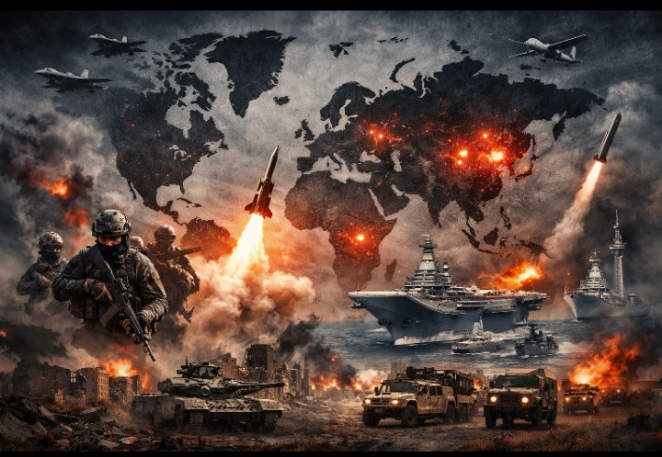
Introduction: A Year That Redefined Conflict and Power
2025: The World in Retrospect — Is Global War on the Horizon? stands as more than a headline — it is a stark assessment of an international order in flux.
From Washington to Beijing, Kyiv to Tehran, Caracas to Abuja, the geopolitical tectonic plates have shifted violently.
Trump returned unpredictability to global policy, Russia continues Ukraine war, China strengthens regional influence.
Africa and Latin America saw proxy conflicts, insurgencies, and humanitarian crises, exposing global governance weaknesses. Overlapping crises foreshadow conditions for potential escalation, even without formal world war.
Analysts warn that 2025 set precedents for high-risk multipolar conflict. Strategic miscalculations, advanced weaponry proliferation, and weak alliances suggest local conflicts could escalate beyond traditional limits.
Trump’s Foreign Policy: Disruption and Unpredictability
President Trump’s 2025 foreign policy emphasized unilateralism, military primacy, and transactional alliances, unsettling allies and provoking adversaries.
Controversial proposals, including Gaza intervention plans and overseas strikes, highlighted prioritization of domestic ideology over traditional diplomacy.
“Trump’s worldview is now on paper for the world to see,” reflected a senior analyst, showing U.S. unpredictability and potential global consequences.
Airstrikes in Nigeria and other regions exemplified extraterritorial readiness to use force, signaling a shift from restraint and encouraging adversarial testing of U.S. resolve.
Russia and Ukraine: A Slow Drift Toward Prolonged Conflict
The Russia‑Ukraine war continued into 2025, marked by missile strikes, drones, and limited gains amidst sanctions and isolation.
Moscow deepened alliances with North Korea, reinforcing an anti-Western axis and creating global security concerns.
“We are willing to fight to achieve all our objectives if Ukraine does not agree to a peace deal on our terms,” stated Putin.
Despite stalemates, NATO adopted a wartime mindset, increasing defense budgets and preparing for protracted engagements in Eastern Europe.
Middle East Flashpoints: Proxy Wars and Direct Engagement
Israel-Iran tensions escalated, with missile and drone attacks reaching urban areas, threatening regional stability and energy markets.
The U.S. conducted direct strikes on Iranian nuclear sites, signaling potential escalation rather than containment.
Yemen’s civil war continued with U.S. and allied strikes targeting Houthis, showing intersection of proxy wars and great-power competition.
“Accidental escalation could turn a local conflict into a regional war,” noted a regional security expert.
China and the New Geopolitical Great Game
China asserted influence economically, technologically, and militarily, escalating U.S.-China rivalry.
Trump’s tariffs increased tensions, risking supply chain disruptions and miscalculations in Asia-Pacific.
Military parades with Russia and North Korea sent signals of a counter-Western coalition.
China frames competition as parallel advancement, but reality shows strategic rivalry affecting all major international decisions.
Africa: Conflict, Terror, and External Influence
Africa faced insurgencies, civil wars, and fragile governance, exposing vulnerabilities to foreign influence.
Read also: Zelenskyy to meet Trump in Florida on Sunday amid Ukraine peace talks
External powers acted strategically: Russia via private military contractors, China economically, U.S. militarily.
Nigeria-U.S. military coordination highlights both cooperation and tension over sovereignty and influence.
Africa’s entanglement in great-power competition warns of unintentional escalation risks.
Latin America: Venezuela and Hemisphere Tensions
Venezuela maintained internal control under Maduro amid economic collapse and sanctions.
Migration crises and U.S. naval activity evoke Cold War-era tensions in the hemisphere.
Asymmetric tactics show how isolated states resist great powers while affecting regional stability.
Latin America faces continued instability, with potential for crises spilling into international confrontation.
A Fragmented World: Are We Headed Toward War?
By late 2025, multiple crises exist without formal world war, creating systemic fragility.
NATO embraced wartime readiness, U.S. and China engaged in sustained rivalry, and proxy wars threatened escalation.
Strategists warn of interconnected conflicts slipping toward broader conflagration.
Technological advances, from hypersonic missiles to cyberwarfare, lower conflict thresholds and complicate deterrence.
Hard Truths from 2025
2025: The World in Retrospect — Is Global War on the Horizon? reveals a world at risk: fragile, militarized, and polarized.
Without renewed diplomacy and arms control, local conflicts could cascade into larger confrontations.
Proactive global strategies are necessary to prevent 2025’s conditions from transforming into 2026’s broader warfare.
2026 Projection: Escalation and Strategic Fragility
Introduction: Preparing for a High-Risk Year
2025: The World in Retrospect and 2026 Projections — Is Global War on the Horizon? extends hardline analysis into the upcoming year, assessing trends and escalation risks.
Analysts warn that overlapping crises from 2025 will intensify, with potential for new flashpoints emerging across Europe, Middle East, Africa, and Latin America.
Strategic competition among major powers will deepen, fueled by military modernization, proxy engagements, and weakened diplomatic frameworks.
2026 may see a more militarized world, where local conflicts, miscalculations, or asymmetric actions have global ramifications.
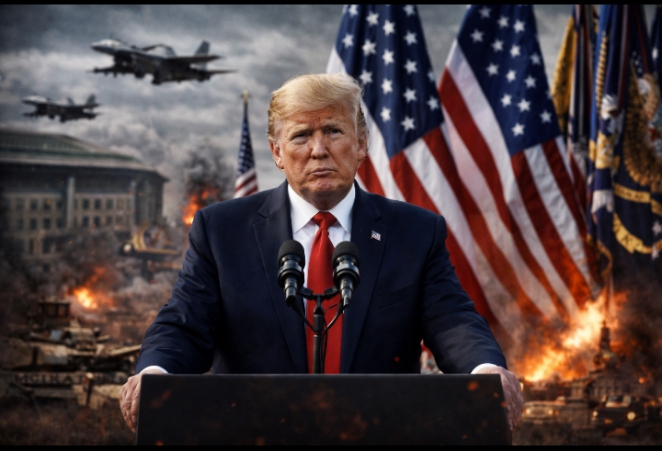
U.S. Policies and Global Impact
Trump’s transactional foreign policy is expected to continue, emphasizing unilateral action, military preemption, and selective alliances.
Direct interventions in the Middle East, Africa, and Latin America may escalate regional tensions, testing NATO cohesion.
Allies may resist U.S. unpredictability, while adversaries exploit opportunities to challenge American influence.
Diplomatic channels may remain reactive, heightening 2026 risks of miscalculation and conflict proliferation.
Russia‑Ukraine and European Security
The Russia‑Ukraine war likely remains unresolved, with periodic escalations and NATO reinforcing Eastern Europe.
Energy, economic, and humanitarian pressures will strain Europe, complicating policy responses and domestic cohesion.
Moscow may continue asymmetric operations while strengthening strategic partnerships, heightening regional instability.
Europe faces prolonged security threats, requiring heightened vigilance and military readiness to counter potential escalation.
Middle East Flashpoints in 2026
Israel-Iran tensions may escalate with missile strikes or proxy actions, affecting regional stability and global energy markets.
Yemen’s war and other proxy conflicts will continue, shaped by outside powers’ strategic interests.
Unexpected escalation remains a high risk, particularly with U.S. and Iranian involvement in regional disputes.
Energy supply vulnerabilities will magnify economic and geopolitical ripple effects worldwide.
U.S.–China Strategic Competition
U.S.–China rivalry will intensify in 2026, including trade, technology, and military posturing.
Potential flashpoints: Taiwan Strait and South China Sea, where miscalculations could trigger conflict.
China will expand influence across Eurasia, Africa, and Latin America, challenging U.S. strategic positions.
The competition risks accidental escalation, with economic, military, and cyber confrontations intertwining globally.
Africa and Latin America as Global Stress Points
Africa remains a theater for proxy conflicts, insurgencies, and foreign influence.
Latin America, particularly Venezuela, continues to challenge U.S. strategic objectives and regional stability.
Migration, economic crises, and armed groups could trigger unexpected regional escalations, drawing in major powers.
These regions will remain testing grounds for great-power competition and potential conflict in 2026.
Global Arms Race and Technological Escalation
Hypersonic missiles, AI-enabled drones, cyberwarfare, and nuclear modernization continue to proliferate in 2026.
Smaller powers may pursue asymmetric capabilities, increasing regional risk and instability.
Alliances emphasize rapid response, preemptive planning, and technology-driven defense strategies.
The global environment becomes increasingly fragile, with local disputes capable of cascading into broader confrontations.
2026 as a High-Risk Year
2025: The World in Retrospect and 2026 Projections — Is Global War on the Horizon? signals that 2026 will see intensified conflict potential.
Read also: North Korea Russia war alliance sealed in ‘blood of war’ as Kim tells Putin in New Year message
Overlapping crises, arms races, and power competition may trigger escalation from local disputes to broader confrontations.
Proactive diplomacy, strategic restraint, and multilateral engagement are critical to prevent cascading crises and preserve global stability.
About The Author
