

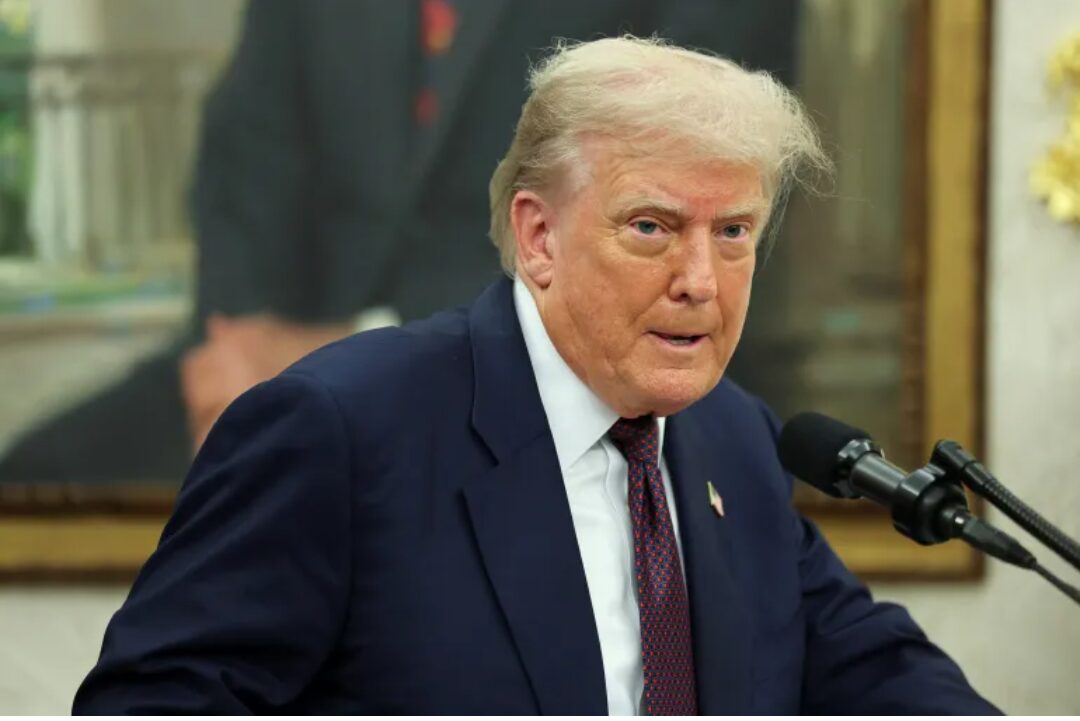

President Donald Trump has secretly signed an order directing the military to take action against drug-smuggling cartels and other criminal groups from Latin America, according to a report in The New York Times. The move appears to confirm statements earlier in the week from Secretary of State Marco Rubio, who signaled the US military had approval to take aggressive action against cartels.
Rubio stated, “It allows us to now target what they’re operating and to use other elements of American power, intelligence agencies, the Department of Defense, whatever … to target these groups if we have an opportunity to do it.” He emphasized the need to treat these groups as armed terrorist organizations, rather than simply drug-dealing organizations.
Mexican President Claudia Sheinbaum faced questions about the risk of US intervention on her country’s soil, acknowledging that her government had received information about the coming order from the Trump administration. However, she denied that the result would be the US military operating on Mexican territory, emphasizing that her country is not at risk of US intervention.

“There will be no invasion of Mexico,” Sheinbaum said. “We were informed that this executive order was coming and that it had nothing to do with the participation of any military personnel or any institution in our territory.” She had previously warned that any US military activity on Mexican territory would be a serious violation of the country’s sovereignty.
The possibility of US military action against cartels has raised concerns about sovereignty and international law. Critics argue that such action could infringe upon Mexico’s territorial integrity and potentially lead to unintended consequences. The Posse Comitatus Act of 1878 prohibits the military from being used as a domestic policing force, and international laws restrict military actions abroad except in instances of self-defense.
The move has sparked concern that the military could be deployed within the US and abroad to combat sanctioned criminal groups like the Sinaloa Cartel, Tren de Aragua, and Mara Salvatrucha (MS-13). Human rights groups have pointed out that civilians living in gang-controlled territory could inadvertently be sanctioned, as they are often forced to pay gangs through coercion.

Trump’s heavy-handed approach has also caused frustration in other parts of Latin America, as well as thorny legal and ethical issues. The US president recently placed high tariffs on Brazil, which Brazilian President Luiz Inacio Lula da Silva called “unacceptable” and described as an effort to interfere in the sovereignty of another country.