

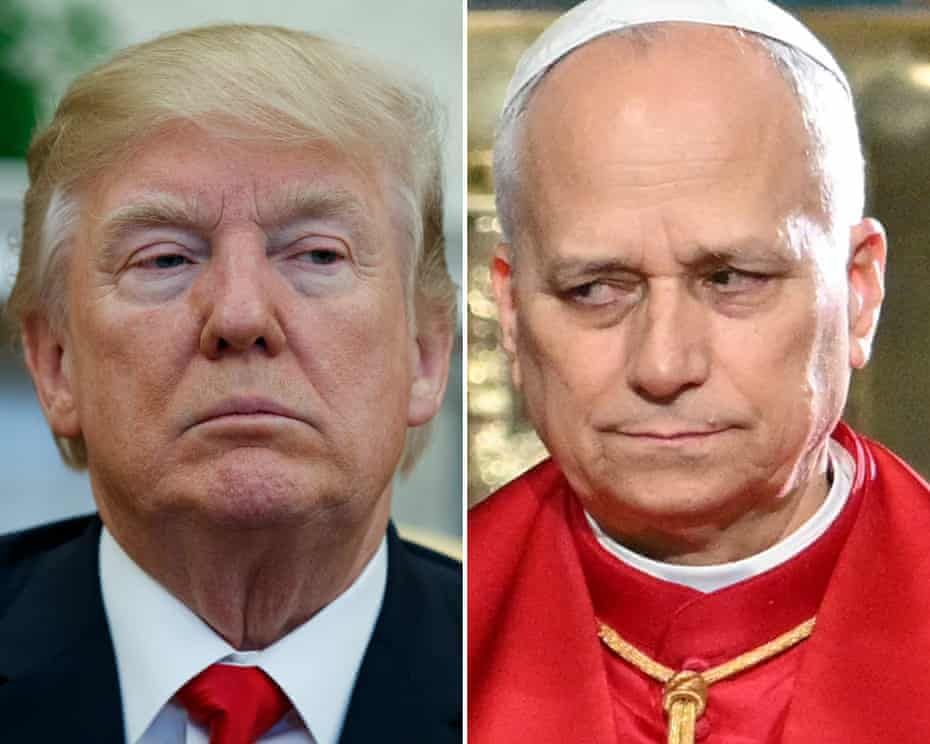
Trump vs Pope Leo Iran stance intensifies global spotlight
The Trump vs Pope Leo Iran stance dispute has entered a sharper phase after Donald Trump accused Pope Leo XIV of “endangering a lot of Catholics” over his perceived position on Iran, according to The Guardian. The renewed verbal attack comes just days before high-level diplomatic talks at the Vatican, amplifying tensions between Washington and the Holy See.
Speaking in a radio interview, Trump said the pope “would rather talk about the fact that it’s OK for Iran to have a nuclear weapon,” adding bluntly: “I think he’s endangering a lot of Catholics and a lot of people.” The US president doubled down, insisting, “If it’s up to the pope, he thinks it’s just fine for Iran to have a nuclear weapon.”
Vatican response and diplomatic balancing
Despite Trump’s claims, Pope Leo XIV has not endorsed nuclear proliferation. Instead, he has consistently called for restraint, ceasefires, and dialogue in the Middle East crisis. His position reflects longstanding Vatican diplomacy rooted in peacebuilding rather than military escalation.
According to Reuters, US ambassador to the Holy See Brian Burch sought to calm tensions, saying upcoming talks would involve a “frank conversation” grounded in “fraternity and authentic dialogue.” He added that disagreements between nations are best resolved through engagement rather than escalation.
Reports indicate that US secretary of state Marco Rubio is expected to meet the pope at the Vatican to “engage in dialogue” and clarify US policy positions, signalling an attempt to prevent the rhetoric from spiralling into a deeper diplomatic rift.
Recalling earlier Trump–Pope Leo altercations
This is not the first confrontation between the two figures. In April, Trump publicly criticised the pontiff, calling him “weak” and saying he was “not doing a very good job.” The dispute escalated further when Trump shared an AI-generated image portraying himself in a Christ-like form, drawing backlash from religious communities.
The pope, for his part, previously pushed back against political pressure, stating: “I do not fear Trump,” while emphasising moral responsibility in global conflicts. He has consistently argued that “peace is needed” and that leaders must pursue “real steps” toward ending wars rather than intensifying them.
US vice-president JD Vance also weighed in, suggesting the Vatican should “stick to matters of morality,” highlighting ideological differences within the broader US leadership on the pope’s global role.
What this means for US foreign policy
The Trump vs Pope Leo Iran stance dispute reflects deeper tensions in US foreign policy direction. Trump’s rhetoric underscores a more hardline approach toward Iran, prioritising deterrence and military leverage. In contrast, the Vatican’s position aligns with multilateral diplomacy and de-escalation.
Analysts suggest this clash could complicate US efforts to maintain moral authority among allies, particularly in Europe where religious diplomacy still carries influence. It may also affect how US policy is perceived in regions with strong Catholic populations, including parts of Africa and Latin America.
Global Catholic influence and geopolitical stakes
Beyond Washington and the Vatican, the dispute carries broader implications for global Catholic leadership. With over a billion adherents worldwide, the pope’s voice shapes discourse on war, peace, and ethics.
By accusing the pontiff of “endangering Catholics,” Trump is effectively challenging that moral authority on a global stage. Observers note that such rhetoric risks politicising religious leadership, potentially dividing Catholic communities along geopolitical lines.
At the same time, the Vatican’s insistence on dialogue reinforces its role as a neutral mediator in conflicts, including tensions involving Iran, Lebanon and the wider Middle East.
Wider geopolitical context: China, Russia and UK dynamics
The dispute also unfolds amid shifting global alliances. The United States is navigating complex relations with China and Russia, while European leaders reassess strategic independence and defence cooperation.
Read also: Romania government collapses after no-confidence vote amid crisis fears
In the UK, political voices such as Nigel Farage and the Green Party have increasingly debated foreign policy direction, particularly regarding military engagement and diplomatic alliances.
The Vatican’s stance on peace contrasts with more confrontational approaches seen in parts of Western politics, highlighting a broader ideological divide shaping international relations.
What happens next
Diplomatic engagement now becomes critical. Marco Rubio’s Vatican visit is expected to test whether dialogue can bridge the growing divide. Officials say both sides aim to better understand each other and prevent tensions from escalating further.
However, the trajectory of the Trump vs Pope Leo Iran stance dispute will likely depend on developments in the Middle East and the tone of future US rhetoric. If the conflict intensifies, pressure on both political and religious leaders to clarify their positions will only increase.
Rather than fading, this clash could redefine how political power and moral authority intersect on the global stage, shaping not just US–Vatican relations but the broader narrative of leadership in an increasingly polarised world.
About The Author

https://shorturl.fm/QqS8V
https://shorturl.fm/Z7FNn