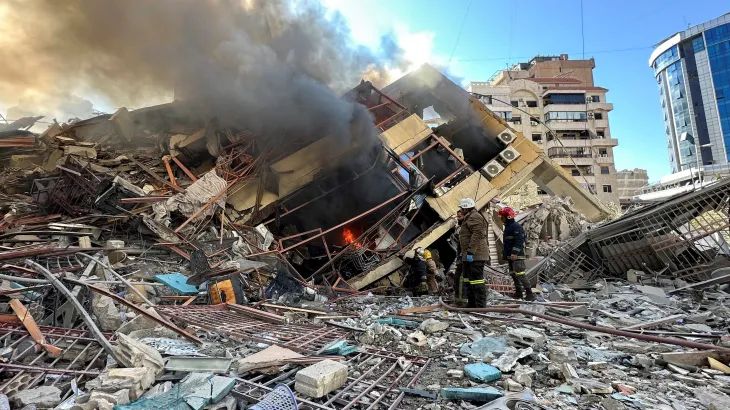
Iran strikes– US President Donald Trump has pledged to continue military strikes against Iran, while Iranian leaders insist they will not surrender under mounting pressure, as hostilities involving Israel expand across the region.
The confrontation intensified following another wave of aerial attacks and missile exchanges, with both sides signalling they are prepared for sustained operations.
Washington said its strikes have significantly damaged Iranian military capabilities, though officials declined to discuss the possibility of deploying ground forces.
Iranian authorities said they remain open to de-escalation if neighbouring countries do not allow their territory or airspace to be used for attacks.
However, officials in Tehran later accused the US of undermining diplomatic openings after American forces reportedly launched operations from bases located in Gulf states.
The regional fallout widened as several neighbouring countries reported incoming projectiles and air defence activity linked to the conflict.
Qatar said ballistic and cruise missiles launched from Iran targeted its territory, with most intercepted by air defence systems. Authorities said remaining projectiles landed in territorial waters or sparsely populated areas without causing casualties.
Air defence forces in Saudi Arabia reported intercepting multiple drones that entered the kingdom’s airspace. Officials did not immediately identify the launch point but confirmed the aircraft were destroyed before reaching sensitive locations.
In Bahrain, authorities reported that falling debris from intercepted missiles injured one person and caused minor property damage in the capital, Manama. Emergency services secured affected areas while investigations assessed the source of the fragments.
Regional political leaders condemned the escalation, warning that expanding cross-border attacks could destabilise the Gulf. Defence officials in Saudi Arabia and Jordan held consultations focused on preserving regional security and preventing further spillover.
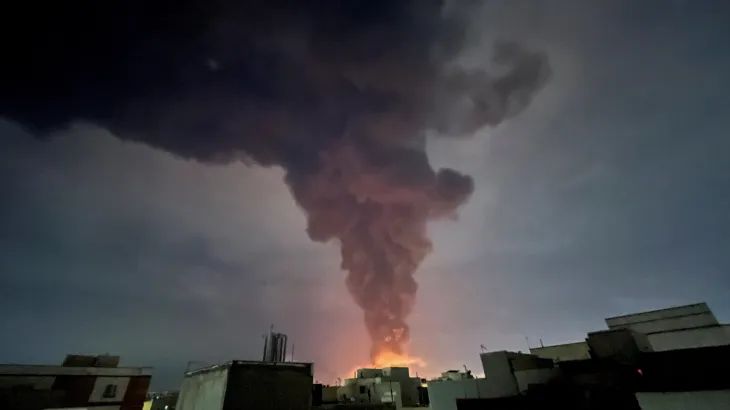
The Israel Defense Forces said it conducted strikes on fuel storage facilities in Tehran that it alleged were linked to Iranian security forces. Israeli officials described the operations as part of efforts to weaken logistical networks supporting military activities.
Israeli Prime Minister Benjamin Netanyahu confirmed additional military actions beyond Iran’s borders, including overnight strikes in eastern Lebanon. Reports from the Bekaa Valley indicated significant casualties, though figures could not be independently verified.
Explosions were also reported in southern Beirut, where witnesses described heavy strikes in densely populated districts. The cross-border exchange raised fears of a broader confrontation along Israel’s northern frontier.
The Lebanese armed group Hezbollah said it launched retaliatory attacks targeting northern Israel and military positions near the border, describing the actions as a response to Israeli operations in Lebanon.
Violence also persisted in the Gaza Strip despite an existing ceasefire, according to Israeli military statements. Reports indicated at least one fatality during an incident in southern Gaza, underscoring concerns that multiple flashpoints could intensify simultaneously.
In Washington, US officials approved the transfer of more than 20,000 bombs to Israel, invoking emergency authority to bypass the standard congressional review process. The munitions package, valued at hundreds of millions of dollars, is intended to replenish Israeli stockpiles amid sustained military operations.
Human rights organisations previously expressed concern about the humanitarian consequences of heavy munitions used in densely populated urban areas during earlier phases of regional fighting. The latest arms transfer is likely to attract renewed scrutiny from advocacy groups and international observers.
Diplomatic efforts continued alongside the fighting, with Oman hosting meetings with ambassadors from multiple regions to press for an end to hostilities. Omani officials stressed that preventing further escalation is a shared regional priority and urged intensified political dialogue.
Analysts say Gulf states are increasingly concerned about the widening geographic scope of attacks, particularly as missile and drone incidents extend into territories not directly involved in frontline combat. Energy infrastructure, aviation routes and maritime corridors remain areas of heightened sensitivity.
Military observers note that both sides appear focused on weakening strategic infrastructure while attempting to avoid steps that could trigger full-scale regional war. However, the frequency of strikes and the growing number of actors involved have increased the risk of miscalculation.
Read also:Son of British couple imprisoned in Tehran appeals to Trump for help amid rising US-Iran tensions
President Trump reiterated that Iran would face sustained military pressure unless it accepts US demands, while Iranian leaders maintained that the country would resist what they described as foreign aggression.
With neither side signalling readiness for major concessions, the conflict appears poised to continue shaping security dynamics across the Middle East.
About The Author