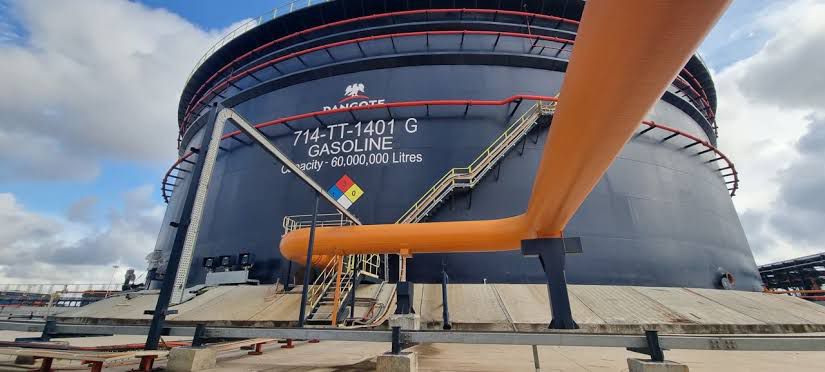
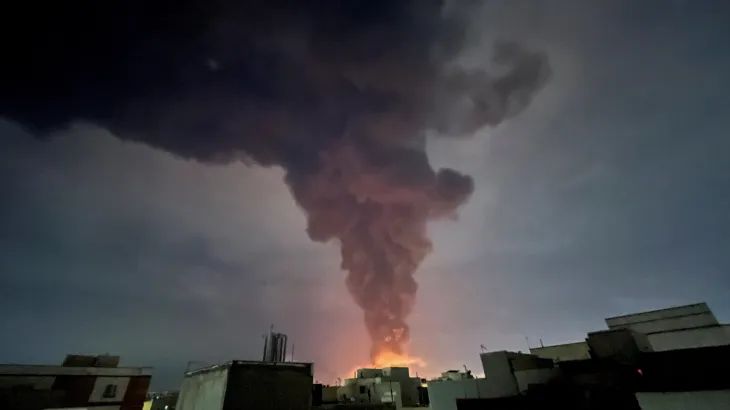
Tehran vows “eye for an eye” response as the Iran war continues to escalate across the Middle East, with intensifying military operations, mounting casualties, and widening geopolitical tensions.
Iranian officials warned that any further attacks on national infrastructure would be met with direct retaliation, signaling a dangerous phase in the conflict as cross-border strikes increase and diplomatic efforts struggle to gain traction.
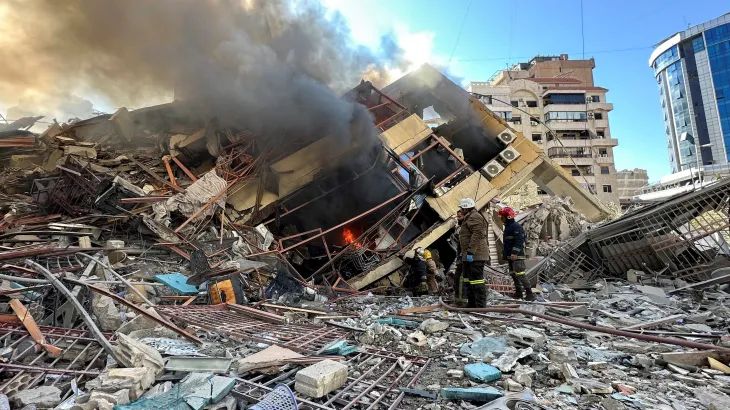
The warning came as heavy bombardment struck areas near the Iranian capital, with local reports indicating significant civilian impact. Military exchanges between Iran and Israeli forces, alongside United States operations targeting strategic facilities, have expanded the scope of the conflict beyond initial expectations.
Regional observers say the pace and scale of attacks now represent one of the most volatile moments since hostilities began.
Iran’s elite military force, the Islamic Revolutionary Guard Corps (IRGC), rejected claims that its missile capabilities had been neutralised, stating that advanced projectiles continue to be deployed.
Iranian commanders insisted that their strategic arsenal remains operational despite sustained air strikes. The statement appeared aimed at countering narratives suggesting that Tehran’s deterrence capacity had been significantly weakened.
Meanwhile, the United States Department of Defense signaled an expansion of offensive operations. Defense Secretary Pete Hegseth indicated that upcoming strike waves would rank among the most intense since the war began.
Military analysts interpret the remarks as preparation for a broader campaign designed to pressure Iran’s strategic infrastructure and command networks.
Fighting has also widened geographically.
Iranian counterattacks have targeted Israeli positions as well as US-linked military assets across parts of the Gulf region. Security sources reported incidents affecting areas in Bahrain and elsewhere, highlighting the growing regional spillover of the conflict.
The expanding theatre of operations has heightened concerns among neighbouring states that previously sought to avoid direct involvement.
In Lebanon, cross-border exchanges between Israeli forces and the armed group Hezbollah intensified, contributing to rising casualties and infrastructure damage.
The clashes mark a renewed escalation along one of the region’s most sensitive frontiers. International monitors warn that sustained hostilities there could further destabilise an already fragile security environment.
Israeli leadership reinforced its military posture, with President Isaac Herzog declaring that operations against Hezbollah would continue until long-term security objectives are achieved. His comments underscored Israel’s determination to counter perceived threats on multiple fronts simultaneously, even as global actors call for de-escalation.
At the diplomatic level, divisions are emerging among Western policymakers regarding the war’s trajectory and objectives. Briefings to lawmakers in Washington reportedly triggered debate over operational costs, strategic goals, and the duration of the campaign. Some officials expressed concern about the absence of clearly defined end-state conditions, reflecting broader uncertainty about how the conflict may evolve.
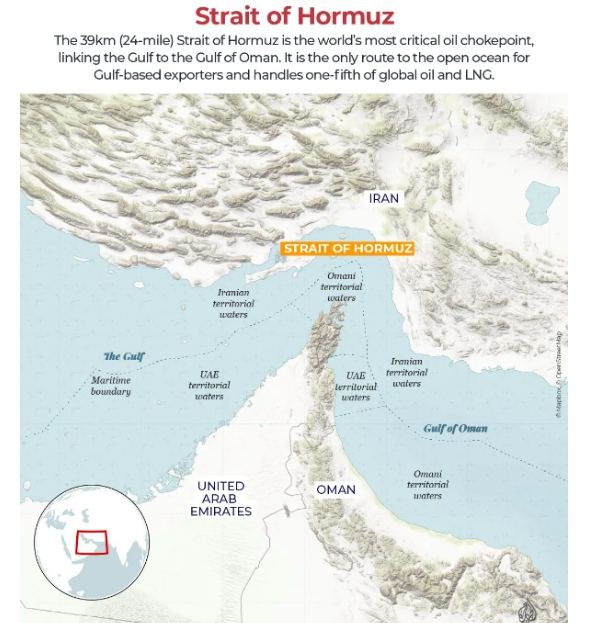
Energy security has become another focal point as maritime tensions affect one of the world’s most critical shipping corridors, the Strait of Hormuz. Global trade analysts warn that disruptions in the passage could affect fuel markets, freight costs, and supply chains far beyond the immediate conflict zone. Shipping insurers have already increased risk premiums, while several carriers review alternative routing options.
Statements from the White House suggested that economic impacts may be temporary, with officials arguing that energy markets would stabilise once military objectives are secured. However, market observers remain cautious, noting that even short-term disruptions in the Strait can trigger price volatility worldwide.
Confusion briefly emerged over reports that US naval forces had escorted commercial vessels through the corridor. Subsequent clarifications from American officials contradicted earlier public claims, illustrating the challenges of information management during fast-moving military crises. Analysts say such discrepancies can influence market reactions and diplomatic perceptions.
International organisations are increasingly focused on the humanitarian and economic implications of prolonged instability. Trade experts note that developing economies may face disproportionate strain if shipping bottlenecks and energy price spikes persist. Previous global crises demonstrated how interconnected supply chains can amplify local disruptions into wider economic shocks.
Regional airlines and transport operators are also adapting to the evolving security landscape. Airspace closures and rerouting measures have forced carriers to adjust flight schedules, contributing to rising operational costs and passenger delays. Aviation authorities continue to monitor risks as military activities shift across multiple theatres.
Despite the intensifying conflict, diplomatic channels remain active behind the scenes. Several governments are urging restraint while exploring mediation pathways designed to prevent further regional spillover. However, entrenched positions among the principal actors complicate efforts to secure immediate ceasefire arrangements.
Security experts caution that rhetoric promising retaliatory escalation raises the risk of miscalculation. With multiple armed forces operating in close proximity across land, sea, and air domains, the possibility of unintended confrontation remains elevated. Strategic analysts argue that communication mechanisms will be essential to prevent sudden escalatory spirals.
Read also: British Airways halts Middle East flights as Iran-US war escalates
Tehran vows “eye for an eye” response as the Iran war enters a critical stage defined by expanding military operations, regional entanglement, and mounting international concern.
The coming days are expected to test both military endurance and diplomatic capacity, with global markets and civilian populations closely watching developments that could reshape security dynamics across the Middle East.
About The Author