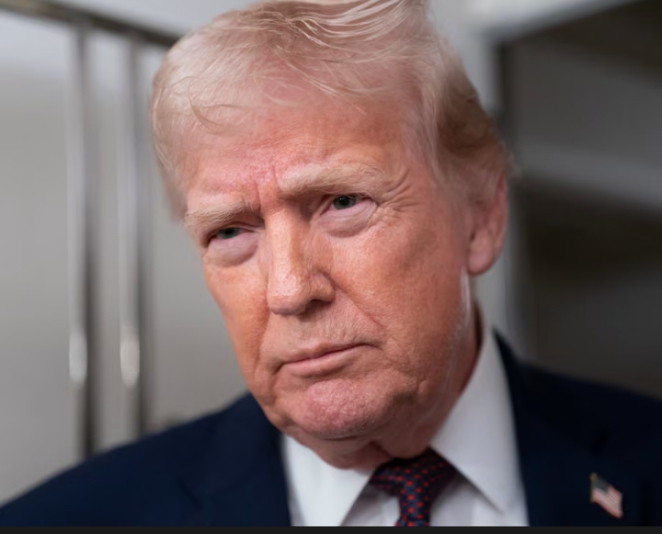
Donald Trump tells Iranians to keep protesting and says “help is on its way” in what officials and analysts describe as the clearest signal yet that the United States president may be preparing to escalate pressure on Tehran, potentially including military action, following weeks of deadly unrest across Iran.
His comments, posted publicly on social media, came as reports of mounting civilian deaths and a sweeping crackdown by Iranian authorities continued to alarm Western governments.
In a message shared on Truth Social, Trump directly addressed demonstrators inside Iran, writing: “Iranian Patriots, keep protesting – take over your institutions!!! … help is on its way.”
He added that he had cancelled all meetings with Iranian officials until what he described as the “senseless killing” of protesters came to an end.

The statement marked a sharp departure from diplomatic caution and appeared to shut the door on Tehran’s recent offer to resume talks on its nuclear programme.
Trump’s remarks followed increasingly credible reports that the number of people killed during the unrest may have reached as many as 2,000, far higher than the figures previously acknowledged by Iranian officials, who had admitted to around 600 deaths.
Human rights groups and international observers have struggled to verify the true scale of the casualties due to severe reporting restrictions and widespread internet shutdowns imposed by the Iranian state.
The call for Iranians to continue protesting came amid indications that demonstrations had temporarily subsided in some cities, largely due to the intensity of the security response.
Mass arrests, lethal force, and the deployment of elite units have been reported across multiple provinces.
Despite this, Trump’s language suggested he believed the movement could regain momentum with external pressure applied to Tehran.
While the US president has not formally announced military action, officials confirmed that Trump has been consulting closely with his national security team about a range of options.
His words indicated dissatisfaction with relying solely on economic measures, even though Washington has already imposed sweeping sanctions and punitive trade policies targeting Iran and its international partners.
On Monday, Trump announced a 25% tariff on any country that continues to trade with Iran, declaring that the measure would take effect immediately.
The announcement triggered a swift response from China, Iran’s largest trading partner, which warned of retaliation. Beijing purchases the majority of Iran’s oil exports and has previously resisted US efforts to isolate Tehran economically.
Liu Pengyu, a spokesperson for the Chinese embassy in Washington, said China would “take all necessary measures to safeguard its legitimate rights and interests,” adding that “tariff wars and trade wars have no winners, and coercion and pressure cannot solve problems.” The warning underscored the risk that Trump’s strategy could further inflame global trade tensions.
Other major trading partners with Iran include India, the United Arab Emirates, Japan and South Korea. Several of these countries have recently concluded trade negotiations with Washington after prolonged disputes over tariffs.
The new US measures have raised concerns that they could once again be drawn into economic confrontation, particularly if exemptions for humanitarian trade are not clarified.
It remains unclear how the new tariffs will be applied in practice and whether they will be layered on top of existing “reciprocal” tariffs imposed by the US.
China already faces steep duties on most goods entering the American market, while India has been penalised over its energy trade with Russia. Economists warn that additional tariffs could have far-reaching consequences beyond Iran itself.
Trump’s latest threats coincided with limited steps by Iranian authorities to ease restrictions on communication. For the first time in days, residents were able to make international phone calls via mobile networks, though access to the internet and text messaging services remained blocked.
Analysts said the move may have been designed to ease pressure without conceding control over information flows.
The difficulty of verifying information from inside Iran has complicated efforts to assess the scale of the violence. The Associated Press cited figures from Human Rights Activists in Iran, a group with a track record of accurate reporting, which estimated that at least 2,000 people had been killed, including more than 100 individuals affiliated with government forces.
The international response has continued to harden. The UK foreign secretary, Yvette Cooper, announced a new round of sector-wide sanctions targeting Iran’s finance, energy transport and software industries.
She described the killings of protesters as “horrendous and brutal” and confirmed that Britain had summoned the Iranian ambassador to emphasise the seriousness of the situation.
Cooper rejected Tehran’s claims that foreign interference was responsible for the unrest, calling such assertions lies and warning that the UK would not play into what she described as the regime’s attempts to mobilise nationalist sentiment against the west.
Similar language has been echoed by officials in several European capitals.
The protests themselves have evolved significantly since they first erupted.
What began as demonstrations over economic hardship, inflation and unemployment have increasingly transformed into open calls for the collapse of Iran’s clerical leadership.
Chants demanding systemic change have been reported even in areas previously considered strongholds of government support.
Iranian authorities have responded with what observers describe as one of the harshest crackdowns in years. In addition to mass detentions and internet blackouts, officials have issued public warnings that participation in demonstrations could result in the death penalty.
Such statements have drawn condemnation from human rights organisations, which argue they amount to collective intimidation.
Trump’s national security team was expected to meet at the White House to discuss next steps, although it was unclear whether the president would attend in person.
Officials speaking on background said options under consideration ranged from intensified sanctions to targeted military strikes against Iranian security infrastructure.
White House press secretary Karoline Leavitt told reporters that airstrikes were among the “many, many options” available, while stressing that “diplomacy is always the first option for the president.”
Her remarks did little to ease speculation that the administration may be preparing for a more confrontational phase.
Despite the mounting pressure, there has been no clear indication that Tehran is prepared to make concessions on its nuclear programme or broader foreign policy in exchange for sanctions relief.
Iran’s foreign minister, Abbas Araghchi, has repeatedly claimed that the protests were orchestrated by foreign terrorist groups, a narrative widely dismissed by western governments.
Read also: Putin takes aim at Zelenskyy over land talks as Russia hardens stance
German chancellor Friedrich Merz offered one of the strongest assessments yet, saying: “I assume that we are now witnessing the final days and weeks of this regime.
When a regime can only maintain power through violence, then it is effectively at its end. The population is now rising up against this regime.”
Whether Trump’s encouragement will embolden protesters or provoke an even harsher response from Tehran remains uncertain.
What is clear is that his intervention has further internationalised Iran’s internal crisis, raising the stakes for a confrontation that now extends far beyond the country’s borders.