The announcement of Trump tariffs on Iran trade has triggered swift international backlash, with China warning it will retaliate against what it sees as an aggressive escalation of the global trade war, as Washington moves to punish countries maintaining economic ties with Tehran amid Iran’s most serious anti-government protests in years.
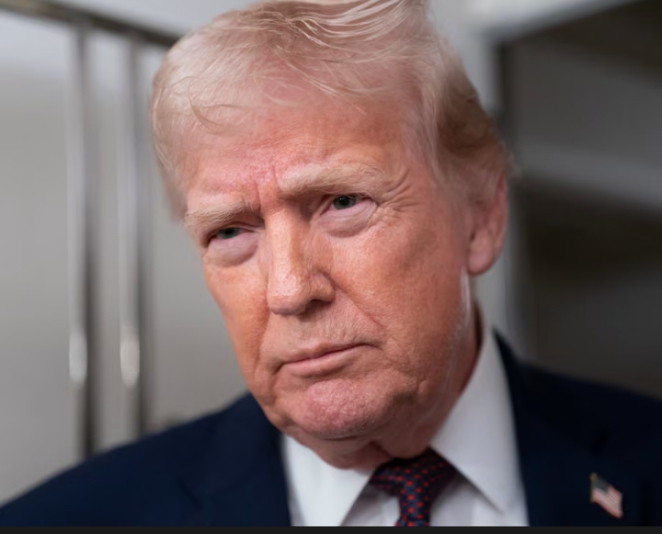
Speaking aboard Air Force One, Donald Trump said his administration would immediately impose a 25% tariff on any country that continues to trade with Iran, framing the decision as a response to what he described as a brutal crackdown by Iranian authorities on mass demonstrations that have shaken the Islamic Republic.
The move marks a sharp departure from previous US sanctions policy by targeting entire national economies rather than individual companies or sectors.
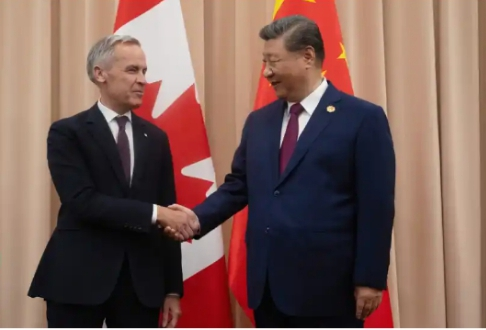
China reacted within hours. Liu Pengyu, spokesperson for the Chinese embassy in Washington, said Beijing would “take all necessary measures to safeguard its legitimate rights and interests,” warning that Washington’s latest step risked destabilising an already fragile global economy.
In a message posted on X, Liu added that “tariff wars and trade wars have no winners, and coercion and pressure cannot solve problems,” underscoring Beijing’s longstanding opposition to unilateral economic punishment.
Under the new policy outlined by Trump, any country that conducts business with Iran would face a blanket 25% tariff on all trade with the United States.
The president said the measure would take effect immediately but offered few details about how it would be implemented or whether exemptions would be granted.
This uncertainty has fuelled concern among US allies and trading partners, particularly those that maintain limited or humanitarian-focused trade with Iran, such as medical supplies and food.
More than 140 countries still engage in some form of trade with Iran, according to World Bank data, though in many cases the volumes involved are small.
Critics argue that a one-size-fits-all tariff could disproportionately harm economies that have minimal exposure to Iran while doing little to change Tehran’s behaviour.
Supporters of the policy, however, say it sends a clear message that the United States will no longer tolerate indirect support for a regime accused of widespread human rights abuses.
China stands to be the most affected. It is by far Iran’s largest trading partner, purchasing an estimated 77% of Iranian oil exports in 2024, according to the data firm Kpler.
Although Beijing recently concluded a tense tariff standoff with Washington, Trump’s latest move threatens to reopen old wounds.
China already faces tariffs of up to 45% on many exports to the US, and analysts warn that an additional 25% levy could significantly disrupt bilateral trade flows.
Other major economies are also caught in the crossfire. India, the United Arab Emirates, Japan and South Korea all maintain substantial commercial ties with Iran.
Japan and South Korea, in particular, had only recently finalised free trade agreements with the United States following bruising negotiations that resulted in baseline tariffs of 15%.
Trump’s new policy risks plunging both countries back into trade uncertainty just as businesses were beginning to adjust to the previous settlement.
The proposal echoes an earlier idea floated by Trump in March last year, when he suggested imposing tariffs on countries trading with Venezuela.
That plan was never fully implemented, in part because of disagreements within the administration over its legality and scope.
This time, however, the president appears determined to push ahead, even as his broader tariff strategy faces mounting legal challenges at home.
US secondary sanctions have traditionally targeted companies that trade with sanctioned countries and then seek to transact in US dollars.
Trump’s approach goes further by penalising entire nations regardless of the nature or scale of their dealings with Iran.
Trade experts say such a policy would be unprecedented in modern US economic diplomacy and could provoke retaliation from multiple fronts.
In a post on Truth Social, Trump declared: “Effective immediately, any Country doing business with the Islamic Republic of Iran will pay a Tariff of 25% on any and all business being done with the United States of America.”
He did not clarify whether the tariff would be added on top of existing “reciprocal” import taxes, a question that has left markets and governments scrambling for answers.
The backdrop to the decision is Iran’s deepening internal crisis. Protests that began over worsening economic conditions have evolved into open calls for the overthrow of the clerical establishment.
Demonstrators have taken to the streets in cities across the country, chanting slogans against senior leaders and defying a heavy security presence.
The authorities have responded with mass arrests, internet shutdowns and stark warnings that participation in protests could carry severe penalties.
Reliable information has been difficult to obtain due to reporting restrictions and communication blackouts, but the Associated Press cited figures from Human Rights Activists in Iran suggesting that at least 2,000 people have been killed, including more than 100 individuals linked to the government.
Iranian officials dispute these numbers and claim the unrest has been inflamed by foreign actors, a charge repeatedly denied by protest organisers.
Trump’s national security team is expected to meet at the White House to discuss next steps, though it remains unclear whether the president will attend.
Military options are reportedly under consideration, ranging from targeted strikes on Iranian security infrastructure to covert operations.
The White House press secretary, Karoline Leavitt, said airstrikes were among “many, many options” on the table but stressed that “diplomacy is always the first option for the president.”
Iran’s foreign minister, Abbas Araghchi, has said that communication channels with the US remain open through special envoy Steve Witkoff.
Read also: Former South Korean President Yoon Suk Yeol could face capital punishment over insurrection case
However, there is little indication that Tehran is prepared to make concessions on its nuclear programme or domestic policies in exchange for sanctions relief.
Instead, Iranian leaders have portrayed the protests as an existential challenge orchestrated by hostile foreign powers.
European leaders have weighed in cautiously.
Germany’s chancellor, Friedrich Merz, said he believed the Iranian regime was entering its “final days and weeks,” arguing that a government reliant on violence to maintain power had lost its legitimacy.
His comments reflect growing impatience in parts of Europe, though many EU states remain wary of measures that could further destabilise the region.
At home, Trump’s tariff strategy faces a critical test. The US supreme court is considering whether the president has overstepped his authority by imposing sweeping tariffs through executive action.
A ruling against the administration could unravel large parts of Trump’s economic agenda.
The president has warned that overturning the tariffs would be “a complete mess,” citing the complexity of issuing refunds and recalculating trade balances.
“It would take many years to figure out what number we are talking about and even, who, when, and where, to pay,” Trump wrote, adding that such an outcome would be “almost impossible” for the country to manage.
A decision from the court is expected imminently and could have far-reaching implications for US trade policy.
As markets digest the implications of the Iran-related tariffs, businesses worldwide are bracing for renewed volatility.
Economists warn that escalating trade conflicts, layered on top of geopolitical instability, risk undermining global growth at a delicate moment.

Whether Trump’s hardline approach will succeed in pressuring Tehran or instead deepen international divisions remains an open question, but the consequences are already being felt far beyond Iran’s borders.