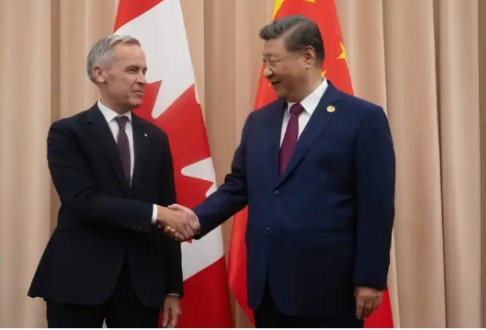
China urges Canada to break from US influence as Prime Minister Mark Carney arrives in Beijing this week, a visit that signals a major shift in Ottawa’s foreign and trade policy as relations with Washington continue to deteriorate.
The trip reflects Canada’s growing determination to diversify its economic and diplomatic partnerships after months of escalating pressure from the United States, including tariffs and provocative political rhetoric.
As Canadian leader Mark Carney lands in China on Wednesday, Beijing views the visit as a rare opportunity to loosen one of Washington’s most reliable alliances.
Chinese officials and state-run media have openly encouraged Canada to chart what they describe as an independent foreign policy course, framed as “strategic autonomy,” rather than continuing to align closely with U.S. priorities.
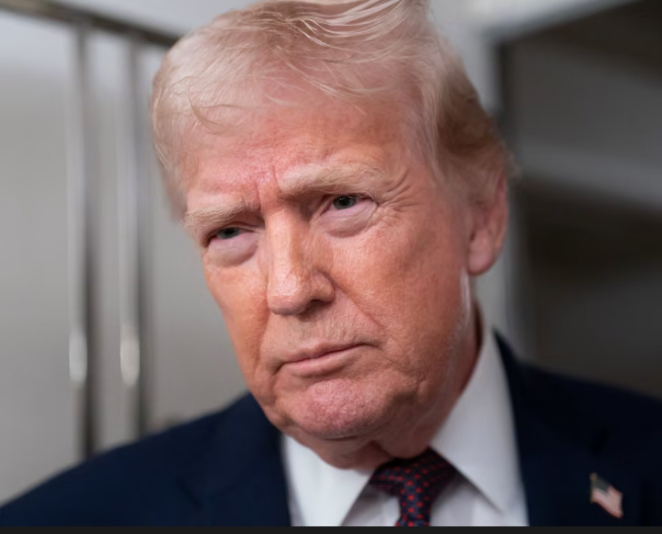
The message comes at a time when long-standing trust between Ottawa and Washington has been strained by trade disputes and increasingly confrontational language from U.S. President Donald Trump.
Canada has historically been one of the United States’ closest allies, bound by geography, shared institutions, and deeply integrated trade.
For decades, the American market has absorbed the majority of Canadian exports, making economic cooperation with Washington a central pillar of Canadian prosperity.
However, Beijing believes that recent U.S. actions are creating an opening. Chinese analysts argue that Trump’s economic aggression toward allies, and what they describe as unilateral military behavior abroad, could gradually weaken Canada’s traditional alignment with the United States.
Beijing’s frustration with the previous U.S. administration also plays into this moment. Chinese leaders were particularly angered by former President Joe Biden’s efforts to strengthen coordination among allies in Europe, the Indo-Pacific, and North America to counter China’s growing influence.
Canada was an active participant in those efforts, supporting trade restrictions and strategic cooperation that Beijing viewed as containment.
Now, with Washington’s relationships under strain, Chinese officials appear eager to test whether those alliances can be softened.
For Carney, the visit is being framed less as a geopolitical realignment and more as an economic necessity. Since taking office last year, he has emphasized the need to reduce Canada’s heavy reliance on the U.S. market.
Trump’s decision to impose tariffs on Canadian exports, coupled with his repeated suggestion that Canada could become America’s “51st state,” has fueled unease across the Canadian political spectrum.
Carney has described the China visit as part of a broader effort to “forge new partnerships around the world” and stabilize Canada’s economic future.
Relations between Ottawa and Beijing have been tense for much of the past decade. The downturn began in late 2018 with the arrest of a Chinese technology executive in Canada at the request of U.S. authorities, an episode that triggered a sharp diplomatic backlash from China.
The situation worsened under former Prime Minister Justin Trudeau, whose government aligned closely with Washington on China-related policies, including restrictions on Chinese technology firms and trade measures targeting Chinese imports.
Tensions escalated again in 2024 when Canada followed the Biden administration’s lead by imposing a 100% tariff on Chinese-made electric vehicles, citing concerns about unfair competition and industrial overcapacity.
Additional tariffs on Chinese steel and aluminum further inflamed relations. Beijing responded with retaliatory measures against Canadian exports, including canola, seafood, and pork, hitting key sectors of the Canadian economy and deepening resentment on both sides.
Chinese state media have been unusually blunt in their assessment of this period. In an editorial published this week, the China Daily argued that Ottawa should reflect on what it called “the root causes of the setbacks in bilateral relations,” blaming the Trudeau government’s policies to “contain China in lockstep with the United States.”
The paper claimed that Canada could avoid repeating those mistakes by asserting greater independence in how it handles relations with Beijing.
“If Ottawa still chooses to subject its China policy to the will of Washington again in the future, it will only render its previous efforts to mend ties with Beijing in vain,” the editorial warned.
The nationalist-leaning Global Times echoed that message, suggesting that Canada’s economic losses from tariffs may have been a wake-up call.
“Perhaps it was the heavy price paid for blindly following the U.S. in imposing high tariffs on China that awakened Ottawa’s sense of strategic autonomy,” the newspaper wrote.
While such commentary is aimed primarily at a domestic Chinese audience, it also serves as a clear signal of Beijing’s expectations ahead of Carney’s meetings.
Canadian officials have sought to temper expectations, stressing that the visit is unlikely to result in the immediate removal of all trade barriers.
They have indicated that progress is expected on certain trade issues, but that major disagreements remain. Human rights concerns, market access, and security issues continue to complicate the relationship, limiting how far rapprochement can go in the short term.
Some Chinese scholars believe that shared unease about recent U.S. actions could create limited areas of common ground.
Analysts have pointed to Washington’s military intervention in Venezuela, which resulted in President Nicolás Maduro being brought to New York to face charges, as well as Trump’s comments suggesting that Greenland, a Danish territory, should fall under U.S. control.
These moves, they argue, have unsettled many U.S. partners.
“We can also see Canada’s current state of considerable unease towards the U.S.,” said Cui Shoujun, a foreign policy expert at Renmin University of China.
“If the U.S. can claim Greenland, might it then lay claim to Canada?” He added that Washington’s actions in Venezuela could strengthen the resolve of other countries to resist what they see as American interference in their internal affairs.
Despite this, Chinese experts caution against assuming that Canada is ready for a dramatic pivot away from Washington. Canada’s economic, military, and cultural ties with the United States remain deep, and public opinion in Canada continues to reflect concern about China’s growing power.
Issues such as China’s booming exports, their impact on jobs in advanced economies, human rights disputes, and tensions over Taiwan all remain significant obstacles.
Zhu Feng, dean of the School of International Studies at Nanjing University, warned against overstating the importance of Carney’s visit.
Read also:Read also: Iran says 2,000 killed in nationwide protests as US urges citizens to leave amid Trump military warning
“Canada is not only a neighbor of the United States but also an ally,” he said, noting that geography and shared security interests impose natural limits on how far Ottawa can shift its alignment. While U.S. pressure may create room for tactical adjustments, it does not erase decades of strategic cooperation.
In the short term, Trump’s confrontational approach toward allies may give China opportunities to expand dialogue and trade with countries like Canada.
However, most analysts agree that American allies will continue to balance any engagement with Beijing against their reliance on U.S. economic and military power.
That dependence may be reduced at the margins, but it is unlikely to disappear entirely in the foreseeable future.
About The Author