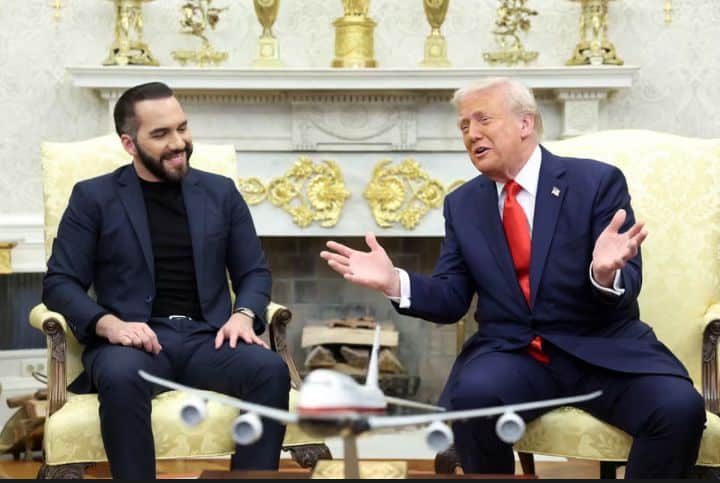
Global investors face mounting uncertainty after China warned it would retaliate Trump tariffs if the US President enforces 100% tariffs, triggering fears of renewed trade war, volatility, and disrupted supply chains worldwide.
Beijing’s commerce ministry blamed Washington for escalating tensions after Trump announced new tariffs and export controls on critical software, claiming such measures are not the way to maintain constructive bilateral relations.
“China does not want a trade war but will defend its rights decisively if the United States persists in its wrong path,” stated a ministry spokesperson via Xinhua.
Trump’s accusations that China made “very hostile” moves to restrict rare-earth exports shocked investors, causing Wall Street losses around $2 trillion, intensifying market concerns over further disruptions to global trade.
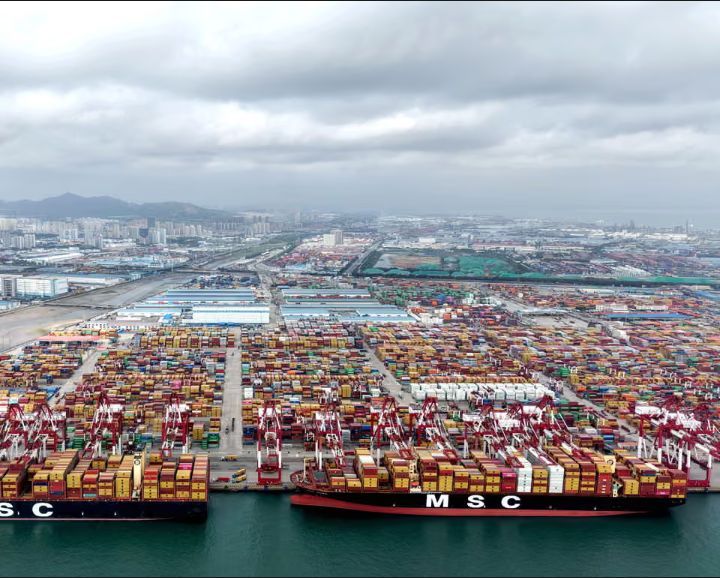
China clarified that recent rare-earth export controls, covering holmium, erbium, thulium, europium, and ytterbium, are legitimate and permit civil-use applications, reassuring compliant businesses amid the US crackdown.
The measures followed Washington adding several Chinese firms to its export control list, preventing circumvention of restrictions on chipmaking technology and other strategic goods deemed sensitive by the United States.
The UK’s FTSE 100 fell almost one percent on Friday after Trump’s announcement, while futures suggest further losses in London and New York, showing markets remain jittery over potential escalation.
Bitcoin initially dropped eight percent following Trump’s post on Truth Social but recovered 1.5 percent as China refrained from immediate retaliation, reflecting investor optimism amid continued uncertainty over global trade policies.
Michael Brown, senior strategist at Pepperstone, described the tariff threat as “unwelcome,” emphasizing markets had largely moved past trade issues before Trump’s sudden escalation rattled investors worldwide.
Brown explained the president’s tactic could be “escalate to de-escalate,” threatening extreme tariffs to focus attention, extract concessions, and push China toward faster negotiations on trade agreements and cooperation.
Global investors worry tariffs could disrupt supply chains for electronics, automotive, and pharmaceuticals, potentially driving up consumer prices, while policymakers closely monitor for signs of broader economic fallout internationally.
Trump’s targeting of rare-earth exports highlights the intersection of trade disputes and national security, with Washington aiming to reduce dependency on China for critical industrial materials essential to US industries.
Beijing considers these measures aggressive, warning retaliation is likely if tariffs are implemented, balancing diplomacy with the intent to protect domestic industries and uphold regulatory authority over sensitive exports.
Officials emphasized export controls comply with international norms, underscoring a dual strategy of legitimacy and readiness to respond decisively to unilateral US measures, shaping market expectations for global trade stability.
Financial instruments, including stock indices, currencies, and commodities, are reflecting investor uncertainty, with volatility likely to persist until clarity emerges on whether Trump follows through or negotiates terms with Beijing.
Economic experts warn that trade escalation could affect countries reliant on US or Chinese markets, while multinational corporations may face operational disruption, prompting global attention to negotiation developments in coming weeks.
Market participants remain alert to official statements, knowing subtle changes in tone or policy could dramatically influence investor sentiment, supply chains, and financial stability in interconnected global markets.
The next weeks are crucial for monitoring statements from both Washington and Beijing, as even minor signals could trigger dramatic shifts in markets, impacting global economic confidence and investor strategy.
The unfolding trade tensions occur amid inflationary pressures, supply chain disruptions, and broader geopolitical concerns, positioning the Trump tariffs dispute as a central factor shaping near-term global economic outlooks.
Investors continue to weigh potential scenarios, from negotiation breakthroughs to full-scale escalation, factoring in geopolitical strategy, market responses, and the resilience of supply chains under prolonged trade pressures.
Global companies, policymakers, and financial institutions are preparing contingency plans, anticipating that tariff implementation or retaliatory measures could influence earnings, trade flows, and strategic investment decisions worldwide.
Markets remain jittery as participants watch for indicators of compromise or escalation, understanding that the stakes involve both economic stability and geopolitical positioning between the United States and China.
Analysts highlight that Trump tariffs could catalyze broader ripple effects, influencing trade policy, technology access, and industrial supply chains, with potential consequences for consumer prices and market confidence globally.
China retaliation warnings and Trump’s aggressive trade stance together amplify uncertainty, reinforcing the perception that financial markets face significant risks until durable agreements or policy clarity emerge.
Observers note that Trump’s approach may test investor patience and market resilience, with both immediate and long-term implications for international commerce, industrial supply chains, and strategic technology access.
Markets now await responses from Beijing and Washington, as any action on tariffs or countermeasures will significantly impact global financial stability, trade relations, and investor confidence in uncertain geopolitical circumstances.
Investors are closely analyzing rare-earth materials supply chains, given their strategic importance for electronics, defense, and green technology, emphasizing how trade restrictions could reverberate through critical industries.
Several economic think tanks warn that prolonged US-China tensions may push global companies to diversify sourcing away from China, potentially reshaping international trade networks and affecting economic growth in both countries.
Market volatility could extend to currency markets, as the US dollar and Chinese yuan may experience sharp fluctuations depending on tariff decisions, investor sentiment, and geopolitical signaling from Washington or Beijing.
The Trump administration continues to frame tariffs as leverage for negotiation, maintaining pressure on China to address intellectual property concerns, export control compliance, and other trade imbalances.
China has indicated that retaliation would be measured yet resolute, suggesting targeted responses rather than blanket measures, balancing domestic industry protection with the need to avoid full-scale financial market panic.
Global investors remain wary of surprises, knowing that even announcements without immediate implementation could influence equities, commodities, and investor sentiment, highlighting the delicate balance between rhetoric and actionable policy.
Experts suggest that multinational corporations may accelerate contingency planning for production relocation, supply chain redundancy, and cost mitigation strategies to reduce exposure to potential trade disruptions stemming from Trump tariffs.
International organizations are monitoring developments closely, recognizing that a sudden escalation could affect global growth forecasts, trade negotiations elsewhere, and investor confidence in a fragile economic recovery from prior disruptions.
The evolving US-China trade narrative underscores the complex interplay between tariffs, rare-earth exports, and financial markets, as both governments navigate strategic objectives, geopolitical pressures, and global economic consequences.
Markets are preparing for continued volatility, with investors, policymakers, and companies factoring in worst-case scenarios while hoping for diplomatic engagement that could avert further economic fallout from Trump tariffs.
Financial analysts emphasize that the coming days may determine whether rhetoric transitions into tangible trade actions, with implications for global investment, supply chain stability, and long-term strategic positioning between two economic superpowers.
China’s cautionary statements reflect a calculated approach: signaling readiness for retaliation while leaving space for negotiation, balancing deterrence against the risks of an escalating trade conflict that could harm global financial markets.
Investors remain focused on any policy signals from Washington or Beijing, knowing that markets, currencies, and critical commodities could react sharply, reinforcing the importance of careful interpretation and strategic positioning globally.
The ongoing tension over Trump tariffs highlights the fragility of international trade relations, as unilateral actions and retaliation threats have potential cascading effects, impacting industries, investors, and governments across multiple continents.
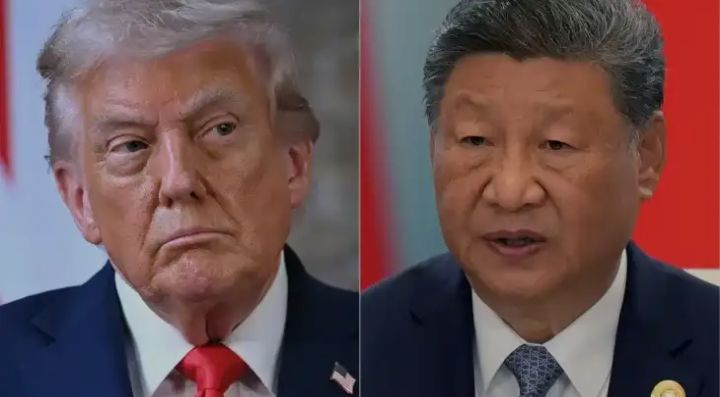
Analysts warn that the conflict underscores the importance of diplomatic channels, trade negotiations, and multilateral engagement, as reliance on economic coercion could destabilize markets and provoke unintended consequences.
Financial markets are likely to experience swings as participants attempt to price in risk, manage uncertainty, and anticipate possible escalation, emphasizing that Trump tariffs are more than policy—they are a global economic signal.
With supply chains, rare-earth exports, and investor confidence in flux, global companies may adopt risk mitigation strategies, reassessing sourcing, logistics, and investment plans to navigate potential outcomes from US-China trade tensions.
The coming weeks may determine whether the Trump tariffs dispute evolves into prolonged trade confrontation or a managed negotiation, with global markets closely watching for any tangible signals from policymakers.
About The Author