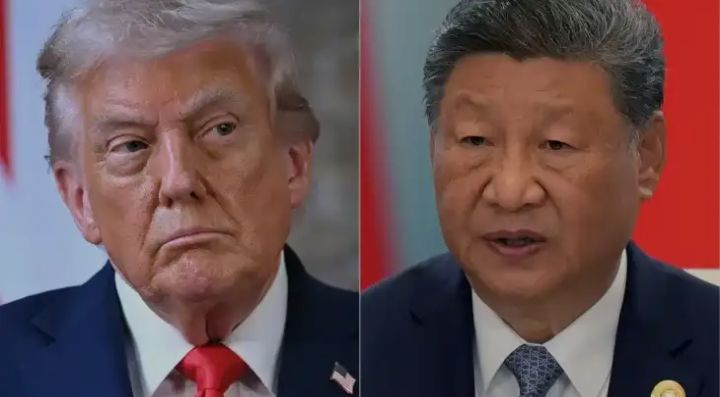
Donald Trump faces calls from Bukele to crack down on US judges, drawing international attention as El Salvador’s President Nayib Bukele urged action against “corrupt judges.”
Bukele’s intervention, widely circulated on social media, was amplified by prominent MAGA figures, including Elon Musk, endorsing Trump faces calls from Bukele to crack down on US judges.
Experts warn that Bukele’s public statements come amid unprecedented threats to US judicial independence, as attacks against judges escalate under Trump’s administration.
The El Salvador leader’s online remarks follow earlier claims that the United States was facing a “judicial coup,” highlighting his penchant for provocative commentary on US law.
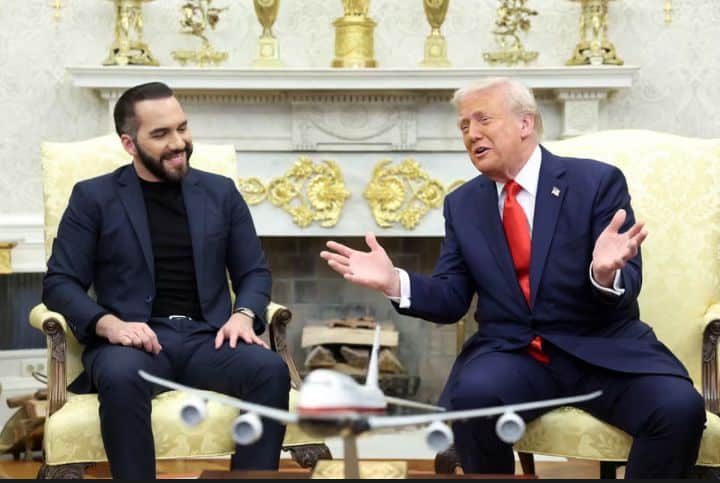
Bukele previously mocked federal rulings restricting deportation flights to his country, which operates with notoriously harsh prison conditions, showing a disregard for international judicial norms.
Amid attacks on Oregon federal judge Karin Immergut, Trump faces calls from Bukele to crack down on US judges, illustrating how foreign autocrats influence domestic political rhetoric.
Immergut issued restraining orders against Trump mobilizing the National Guard in Portland and California, challenging the president’s effort to deploy troops over minor, non-violent protests.
Stephen Miller, Pam Bondi, Musk, and Trump himself have historically targeted judges blocking executive orders, often generating harassment campaigns among MAGA supporters and online followers.
Before returning to office in 2025, Trump directed supporters against judges overseeing his civil and criminal cases, showing a long-standing pattern of pressuring the judiciary.
US Marshals Service data reveals 562 threats to 395 federal judges from January through September 2025, prompting 805 investigations, already surpassing previous years and reflecting growing judicial insecurity.
Local judges have faced harassment too, with Princeton’s Bridging Divides Initiative documenting at least 59 threats and attacks on municipal courts in 2025, demonstrating the nationwide scope of intimidation.
Experts attribute the threats to rhetoric from senior Trump administration officials, whose repeated assertions about presidential authority undermine judicial legitimacy and encourage public attacks.
A May report from the Global Project Against Hate and Extremism noted a 54% spike in calls for impeachment and online threats against judges, coinciding with early months of Trump’s administration.
Heidi Beirich, GPAHE co-founder, said, “Trump’s threats against judges have definitely driven online vitriol, targeting the judiciary as one more step in a march toward authoritarianism.”
This trajectory mirrors patterns internationally, with leaders like Bukele in El Salvador consolidating power by controlling judicial institutions and dismissing uncooperative judges.
In 2021, Bukele’s loyalists in parliament dismissed the attorney general and five constitutional court justices after disputes over coronavirus measures, replacing them with loyalists, showing how judicial independence can be subverted.
Observers note parallels with Hungary’s Viktor Orbán, Turkey’s Recep Tayyip Erdoğan, Poland, and Israel, where governments undertook judicial reforms centralizing authority and weakening independent courts.
The US judiciary is unique, but Trump faces calls from Bukele to crack down on US judges highlight attempts to weaken judicial independence without formal legislation or executive removal powers.
Meghan Leonard, Illinois State University professor, explained that the administration studied authoritarian methods abroad to pressure judges without passing legislation, observing both successes and failures globally.
Leonard noted that repeated assertions from officials like Stephen Miller, claiming near-unlimited presidential authority, undermine judicial legitimacy and reframe the separation-of-powers debate in Trump’s favor.
“Judges rely on public belief in their legitimacy,” Leonard said. “Threats and attacks may cause hesitation in rulings against the administration, which is deeply concerning for democracy.”
Princeton’s Kim Lane Scheppele highlights the use of “autocratic legalism” abroad and warns that US judges face increasing harassment, including so-called “pizza doxxings,” sending threatening messages and deliveries.
These incidents include unsolicited pizza deliveries addressed to judges’ children, invoking memories of threats and the 2020 attack on Judge Esther Salas’s family, demonstrating intimidation’s real-world danger.
“Federal judges are protected by specialized agencies, but attacks from Trump allies like Pam Bondi exacerbate risks,” Scheppele said, emphasizing the administration’s targeted pressure on judicial independence.
Scheppele suggests impeachment is unlikely, but Trump faces calls from Bukele to crack down on US judges aim to frighten judges into compliance rather than removing them legally.
Bukele’s skill at pressuring courts illustrates why Trump faces calls from Bukele to crack down on US judges, showing how international authoritarian tactics influence US domestic politics.
Beirich observed that while Bukele and Orbán exploit judicial systems, American presidents are expected to uphold democracy, suggesting Trump risks undermining institutions with such encouragement.
MAGA supporters have echoed Bukele’s messages online, portraying judicial opposition as corruption while framing Trump as a leader emulating global autocratic examples to reform US courts.
Experts warn this environment threatens judicial independence and public trust, undermining constitutional checks and creating a perilous precedent for future administrations seeking influence over courts.
Trump’s historical pattern includes directing followers against judges in election disputes, criminal cases, and executive orders, indicating a systematic approach to shaping judicial outcomes.
International observers note that leaders like Bukele gain legitimacy by framing judicial resistance as corruption, a narrative increasingly used by Trump and his allies domestically.
Data shows threats and harassment against judges increase after political rhetoric targets the courts, demonstrating a causal relationship between administration messaging and real-world intimidation.
Leonard emphasized that these tactics weaken institutional resilience, causing judges to second-guess rulings against presidential interests, which is profoundly concerning for democratic governance.
Scheppele warns that even without impeachment, Trump faces calls from Bukele to crack down on US judges achieve their goal: influencing judicial behavior through fear, a method honed by authoritarian allies.
Bukele’s commentary demonstrates his skill in leveraging US crises to validate his governance style while providing tacit support for Trump’s judicial pressure campaigns, strengthening ties among populist leaders.
Beirich observed that while Bukele thrives in such environments, American presidents are expected to uphold democracy, signaling Trump risks eroding public trust in key institutions.
Experts stress the importance of monitoring judicial threats, public rhetoric, and social media campaigns to prevent further erosion of democratic norms and the independence of the courts.
The Trump-Bukele dynamic shows how domestic politics intersects with international authoritarian strategies, with both leaders using courts as arenas for power consolidation and shaping public perception.
Leonard summarized, “The combination of threats, rhetoric, and social media amplification creates a chilling effect on judges, who may hesitate to act independently, threatening democracy itself.”
Scheppele added that observing Bukele’s tactics provides insight into intimidation campaigns, while noting the US system’s checks and balances are under unprecedented stress.
The administration’s ongoing attacks on the judiciary, combined with MAGA support and international validation from Bukele, show how populist leaders can pressure courts while maintaining democratic facades.
Experts warn that failure to address these patterns could embolden future administrations, eroding trust in judicial systems and destabilizing constitutional governance.
Trump faces calls from Bukele to crack down on US judges represents a significant moment for US democracy, highlighting tensions between executive power, judicial independence, and populist influence.
About The Author