Trump bans CNN, MS Now and Politico from the White House after the US president accused the three news organisations of publishing what he described as “FAKE NEWS” and threatened that additional media outlets could face similar restrictions.
President Donald Trump announced the decision on Friday through his Truth Social platform, saying the three outlets were being expelled from the White House “effective immediately” because of what he called their repeated false reporting about his administration.
Trump also suggested that the ban could be expanded to other media organisations, intensifying an ongoing dispute between his administration and several major news outlets.
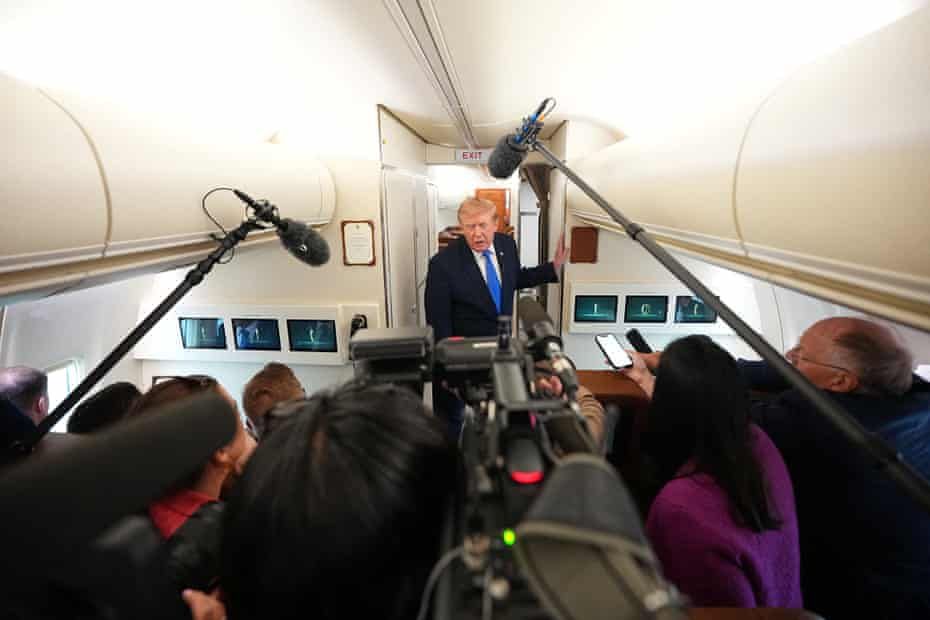
Trump Defends White House Media Ban
In his statement, Trump accused the affected news organisations of repeatedly publishing what he described as fiction and lies about the president, his administration and the United States.
“Media Outlets shouldn’t be able to constantly write or report FICTION and LIES when they’re covering the President of the United States, the Trump Administration, or the United States of America,” Trump said.
He added: “Other Fake News Media Outlets to follow.”
Trump later defended the decision during an Oval Office event focused on his administration’s healthcare policies.
“I don’t get fair press. I get it from Breitbart. I get it from a little bit from Fox,” Trump told reporters, adding that he wanted “just a semblance of truth.”
When a reporter reminded the president that every president takes an oath to uphold the US Constitution, including the First Amendment’s protection of free speech, Trump responded that he was tired of what he described as fake news.
“I don’t think that a court should allow fake news to be written day after day after day,” Trump said.
He argued that media organisations should not be allowed to publish what he considers false stories repeatedly.
Trump Threatens More Media Restrictions
During the news conference, Trump was asked to explain how the restrictions on CNN, MS Now and Politico would operate.
“When you say ‘the ban’, which ban? Do you know how many bans I’m involved in?” Trump responded.
After another reporter rephrased the question, asking what he envisioned the media bans would look like, Trump replied: “Oh, the ban on the free press, right?”
Trump later maintained that his decision was not linked to any single story published by the three organisations.
“It’s really just cumulative stories over the last few years,” he said.
He also warned that more media outlets could be added to the restrictions.
“There may be others to join them,” Trump said.
News Reports Preceded Trump’s Decision
The announcement came on the same day that major media organisations published reports involving sensitive issues concerning the Trump administration and US national security.
The Washington Post reported that more American service members had died in the war with Iran than the Pentagon had publicly disclosed.
CNN also reported that an “entirely false” intelligence report concerning a Chinese ship in the Middle East had been generated with the help of artificial intelligence and had nearly triggered a wider military crisis.
Politico, meanwhile, reported on a congressional investigation after sensitive F-35 fighter jet technology unexpectedly reached Hong Kong, potentially providing China with access to information concerning the aircraft.
Trump said the decision to restrict the three organisations was not connected to those individual reports, instead describing it as the result of what he characterised as years of cumulative coverage.
CNN and Politico Respond
CNN rejected Trump’s accusations and defended the work of its White House reporting team.
The network said it stood fully behind its White House journalists and their reporting, arguing that journalists have constitutional rights to report without government interference.
CNN also said that if the threatened ban proceeded, it would challenge what it described as an unlawful restriction on constitutionally protected reporting.
Politico similarly said its journalists would continue reporting on Trump’s White House and future administrations.
The organisation said it would defend its First Amendment rights against attempts to restrict its journalists’ access or reporting activities.
MS Now declined to comment on the announcement.
White House Correspondents Association Speaks Out
The White House Correspondents Association also responded to the decision.
Its president, Jacqui Heinrich, said the organisation stood in defence of the journalists affected by the restrictions.
Heinrich argued that the issue extended beyond the rights of individual reporters because the public has an interest in receiving independent information about government activities, policies and decisions.
“This is about more than the rights of journalists,” Heinrich said in a statement. “It is about the right of the American people to receive a full and independent account of the activities, policies and decisions of whoever occupies the nation’s highest office.”
Legal Experts Question Trump’s Authority
The decision has also raised constitutional questions about the president’s authority to restrict journalists from White House access because of their reporting.
Jameel Jaffer, executive director of the Knight First Amendment Institute at Columbia University, said the White House press pool is a public forum protected by the First Amendment.
Jaffer argued that journalists cannot be excluded from such access simply because the president objects to their coverage or viewpoints.
“The first amendment prohibits the president from punishing journalists because he doesn’t like their coverage,” Jaffer said.
He also pointed to previous court decisions involving Trump’s administration and restrictions affecting journalists and other institutions.
Seth Stern, chief of advocacy at the Freedom of the Press Foundation, similarly criticised the decision, arguing that excluding news organisations from the White House because of their coverage raises serious First Amendment concerns.
Trump’s Broader Conflict With the Media
The latest restrictions come after a series of confrontations between Trump’s administration and major American media organisations since he returned to office.
The Associated Press previously lost access to certain White House press pool events after continuing to use the name Gulf of Mexico rather than Trump’s preferred term, Gulf of America.
The AP challenged the restriction in court, with the litigation still ongoing according to the supplied Guardian report.
Trump’s White House has also taken greater control over the organisation of the presidential press pool, which determines which journalists and news organisations receive access to the president during smaller events and travel.
Traditionally, the White House Correspondents Association coordinated the rotating pool of journalists covering the president in locations such as the Oval Office and aboard Air Force One.
Pentagon Press Restrictions Also Faced Court Challenge
The administration also attempted to introduce a new Pentagon press policy that would have restricted how journalists gathered and reported sensitive information.
Read also: Trump reaches Greenland security deal with Denmark after takeover threats
The policy resulted in a mass walkout by news organisations that declined to sign the required pledge.
A federal judge later ruled the policy unconstitutional.
The Trump administration has also engaged in legal disputes with several major news organisations, including The New York Times, The Wall Street Journal, CNN, ABC News and the BBC.
The Guardian reported that these developments form part of a broader pattern of conflict between Trump’s administration and major traditional news organisations since the beginning of his second term.
The latest decision involving CNN, MS Now and Politico therefore adds another major dispute to the continuing debate over presidential authority, press access and First Amendment protections in the United States.