Trump says Mamdani will visit White House became the latest twist in a relationship defined by hostility, ideological confrontation, and months of mutual suspicion between the president and mayor-elect.
The announcement that Trump says Mamdani will visit White House arrived abruptly and surprised both political camps, appearing less like reconciliation and more like a tactical pause in a protracted feud.
For months, the campaign trail had been dominated by escalating rhetoric, and although Trump says Mamdani will visit White House signals a potential thaw, underlying tensions remain unmistakably entrenched.
During the heated election season culminating in the Mamdani election victory, Trump repeatedly framed the incoming New York leader as an ideological extremist, further inflaming long-running Trump political tensions nationwide.
While supporters celebrated the historic nature of the Mamdani election victory, critics aligned with the president amplified attacks that portrayed the mayor-elect as a threat to established political and economic norms.
New York voters had responded to deep grievances regarding housing, wages, and inequality, making New York City politics a national flashpoint and elevating Mamdani’s message beyond traditional municipal boundaries.
As the confrontation intensified, Trump leaned heavily into incendiary labels, and the incoming mayor countered by calling out authoritarian tendencies, sharpening the ideological edge shaping New York City politics.
The president’s repeated focus on Mamdani’s background, beliefs, and policy proposals formed an unmistakable pattern, driving debates that left many residents wary of worsening Trump political tensions across communities.
Before the unexpected shift signaled when Trump says Mamdani will visit White House, threats to withdraw federal assistance became central to the confrontation, raising fears of a prolonged federal funding dispute.
Local leaders had warned that a federal funding dispute could destabilize infrastructure, transit systems, and social services, intensifying the policy anxieties dominating the final days before Election Day.
Despite national polarization, the Mamdani election victory demonstrated that many New Yorkers rejected divisive politics, instead embracing a candidate who emphasized affordability, fairness, and expanded opportunities for marginalized groups.
The administration, however, purposely amplified doubts about Mamdani’s intentions and capacity, injecting new friction into New York City politics while energizing factions loyal to the president’s worldview.
Amid rising suspicions, Trump’s backers escalated racially charged narratives, widening Trump political tensions and raising questions about the country’s commitment to pluralism, inclusion, and constitutional protections in public life.
Mamdani consistently pushed back against personal attacks, arguing that racism, Islamophobia, and targeted misinformation campaigns had corrupted political discourse, harming residents and poisoning New York City politics.
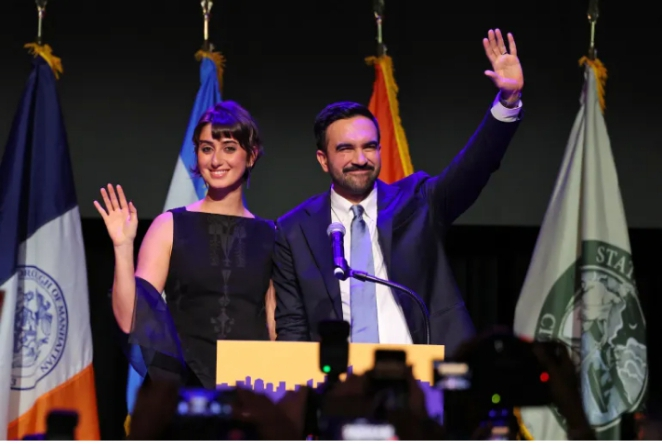
The intensifying hostility created gaps in cooperation, and a federal funding dispute remained a credible threat up until the election concluded with the decisive Mamdani election victory on November 4.
In the days following that triumph, Mamdani adopted a measured tone, insisting that governing required engagement with adversaries and refusing to allow entrenched Trump political tensions to derail progress.
His team articulated a commitment to dialogue, declaring that the wellbeing of millions outweighed partisan animosity and that New York City politics must shift from survival mode to constructive policymaking.
Observers noted that the president’s Wednesday post, where Trump says Mamdani will visit White House, contained familiar insults but also signaled a tentative acknowledgment of the incoming mayor’s democratic mandate.
Some advisers privately argued that easing into conversation, even symbolically, could temper backlash from business leaders fearful of a prolonged federal funding dispute hurting the nation’s economic epicenter.
Yet many questioned the sincerity of the shift, given that the Mamdani election victory had directly contradicted Trump’s preferred narrative about national political momentum heading into the midterm season.
Mamdani interpreted the gesture cautiously, referencing years of division rooted in sharply diverging values and stressing an unwillingness to excuse patterns fueling entrenched Trump political tensions.
He reiterated his intention to advocate aggressively for affordable housing, transportation improvements, and an economic reset that reflected community priorities shaping New York City politics before and after the campaign.
Activists across the city regarded the meeting as necessary but fraught, given that threats linked to the ongoing federal funding dispute still shaped their expectations for the coming transition period.
Political strategists said the symbolism carried weight because the Mamdani election victory reflected a broader shift among working-class voters rejecting political intimidation and demanding solutions grounded in everyday realities.
Behind the scenes, administration officials debated potential optics, understanding that acknowledging Trump says Mamdani will visit White House tested the president’s ability to balance confrontation with pragmatic governance.
Commentators noted that Trump had been under pressure to soften his posture, especially as persistent Trump political tensions began causing discomfort among moderates worried about national stability.
Mamdani’s aides stressed that cooperating did not mean capitulating and insisted that any dialogue must include concrete commitments that address residents’ anxieties influencing New York City politics for years.
The incoming administration emphasized transparency, vowing to confront partisan threats and prevent escalations that could renew a destabilizing federal funding dispute during the critical first months of governing.
Public interest continued to rise as the meeting approached, fueled partly by the symbolic weight carried when Trump says Mamdani will visit White House, challenging assumptions about bipartisan paralysis.
Many New Yorkers expressed cautious optimism, hoping the Mamdani election victory would translate into accessible solutions capable of easing economic pressures and counteracting years of fractious political climate.
Still, skeptics warned that the president’s track record and combative instincts suggested that heightened Trump political tensions could quickly return if negotiations failed to satisfy deeper ideological expectations.
Analysts argued that the stark difference between Trump’s worldview and the city’s progressive direction ensured New York City politics would remain a national flashpoint long after the meeting concluded.
Several experts theorized that stabilizing relations required an end to the ongoing federal funding dispute, urging leaders to recognize the severe consequences federal retaliation would impose on millions of residents.
By Thursday evening, discussions among journalists, activists, and policymakers focused on whether the emerging shift would last or collapse once Trump says Mamdani will visit White House becomes yesterday’s headline.
The hours ahead promised more speculation, but the Mamdani election victory had already transformed expectations, encouraging communities to demand accountability and transparency from an often unpredictable administration.
Whether the moment represented meaningful dialogue or strategic optics remained uncertain, particularly as Trump political tensions continued shaping voter perceptions and influencing political dynamics nationwide.
Ultimately, New Yorkers awaited the outcome cautiously, knowing the meeting would affect New York City politics and determine whether threats escalate or the federal funding dispute finally begins to dissolve.
About The Author