South Africa is bracing for G20 summit protests this weekend as authorities ramp up security measures across Johannesburg and other major cities ahead of the high-profile event.
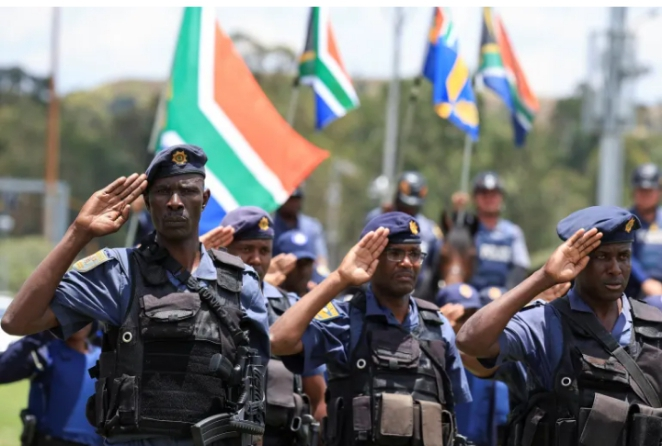
More than 3,500 police officers have been deployed to key locations, with the army placed on standby, as part of South Africa’s enhanced security measures for the anticipated demonstrations.
The integrated law enforcement parade, featuring helicopters and officers on motorcycles, was held Wednesday, signaling the government’s commitment to ensuring public order during the upcoming G20 summit protests.
Deputy national commissioner for policing, Lieutenant General Tebello Mosikili, emphasized that citizens would be allowed to protest, but strictly within legal confines, maintaining a balance between rights and public safety.
Authorities have designated specific areas for protesters near the summit venue, an exhibition centre adjacent to the country’s largest football stadium, to manage crowds and prevent potential disruption.
The summit is expected to host leaders and diplomats from over 40 countries, including global institutions like the United Nations, although the United States is boycotting the event over political disagreements.
Demonstrations are expected from anticapitalists, climate activists, women’s rights campaigners, anti-migrant groups, and other organizations highlighting South Africa’s domestic challenges, including poverty, inequality, and social unrest.
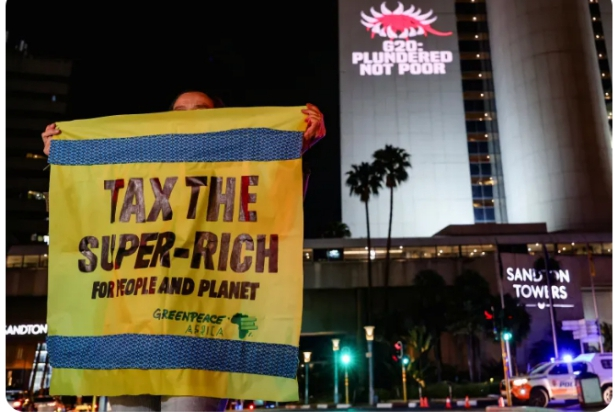
Greenpeace activists have staged pre-summit events in Johannesburg, urging bold climate action, debt reform, and urgent development responses, emphasizing the global importance of environmental and economic justice.
A trade union representing South Africa’s Afrikaner minority has sparked controversy with billboards around Johannesburg, highlighting racial tensions and affirmative action policies, which some critics say marginalize the white population.
City authorities have removed some billboards, prompting the Solidarity union to threaten legal action, illustrating the sensitive nature of race and economic policies amid the upcoming G20 summit protests.
US President Donald Trump’s boycott is based on claims of anti-white policies, which South African authorities have dismissed as baseless, though the absence could affect diplomatic dynamics at the historic African-hosted summit.
Government officials have confirmed that the US embassy sent a note reiterating Washington’s refusal to participate, signaling that political disagreements may overshadow the summit’s objectives.
South African officials rejected Washington’s demand to withhold a leaders’ declaration, asserting that boycotting nations cannot dictate outcomes and affirming the country’s sovereignty in hosting the G20 summit protests.
The Women for Change advocacy group has called for a national shutdown on Friday, urging women to boycott work in protest against high levels of violence and femicide across South Africa.
“Until South Africa stops burying a woman every 2.5 hours, the G20 cannot claim progress or growth,” the group said, highlighting the urgent social issues driving some protest movements.
An anti-immigration group is preparing demonstrations against joblessness and poverty, as South Africa’s unemployment rate remains above 30 percent, contributing to the public unrest that the G20 summit protests aim to spotlight.
Climate and wealth inequality activists are organizing an alternative summit in Johannesburg, arguing that the official event represents global elites and does not address the struggles of ordinary citizens.
Authorities have urged all participants to exercise their right to protest responsibly, reminding them that law enforcement agencies are ready to respond to any incidents that threaten public safety.
Police have also emphasized coordination with the army under the National Joint Operational and Intelligence Structure, a framework that integrates military, police, and intelligence agencies during high-profile events.
The South African government’s strong stance on security comes as it seeks to present the country as a capable host of international events, despite facing internal and external political pressures.
Protest groups have highlighted issues ranging from environmental degradation to social inequities, intending to draw global attention to the persistent challenges that South Africa faces even as it hosts the summit.
The presence of global media and international observers increases scrutiny on South Africa’s handling of both security and civil liberties during the G20 summit protests, adding pressure on authorities to act judiciously.
Johannesburg’s streets have been a focal point for pre-summit preparations, with visible police patrols and public awareness campaigns designed to minimize disruption while ensuring citizens feel safe during demonstrations.
The planned demonstrations are diverse, reflecting broad societal concerns, including gender-based violence, unemployment, climate change, and perceived racial inequalities, all converging during the historic African-hosted G20 summit protests.
Women for Change, climate activists, and trade unions continue to amplify their messages through organized campaigns, social media, and public gatherings, underscoring the broad mobilization behind the protests.
Despite the US boycott, South Africa has pledged to maintain a productive summit, welcoming other nations and emphasizing that diplomatic engagement will proceed uninterrupted amid the scheduled G20 summit protests.
Security forces are prepared to handle potential flashpoints, ensuring both protesters and summit attendees are protected, while reinforcing South Africa’s reputation for managing high-stakes international events.
Local authorities have worked with community leaders and civic organizations to facilitate peaceful demonstrations, emphasizing the government’s willingness to respect citizens’ rights while maintaining law and order.
The combination of South Africa security measures and designated protest zones aims to prevent clashes, ensuring that the demonstrations during the summit can proceed without significant disruption to international delegates.
Analysts note that the Johannesburg demonstrations are a reflection of larger societal frustrations, signaling that hosting international events can bring domestic grievances to the global stage.
In addition to security and logistics, authorities are monitoring online activity and protest communications, seeking to anticipate potential flashpoints and mitigate any escalation during the G20 summit protests.
Organizers and participants have reiterated their commitment to non-violent demonstrations, although officials remain vigilant, acknowledging the potential for tensions to arise in a politically charged environment.
The historic nature of the summit, being the first held in Africa, places additional responsibility on South Africa to manage expectations, both domestically and internationally, amid the planned G20 summit protests.
The government’s multi-agency coordination, including military readiness and policing efforts, reflects the seriousness with which South Africa is approaching its role as host, aiming to balance security with civil liberties.
Observers highlight that the convergence of multiple protest groups, each advocating for different causes, illustrates the complexity of organizing international summits in countries facing persistent social challenges.
As the summit approaches, the global spotlight will remain on Johannesburg, both for diplomatic outcomes and the handling of civil demonstrations, emphasizing the importance of managing the G20 summit protests effectively.
With multiple stakeholder groups involved, authorities continue to refine security protocols and communication strategies to ensure that protests remain peaceful and that summit proceedings continue smoothly.
Civil society organizations are engaging with authorities to facilitate dialogue, reduce tensions, and encourage responsible protest conduct, aiming to ensure that the voices of South Africans are heard during the G20 summit protests.
The combination of Women for Change shutdown, environmental activism, and racial discourse highlights the multifaceted nature of the unrest, reflecting both domestic inequalities and global concerns converging on Johannesburg.
Security and intelligence teams continue monitoring developments, adjusting deployment patterns in response to crowd sizes and protester movements, reinforcing South Africa’s commitment to safety amid the upcoming summit.
The upcoming G20 summit protests are expected to test South Africa’s ability to host international events while balancing the right to protest, law enforcement preparedness, and diplomatic sensitivities.
As international leaders arrive in Johannesburg, authorities aim to demonstrate professionalism, resilience, and respect for civil liberties, ensuring that both diplomatic engagement and public expression coexist peacefully.
South Africa’s proactive measures in advance of the G20 summit protests underscore the nation’s effort to protect participants, facilitate peaceful demonstrations, and assert its capability as a host of major global events.
About The Author