US President Donald Trump’s ongoing Trump Nobel Peace Prize dispute resurfaced when he sent a pointed message to Norway’s Prime Minister Jonas Gahr Store, saying he no longer feels obligated to “think purely of peace” after being denied the award he sought.
Trump wrote, “Considering your Country decided not to give me the Nobel Peace Prize for having stopped 8 Wars PLUS, I no longer feel an obligation to think purely of Peace.”
The message, confirmed on Monday by sources close to the matter and by Store himself in the Norwegian newspaper VG, underscores Trump’s frustration over missing the prestigious international prize.
Trump’s claim to have ended eight wars—including brief conflicts such as the one between India and Pakistan, and ongoing wars like Israel’s operations in Gaza and the Democratic Republic of the Congo—has been widely questioned by analysts and international observers.
Some experts argue that while a few of the conflicts Trump referenced were resolved quickly, others remain active, making his claim controversial.
Prime Minister Store clarified the situation, emphasizing that the Nobel Peace Prize is awarded by the independent Norwegian Nobel Committee, not by the government of Norway.
He told reporters, “I have clearly explained, including to President Trump, what is well known: the prize is awarded by an independent Nobel Committee.” Despite this, Trump’s fixation on the award remains evident.

The dispute gained further attention when Venezuelan opposition leader Maria Corina Machado presented Trump with her Nobel Peace Prize medal during a White House visit, two weeks after US forces abducted Venezuelan President Nicolas Maduro.
The meeting was private, with no live cameras allowed, though the White House released photographs showing Trump receiving the medal.
Machado, who won the 2025 Nobel Peace Prize for leading Venezuela’s opposition, said she gave the medal to Trump “as a recognition for his unique commitment to our freedom.” Trump later posted on social media, “She is a wonderful woman who has been through so much. María presented me with her Nobel Peace Prize for the work I have done.”
The Norwegian Nobel Institute confirmed that the Nobel Peace Prize cannot be transferred or shared once awarded.
According to the statutes of the Nobel Foundation and Alfred Nobel’s will, the prize belongs solely to the recipient, even if the physical medal changes hands.
Trump’s public recognition for his peace claims extends beyond the Nobel controversy.
In December, FIFA President Gianni Infantino awarded him the inaugural FIFA Peace Prize, drawing criticism over political neutrality.
Human rights group FairSquare filed a formal complaint with FIFA’s ethics committee, arguing that the award violated FIFA’s principles and served personal political interests rather than the global football community.
Observers note that Trump’s confrontational and personal-focused diplomacy, exemplified by both the Nobel and FIFA disputes, highlights his emphasis on international recognition and accolades.
Analysts suggest that his public insistence on personal achievements in global affairs may complicate relations with allies and challenge established diplomatic norms.
Trump’s persistent focus on the Nobel Peace Prize and similar honors underscores a larger pattern in his foreign policy approach, where personal validation appears intertwined with official US diplomacy.
While supporters see these actions as celebrations of achievement, critics warn that they risk undermining both the credibility of global institutions and the legitimacy of international awards.
Trump’s actions in pursuing international recognition, including the Nobel Peace Prize and the FIFA Peace Prize, reflect a broader pattern in his approach to diplomacy.
Observers note that while many US presidents have sought accolades or endorsements abroad, Trump’s methods are highly personal and public-facing.
By directly messaging the Norwegian Prime Minister and accepting the medal from Maria Corina Machado, he has placed himself at the center of international attention in ways that blur the lines between state policy and personal ambition.
Analysts suggest that this approach can create tensions with established diplomatic channels, as foreign leaders may find themselves navigating both protocol and Trump’s personal expectations.
The United States’ relationship with Venezuela has been further complicated by these events. Machado’s Nobel Peace Prize victory and subsequent gift to Trump came against the backdrop of intense US-Venezuelan tensions, including the controversial abduction of President Maduro by US special forces.
This operation drew widespread condemnation from international observers, who described it as a breach of international law.
Trump’s embrace of Machado, and the symbolic acceptance of her Nobel medal, reinforces his image as a supporter of Venezuelan opposition forces, while simultaneously provoking criticism for intertwining US foreign policy with personal recognition.
Experts also point to the geopolitical implications of Trump’s eight-war claim, which remains central to the Nobel dispute. While he cites ending eight wars as justification for his candidacy for the prize, many of these conflicts are complex and ongoing, with deep-rooted political, ethnic, and humanitarian dimensions. For example, the conflict in Gaza has seen continued hostilities despite previous ceasefires, and the situation in the Democratic Republic of the Congo remains volatile, with multiple armed groups still active.
Analysts argue that such claims of “peace achievements” are often selective and risk misrepresenting the broader reality on the ground, particularly when used to bolster a personal narrative.
Trump’s ongoing focus on awards and recognition is not limited to the Nobel or FIFA incidents. Since leaving office, he has cultivated relationships with political and social figures worldwide, emphasizing symbolic gestures that reinforce his global stature.
Some commentators see this as a strategic effort to maintain international visibility and influence, while others view it as a distraction from substantive diplomatic efforts.
The blurring of personal branding and statecraft can raise questions for both allies and adversaries about the consistency and reliability of US foreign policy under Trump’s influence.
Norway’s response to the dispute demonstrates the careful diplomacy often required when dealing with sensitive international institutions.
Prime Minister Store’s insistence on the independent role of the Nobel Committee highlights the importance of maintaining institutional integrity, even when high-profile leaders like Trump attempt to assert personal claims.
The distinction between Norway’s government and the Nobel Committee serves as a reminder that many international awards are designed to remain insulated from political pressures, a principle that Trump’s approach directly challenges.
Human rights and ethical organizations have also reacted to the Trump Nobel Peace Prize dispute. FairSquare’s complaint against FIFA for awarding the Peace Prize underscores concerns that international institutions may be manipulated to serve political narratives.
Critics argue that such actions risk undermining public trust in organizations that are meant to operate independently of national or partisan interests. By accepting awards that are not officially conferred upon him, Trump raises broader questions about the role of symbolic gestures in international relations and their impact on institutional credibility.
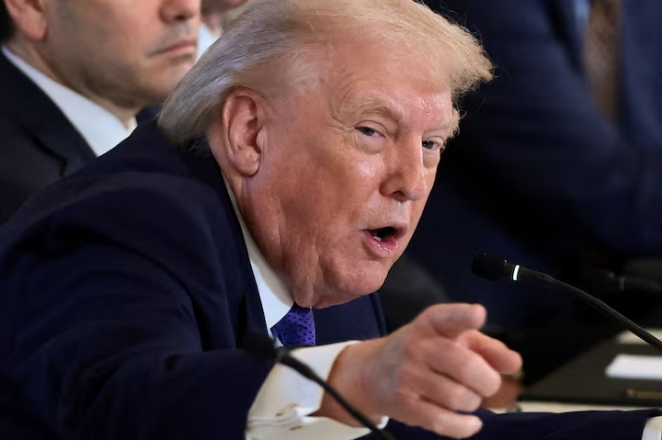
The domestic implications of Trump’s dispute are also notable. His supporters have embraced his claims of peace achievements, seeing them as evidence of strong leadership and global influence.
Meanwhile, critics argue that the focus on personal accolades detracts from pressing domestic and international issues, including humanitarian crises, ongoing conflicts, and diplomatic negotiations.
The polarization of opinion around Trump’s awards reflects the broader divides in American politics, where symbolic gestures are often interpreted through partisan lenses rather than substantive analysis.
Looking ahead, analysts predict that Trump’s continued focus on awards and recognition could influence future US foreign policy interactions. International leaders may approach negotiations with awareness of Trump’s personal objectives, potentially complicating multilateral diplomacy.
At the same time, his supporters argue that such gestures enhance US visibility and assertiveness on the global stage. Regardless of perspective, the dispute underscores the increasing interplay between personal ambition, symbolic recognition, and the conduct of official diplomacy in the Trump era.
In conclusion, the Trump Nobel Peace Prize dispute illustrates how personal ambition, international recognition, and political messaging intersect in contemporary diplomacy.
Trump’s claims of ending wars, the acceptance of Machado’s medal, and the FIFA Peace Prize episode all contribute to a narrative centered on personal validation rather than conventional diplomatic channels.
While some view these actions as a celebration of achievements, critics warn that they risk undermining institutional credibility and complicating US relations with allies and adversaries alike.
The dispute serves as a case study in the challenges posed when personal branding and statecraft converge, highlighting the delicate balance required to maintain legitimacy and trust in global affairs.
About The Author