Donald Trump on Monday formally began the process of pursuing a Muslim Brotherhood terrorist designation, targeting specific chapters as foreign terrorist organizations and specially designated global terrorists.
The move, outlined in a White House fact sheet, seeks to impose sanctions on some of the Arab world’s oldest and most influential Islamist movements.
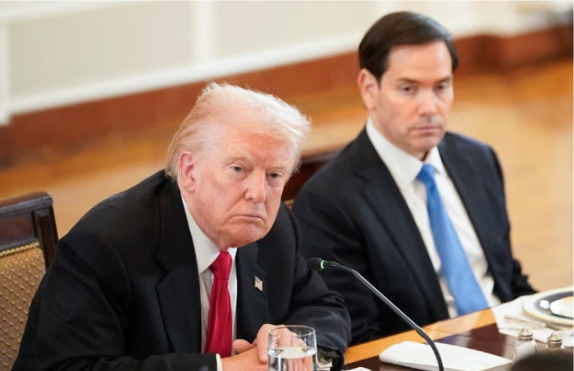
Trump signed an executive order directing Secretary of State Marco Rubio and Treasury Secretary Scott Bessent to submit a report evaluating potential designations.
The report will review Muslim Brotherhood chapters in Lebanon, Egypt, and Jordan, assessing links to violence or material support for militant organizations such as Hamas.
The executive order requires the secretaries to act on any designations within 45 days, establishing a clear timeline for enforcement under Washington’s counterterrorism policy.
“The President is confronting the Muslim Brotherhood’s transnational network, which fuels terrorism and destabilization campaigns against US interests and allies in the Middle East,” according to the White House.
Founded in Egypt in the 1920s, the Brotherhood emerged as an Islamic political movement aimed at countering secular and nationalist ideologies gaining traction across the region.
It expanded rapidly throughout the Middle East, becoming an influential force in politics, education, and social services, often operating through clandestine or semi-clandestine channels.
Over decades, the Muslim Brotherhood has been accused of supporting violent attacks against Israel and US allies, although it publicly denies direct involvement in terrorism.
Critics argue that Brotherhood-linked organizations provide material or ideological support to Palestinian militant groups, including Hamas, which Washington already classifies as a terrorist organization.
Trump’s administration maintains that formal designations will disrupt transnational networks, freeze assets, and limit movement of Brotherhood-affiliated actors across borders.
This policy shift aligns with broader US efforts to counter Islamist extremism in the Middle East while pressuring regional governments to monitor Brotherhood activities more closely.
Secretary Rubio, a longtime critic of Islamist extremism, indicated that recommendations will weigh heavily on intelligence assessments and documented evidence of Brotherhood involvement in terrorism.
The Treasury Department, led by Bessent, will evaluate financial transactions and organizational structures to identify potential sanctions against Brotherhood-linked institutions or individuals.
Trump’s move carries symbolic weight, sending a message to both allies and adversaries that the United States considers the Brotherhood a threat to regional stability and US security.
Regional reactions are expected to vary. Egypt, where the Brotherhood originated, has long designated the organization as a terrorist group, while other countries tolerate or politically incorporate its actors.
In Jordan and Lebanon, Brotherhood chapters operate within legal frameworks but are viewed warily by governments concerned about political influence and destabilization, raising questions about implementation challenges.
The executive order does not immediately designate the chapters as terrorist groups but starts a formal review process, allowing the administration to build legal and intelligence justifications.
Political analysts note that this step could escalate tensions with nations where the Brotherhood maintains significant social and political influence, potentially affecting US diplomacy in the region.
Some experts argue that such designations risk pushing moderate Islamist actors underground, complicating engagement and intelligence collection, while others see it as a necessary counterterrorism measure.
Historically, the Muslim Brotherhood has oscillated between political participation and militancy, with factions in some countries advocating nonviolent social programs while others pursue aggressive agendas.
Trump’s policy frames the Brotherhood as a unified threat, emphasizing its networked structure across borders rather than nuanced differences between chapters or local affiliates.
Supporters of the executive order argue that US allies, including Israel, benefit from measures targeting the Brotherhood, accused of undermining peace and stability indirectly through armed groups.
Critics caution that broad designations could destabilize domestic politics in countries like Jordan, where the Brotherhood participates in parliamentary processes and enjoys grassroots support.
The Trump administration has faced pressure from Congress and advocacy groups to adopt stronger measures against Islamist extremism, with the Brotherhood often cited as a central concern.
The administration’s move follows previous US efforts to designate terrorist organizations abroad, such as al-Qaeda and the Islamic State, relying on similar legal frameworks for sanctions and asset freezes.
Officials assert that the review process will involve collaboration with intelligence agencies, regional experts, and international partners to ensure designations are evidence-based and defensible.
White House officials have stressed that this is not a punitive measure against Islam but a targeted action against organizations engaged in terrorism or supporting violent activity.
The Brotherhood’s global network is diverse, with chapters engaging in education, social services, political lobbying, and, according to critics, some providing resources or encouragement to extremist actors.
Trump’s executive order signals a heightened focus on transnational threats, reflecting a broader strategy to confront networks perceived to endanger US personnel, citizens, and allies.
Implementation will require careful monitoring of regional governments’ responses and coordination with international partners, balancing security objectives with diplomatic sensitivities.
Observers note that sanctions could include asset freezes, travel bans, and restrictions on affiliated organizations’ financial dealings, limiting operational capacity and international influence.
Trump’s decision comes amid heightened regional tensions in the Middle East, including ongoing conflicts in Gaza, Syria, and Yemen, where Islamist extremist groups have played destabilizing roles.
Some analysts see the designation process as part of a broader effort to redefine US counterterrorism policy, prioritizing transnational networks rather than isolated groups or conflicts.
The Brotherhood has historically influenced political Islam in numerous countries, with members participating in elections, governance, and civil society, complicating blanket designations as terrorist entities.
Human rights groups warn that broad measures could inadvertently affect civilians and charitable organizations linked to the Brotherhood, highlighting the need for precise targeting of enforcement measures.
Despite these concerns, Trump administration officials insist that intelligence supports classifying specific Brotherhood chapters as linked to violent activity or extremist agendas.
If finalized, the designations would expand the US list of foreign terrorist organizations, enabling more aggressive enforcement measures and signaling strong opposition to ideological networks associated with violence.
The process underscores the administration’s focus on Middle Eastern security priorities, emphasizing the importance of countering non-state actors and transnational networks threatening US allies.
Political commentators expect the designations to provoke debate in Washington, with some arguing it strengthens national security while others caution about unintended regional consequences.
The Muslim Brotherhood’s response has historically ranged from public denial of violent activities to calls for international dialogue, reflecting the organization’s complex and varied global presence.
Trump’s executive order may also influence future US policy decisions regarding engagement with Islamist movements, shaping the framework for addressing ideological extremism abroad.
While the immediate impact may be symbolic, the potential sanctions and restrictions could significantly affect the operational capacity of Brotherhood-affiliated organizations across the Middle East.
The administration is expected to release the report within the mandated 45 days, setting in motion consultations, intelligence reviews, and potential formal designations of targeted chapters.
Regional governments, including Egypt, Jordan, and Lebanon, will likely be consulted to assess implications, enforce compliance, and manage domestic political sensitivities related to Brotherhood activity.
Trump’s move represents a continuation of his administration’s assertive counterterrorism strategy, aiming to disrupt networks perceived as threats to both US security and regional stability.
The designation process will likely influence international partners and allies in Europe and the Middle East, signaling US priorities in confronting Islamist extremist networks globally.
By targeting the Muslim Brotherhood, the administration emphasizes a proactive stance against ideological networks that may indirectly contribute to terrorism, seeking to limit their influence and capabilities.
The policy illustrates an ongoing commitment to protecting US interests abroad while sending a broader signal that transnational extremist organizations will face coordinated US action.
Trump’s executive order and the ensuing report may set a precedent for designating other ideological or political networks deemed threatening to US security or global stability in the future.
The administration’s approach balances intelligence, law, and diplomacy, aiming to apply pressure on specific Brotherhood chapters without unnecessarily antagonizing entire populations or Muslim communities.
Observers will be watching closely how regional leaders respond, including potential backlash from political groups, civil society actors, or grassroots movements with Brotherhood affiliations.

The upcoming 45-day period will be critical in shaping the next steps, as US officials gather evidence, evaluate risk, and determine which chapters merit formal terrorist designations.
Ultimately, the Trump administration aims to curb perceived threats from the Muslim Brotherhood while reinforcing the United States’ role as a global actor in counterterrorism efforts.
About The Author