The Trump Iran war “won enough” remarks have triggered widespread confusion after Donald Trump delivered a series of vague and contradictory statements about the direction of the United States’ military campaign in Iran.
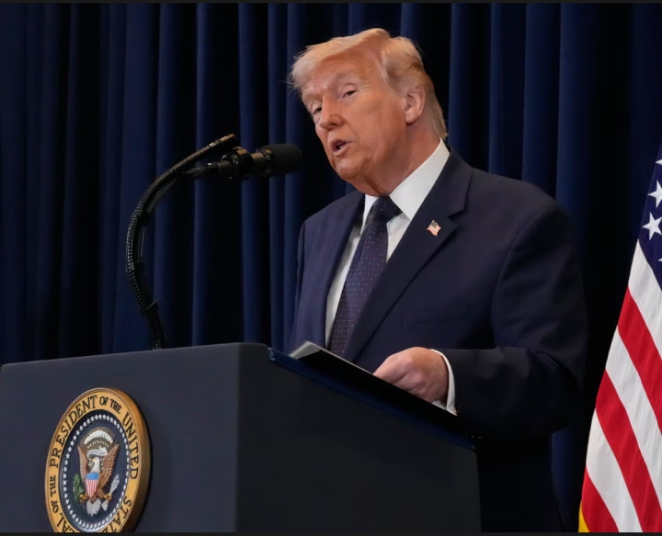
Speaking during a tense Donald Trump press conference in Florida, the US president alternated between declaring success and suggesting that American forces would intensify their operations, leaving allies, lawmakers, and global markets uncertain about Washington’s true strategy.
At a moment considered one of the most geopolitically sensitive periods of his presidency, Trump attempted to project confidence about the ongoing US Middle East intervention. However, his remarks instead deepened doubts about whether the administration has a clear endgame.
“We have won in many ways,” Trump said, before adding words that quickly drew attention across diplomatic circles: “But we haven’t won enough.”
The statement appeared to contradict earlier suggestions that the conflict might be nearing its conclusion. Only hours before the appearance, Trump had described the war effort as “very complete” during a media interview.
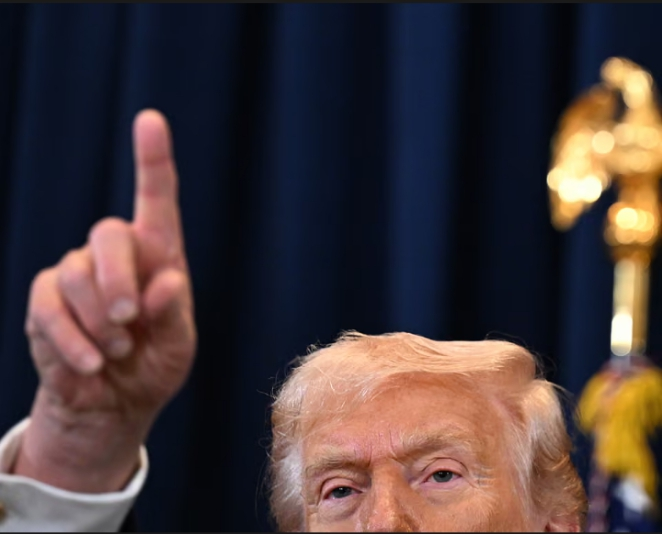
Yet when pressed by reporters to clarify whether this meant US operations would wind down soon, he shifted position. “No, but soon. I think soon. Very soon,” he said, offering no timeline or measurable objective.
The lack of clarity has amplified uncertainty surrounding US military strategy in Iran, particularly as American forces remain deeply involved in operations across multiple regions.
Defense officials have described the campaign as ongoing and evolving, while the White House has emphasized what it calls “major battlefield successes.” Trump’s shifting tone, however, suggested internal inconsistencies over what constitutes victory.
During the press appearance, Trump also spoke about reconstruction prospects, saying the conflict marked “the beginning of building a new country.” The remark raised eyebrows because senior administration officials had repeatedly ruled out nation-building efforts, arguing that the US mission was limited to neutralizing security threats.
The apparent contradiction fueled criticism that the administration’s objectives remain fluid.
Financial markets reacted cautiously to the uncertainty. Iran war oil prices have surged amid fears of prolonged instability in the region, with crude trading above $100 per barrel for extended periods.
Energy analysts warn that the longer the conflict continues without a defined conclusion, the greater the risk of supply disruptions that could ripple across global economies.
Trump attempted to calm market anxiety by suggesting he might relax certain international sanctions affecting oil exports. The proposal marked a notable shift in policy tone and raised questions about whether economic pressure tactics would remain central to Washington’s foreign policy toolkit.
“Who knows… maybe we won’t have to put them on,” he said. “There will be so much peace.”
The president’s remarks drew swift criticism from political opponents who argued that inconsistent messaging could weaken diplomatic leverage and embolden adversaries.
Senior lawmakers questioned whether the administration had established clear military benchmarks or exit conditions. Critics said the absence of defined objectives could increase the risk of prolonged engagement without measurable gains.
One of the most controversial moments came when Trump referenced a deadly missile strike on a school in southern Iran. He suggested that Iranian forces may have obtained advanced cruise missile technology and could be responsible for the incident.
However, he acknowledged uncertainty when challenged by journalists. “I just don’t know enough about it,” he said. “It’s under investigation.”
The exchange intensified scrutiny of intelligence transparency and wartime accountability. Security analysts emphasized the importance of verified evidence before assigning responsibility for high-profile attacks, warning that premature claims could inflame tensions or undermine credibility.
Diplomatic observers say the communication challenges reflect broader strains within modern wartime leadership, where public messaging must balance military confidentiality with the need to reassure citizens and international partners. The administration has defended its approach, arguing that operational security limits the details that can be shared publicly.
Meanwhile, allied governments across Europe and the Middle East continue to monitor Washington’s posture closely. Many regional partners fear that prolonged uncertainty could expand instability beyond Iran’s borders.
Diplomatic channels remain active, but several governments have privately urged the US to clarify its objectives and timeline.
Strategic experts note that modern conflicts often involve shifting operational phases, making it difficult to define victory in traditional terms. Still, they argue that clear benchmarks — such as territorial control, threat reduction, or negotiated settlements — help maintain political consensus and alliance cohesion.
Trump’s supporters argue that his rhetoric reflects negotiating strategy rather than confusion. They contend that projecting unpredictability can pressure adversaries and create leverage in high-stakes geopolitical standoffs. Critics counter that inconsistent messaging risks miscalculation and diplomatic isolation.
Read also: Gunfire at Rihanna Los Angeles home leads to attempted murder charge
The debate underscores how presidential communication shapes both domestic perception and international confidence. In wartime settings especially, markets, military planners, and foreign governments rely heavily on leadership signals to assess risk and stability.
As the conflict continues, attention remains focused on whether the administration will provide a clearer roadmap for the next phase of operations. Defense officials are expected to brief lawmakers in closed sessions, while diplomatic envoys pursue parallel talks aimed at preventing regional spillover.
For now, the phrase Trump Iran war “won enough” has become a defining soundbite of the conflict’s political dimension — encapsulating both claims of battlefield gains and uncertainty about what final success would look like.
Whether the remarks signal strategic ambiguity or genuine indecision remains debated. What is clear is that global markets, foreign governments, and American voters are seeking firmer answers about how and when the conflict will conclude.
About The Author