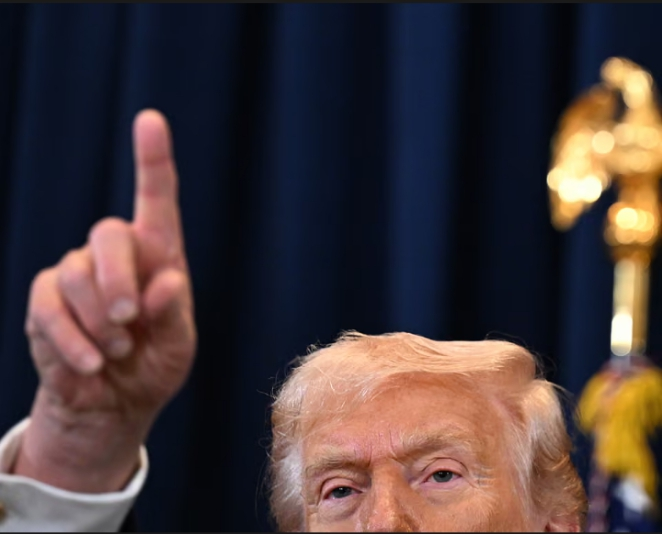
Trump says Iran war “very complete” as the United States and Israel launched new waves of coordinated strikes across Iranian territory, while regional tensions escalated and the global economic toll deepened.
The US president’s remarks came as military operations entered a second week, raising fears of a prolonged Middle East conflict affecting oil supplies, shipping routes, and civilian safety.
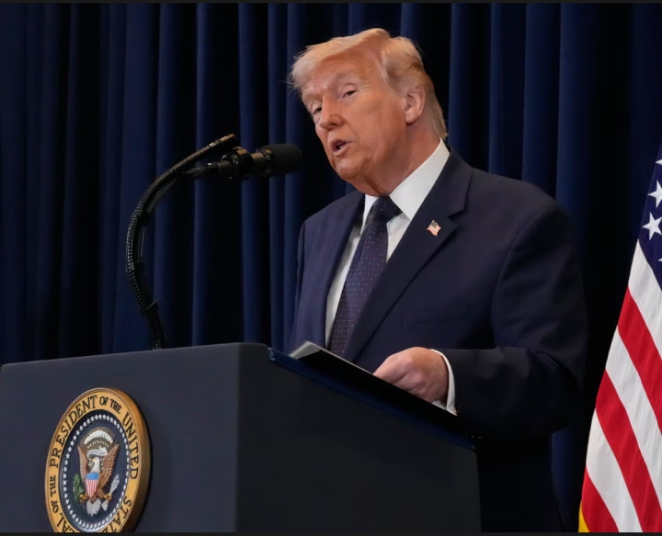
Speaking before a press event in Florida, Donald Trump sought to reassure domestic audiences that the conflict would not become a lengthy military entanglement.
“I think the war is very complete, pretty much,” Trump said during a phone interview with CBS News. “They have no navy, no communications, they’ve got no air force.”
Addressing Republican supporters later, he described the campaign as a necessary but limited intervention.
“We took a little excursion because we felt we had to do that to get rid of some evil. I think you’ll see it’s going to be a short-term excursion.”
Despite the confident tone, Trump stopped short of declaring total victory.
“We’ve already won in many ways, but we haven’t won enough,” he added.
Meanwhile, joint US-Israeli air operations intensified. Warplanes struck multiple targets across Iran, including military infrastructure and communications facilities. Iranian authorities responded with fresh missile and drone attacks targeting Israel, US military bases across the region, and strategic energy installations in Gulf states.
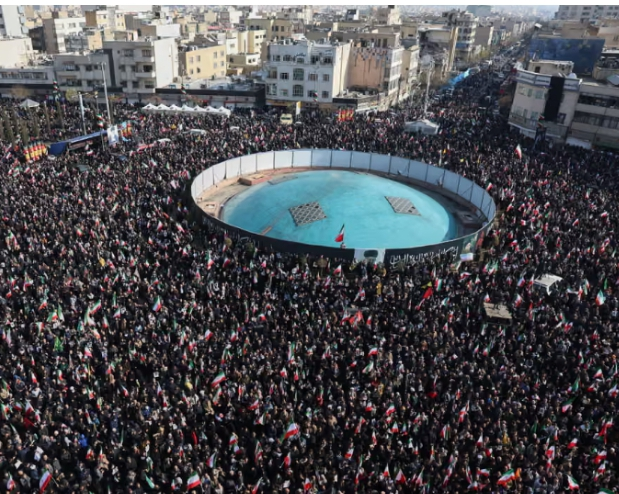
Large crowds gathered in Tehran in a show of support for Iran’s newly appointed supreme leader, Mojtaba Khamenei. Demonstrators waved national flags and chanted slogans condemning both Washington and Tel Aviv, signaling defiance despite mounting military pressure.
The leadership transition followed the death of former supreme leader Ali Khamenei, a development that has further intensified political tensions and hardened rhetoric on both sides.
Regional violence continued to spread beyond Iran’s borders. In Lebanon, Israeli forces pressed attacks against Hezbollah positions, carrying out airstrikes in Beirut and southern territories. Israeli officials described the operations as efforts to dismantle militant infrastructure linked to Iranian support networks.
In the Gulf, multiple countries reported incoming drones and missile interceptions. Authorities in the United Arab Emirates confirmed casualties after debris from intercepted projectiles fell in populated districts. Bahrain reported damage to energy infrastructure, including a strike that ignited a fire at a major oil refinery.
The expanding conflict has alarmed global markets. Oil prices surged sharply amid fears that supply routes could be disrupted, particularly through the Strait of Hormuz, a critical maritime corridor through which roughly a fifth of global petroleum shipments pass.
Shipping companies have already slowed or rerouted tanker traffic due to security risks, creating ripple effects across energy markets and international trade. Analysts warn that prolonged disruptions could drive inflation and strain fragile global supply chains.
Iranian officials signaled their readiness to maintain pressure on strategic waterways. Senior adviser Ali Larijani warned that safe passage through key shipping lanes would not resume while hostilities continued.
On social media, Trump responded with a stark warning:
“If Iran does anything that stops the flow of Oil within the Strait of Hormuz, they will be hit TWENTY TIMES HARDER than they have been hit thus far.”
European leaders also reacted to the deteriorating security environment. Emmanuel Macron announced that France and its allies were preparing defensive naval deployments aimed at protecting commercial shipping and stabilizing energy routes.
France has already repositioned several naval assets, including carrier strike groups, across the Mediterranean and Red Sea as part of broader contingency planning.
Civilian casualties continue to mount. Regional officials report significant fatalities in Iran, Lebanon, and Israel, with thousands more injured. Aid agencies warn that displacement is accelerating as families flee areas near military installations and bombardment zones.
Humanitarian groups say children face particularly severe risks as shelters grow overcrowded and medical systems struggle under sustained strain.
Military analysts caution that the conflict risks widening further if additional regional actors are drawn in. Cross-border strikes and proxy engagements have increased the possibility of miscalculation, potentially triggering broader confrontation.
Despite intensified combat, diplomatic progress remains limited. None of the major parties involved have indicated readiness for concessions, and public statements from leaders continue to emphasize military objectives over negotiation.
Security experts say the coming days will be critical in determining whether the conflict stabilizes or escalates into a longer regional war with global consequences.
For now, Trump says Iran war “very complete” remains a defining message from Washington, even as battlefield developments and economic aftershocks suggest the crisis is far from resolved.
Read also: Carney calls Canada by-elections to secure Liberal majority in parliament
About The Author