The British government is being shaked by internal wranglings in what many would see as Starmer vs his ministers after reports surfaced about alleged leadership challenges within the Labour Party, revealing growing unrest and potential risks to UK government stability.
The Prime Minister moved quickly to distance himself from unofficial media briefings claiming Health Secretary Wes Streeting is seeking support to replace him, emphasizing that Labour Party internal politics remain under control.
Streeting publicly rejected any intention to challenge Starmer, stating, “I am not doing any of the things some silly briefer said overnight,” signaling loyalty and commitment to Cabinet unity and government stability.
Starmer condemned the media storm as “completely unacceptable,” emphasizing attacks on ministers cannot come from Number 10 and affirming confidence in his team while addressing the Cabinet reshuffle controversy.
Recent polls highlight Starmer’s declining popularity, with only twenty-seven percent of respondents supporting his continuation as Labour leader, raising questions about the Prime Minister’s authority and broader UK government stability.
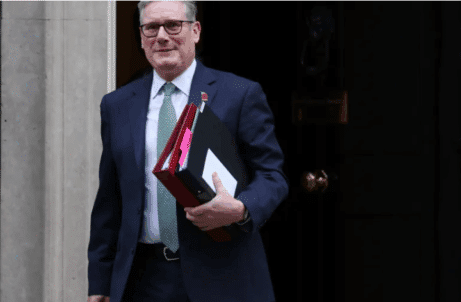
Reports indicated that multiple ministers may be maneuvering within the party, illustrating Labour Party internal politics are increasingly complex and volatile under current leadership pressures and Cabinet reshuffle controversy.
Political analysts warn that removing the Prime Minister only eighteen months into his term could have severe economic and political consequences, including destabilizing financial markets and weakening Britain’s international standing.
Potential leadership contenders include Health Secretary Wes Streeting, Home Secretary Shabana Mahmood, and former Labour leader Ed Miliband, reflecting the Cabinet reshuffle controversy and highlighting tensions in the British political landscape.
Starmer’s chief of staff, Morgan McSweeney, was implicated in the briefings, though the Prime Minister reiterated his full confidence in him, underscoring a delicate balance between staff loyalty, leadership, and Labour Party internal politics.
Financial Times reporting suggested Streeting’s support may have increased following the briefings, but Labour rules require twenty percent of MPs to nominate a contender, making leadership change procedurally challenging despite growing speculation.
Political experts note that while Starmer cannot be easily ousted, declining public support and internal dissatisfaction could precipitate voluntary resignation or coordinated ministerial pressure to force leadership change.
Opposition parties criticized Starmer’s handling of unrest. Conservative leader Kemi Badenoch labeled him a weak Prime Minister at war with his Cabinet, questioning whether his government can maintain authority and UK government stability.
Far-right Reform UK has exploited the crisis, with leader Zia Yusuf emphasizing Labour disarray and warning that members might choose Starmer’s replacement, further destabilizing the British political landscape and amplifying political tension.
The upcoming autumn budget complicates the Prime Minister’s situation, as speculation about tax and spending decisions could sway public confidence and influence Labour Party internal politics and Cabinet reshuffle controversy.
Chancellor Rachel Reeves reportedly ruled out income tax increases, aiming to avoid alienating backbenchers and voters, demonstrating how policy decisions intersect with leadership stability and Labour Party internal politics.
Starmer’s government has faced criticism over migration and rising far-right activity, amplifying Cabinet reshuffle controversy while challenging his ability to maintain control and credibility in the British political landscape.
The migrant policy includes a “one-in-one-out” agreement with France, but limited deportations have drawn public scrutiny and intensified debate over leadership, policy implementation, and Labour Party internal politics.
Critics argue Starmer has not done enough to address far-right protests and concerns over reform policies, highlighting the Cabinet reshuffle controversy and raising questions about leadership effectiveness and UK government stability.
Administrative errors, such as accidental prison releases, have reinforced perceptions of incompetence, fueling narratives that the Prime Minister struggles to maintain control, impacting public trust and the British political landscape.
Economic stagnation and persistent inflation further complicate leadership challenges, with growing public dissatisfaction intersecting with Labour Party internal politics and potentially influencing ministerial calculations regarding Starmer’s future.
The briefings controversy emphasizes the importance of communication strategy and leadership judgment in maintaining authority, highlighting the fine line between political maneuvering, Cabinet reshuffle controversy, and UK government stability.
Starmer reiterated that attacks on ministers are unacceptable, attempting to reassure colleagues and the public, showing a strategic effort to contain Labour Party internal politics and stabilize the Cabinet reshuffle controversy.
Critics continue to question Starmer’s political judgment and staff effectiveness, creating uncertainty around his leadership while contributing to perceptions of instability in the British political landscape and ongoing Cabinet reshuffle controversy.
Labour’s low polling and internal divisions may embolden opposition parties, increasing scrutiny of Starmer’s leadership, influencing Cabinet appointments, and impacting the broader trajectory of UK government stability.
Labour Party internal politics remain under close observation, with potential leadership moves contingent on future elections, public sentiment, and policy decisions, keeping the British political landscape in a state of uncertainty.
Experts emphasize Starmer’s handling of his chief of staff, communication strategy, and Cabinet loyalty will determine whether he can maintain authority and prevent Labour Party internal politics from undermining UK government stability.
The Prime Minister’s focus on maintaining control and authority reflects the intricate dynamics of leadership under scrutiny, showing how Cabinet reshuffle controversy and media narratives intersect with the broader British political landscape.
Starmer’s strategy in responding to media reports aims to project strength, manage dissent, and reassure the public, demonstrating the importance of perception management in sustaining UK government stability and Labour Party internal politics.
Observers note that internal party dynamics, public perception, and opposition pressure combine to create a complex environment for Starmer, where leadership missteps could amplify Cabinet reshuffle controversy and destabilize the British political landscape.
While Starmer continues to assert authority, persistent rumors and internal dissatisfaction illustrate how fragile leadership can be when Cabinet cohesion and Labour Party internal politics are under strain in the UK government.
The interplay between leadership challenges, public confidence, and Cabinet loyalty underscores the critical stakes for Starmer as he navigates the current political crisis, balancing Labour Party internal politics with UK government stability.
Starmer’s emphasis on staff loyalty, communication discipline, and ministerial coordination reflects an effort to mitigate Cabinet reshuffle controversy, stabilize internal politics, and maintain control of the British political landscape during heightened scrutiny.
Political commentators predict that unless Starmer successfully addresses internal tensions and manages perceptions, ongoing infighting could escalate, threatening the Prime Minister’s leadership and undermining UK government stability in coming months.
The outcome of this leadership crisis will likely shape Labour Party internal politics, public trust in governance, and the broader trajectory of UK government stability, illustrating the high stakes of political maneuvering.
The media coverage of the controversy has intensified public debate, highlighting divisions within Labour and demonstrating how Cabinet reshuffle controversy can dominate discourse while influencing the British political landscape.
Starmer’s capacity to maintain authority amid rumours, media scrutiny, and internal discontent will determine his longevity as Prime Minister, illustrating the delicate balance between Labour Party internal politics and UK government stability.
Observers note that Starmer vs His Ministers is not simply a personnel dispute but reflects broader questions about leadership competence, governance, and public confidence, highlighting how internal dynamics affect the British political landscape.
As political pressure mounts, Starmer’s leadership decisions, handling of dissent, and management of Cabinet reshuffle controversy will be decisive in shaping both Labour Party internal politics and the future of UK government stability.
Starmer must navigate complex political terrain, balancing media scrutiny, opposition pressure, and Cabinet loyalty, while addressing Labour Party internal politics and maintaining UK government stability amid a volatile British political landscape.

The Prime Minister’s handling of this crisis will set a precedent for leadership resilience, demonstrating the interconnectedness of Cabinet reshuffle controversy, media management, and Labour Party internal politics within UK governance.
Starmer’s ongoing efforts to stabilize his leadership and control infighting underscore the high-stakes environment of UK politics, where internal party divisions and public perception interact to shape the British political landscape.
The Labour Party’s future cohesion and Starmer’s authority depend on managing dissent, reinforcing Cabinet loyalty, and addressing public concerns, highlighting how leadership strategy and internal politics influence UK government stability.
Ultimately, Starmer vs His Ministers exemplifies the challenges of modern governance, where internal politics, media scrutiny, and public confidence intersect, shaping the trajectory of the British political landscape and Cabinet reshuffle controversy.
About The Author